|
|
|
| “...Richard Rodgers says that he wrote the number at a bright tempo, but the film’s musical director wanted it performed as a slow ballad.” |
|
 |
|
- Sandra Burlingame
|
|
| |
The 1945 movie State Fair was the only original film score written by composer Richard Rodgers and lyricist Oscar Hammerstein II. Their other films were adapted from stage plays. “It Might As Well Be Spring,” sung in the film by Dick Haymes and dubbed for Jeanne Crain by Louann Hogan, won the Best Song Oscar that year. Other memorable songs in the movie include “That’s for Me” and “It’s a Grand Night for Singing.” The 1945 movie was a remake of a 1933 non-musical film starring Will Rogers and Janet Gaynor. In 1962, two years after Hammerstein’s death, the film was remade with Pat Boone, Bobby Darin, Pamela Tiffin, and Ann-Margaret with additional songs and lyrics by Rodgers.
|
| |
| |
|
| |
|
|
| |
| |
|
| |
|
The song was featured on the radio show Your Hit Parade 14 times, three times in first place, and it charted three times:
- Dick Haymes (1945, Paul Whiteman and His Orchestra, #5)
- Paul Weston and His Orchestra (1945, Margaret Whiting, vocal, #6)
- Sammy Kaye and His Orchestra (1946, Billy Williams, vocal, #4)
|
|
| |
|
| |
|
In his autobiography Musical Stages, Richard Rodgers says that he wrote the number at a bright tempo, but the film’s musical director wanted it performed as a slow ballad. The studio promised to reshoot the scene if the ballad tempo didn’t work. It did, and the songwriters were overruled.
Unlike Lorenz Hart, who wrote lyrics to fits Rodgers’ music, Hammerstein wrote the lyrics first and Rodgers set them to music. Rodgers explains how he composed music to amplify the meaning of the words. “The first lines are: ‘I’m as restless as a willow in a wind storm,/I’m as jumpy as a puppet on a string.’ Taking its cue directly from these words, the music itself is appropriately restless and jumpy. Moreover, since the song is sung by a young girl who can’t quite understand why she feels the way she does, I deliberately ended the phrase on the uncertain sound of the F natural (on the word ‘string’) rather than on the more positive F sharp.”
William Zinsser, in Easy to Remember: The Great American Songwriters and Their Songs, says “Hammerstein’s lilting lyric for ‘It Might as Well Be Spring’...led Rodgers by the hand to one of his most delicate melodies.” In his book Can’t Help Singin’ Gerald Mast sums up the perfect blend of words and music in the song, referring to the songwriters’ teamwork as “musical-verbal onomatopoeia.” “The meanings and sounds of Hammerstein’s words are inseparable from the sounds and feelings of Rodgers’ music.”
In Reading Lyrics, editors Robert Gottlieb and Robert Kimball say of the lyricist, “Hammerstein’s simple and sincere lyrics, carefully wrought, if at times edging toward corniness, reflected the late-war and post-war mood of America and have kept their power over us....”
The verse sets the restless mood of the song: “The things I used to like I don’t like anymore” and “I sit around and mope.’” Brother and sister, played by Haymes and Crain, are preparing to attend the annual fair with the family. Neither is looking forward to the trip and both are wishing for more excitement in their lives. They equate the mood to spring fever: “I’d say that I had Spring fever, But I know it isn’t Spring.” Happily both of them fall in love at the fair.
In her book Hollywood Sings!: An Inside Look at Sixty Years of Academy Award-Nominated Songs, Susan Sackett relates a story about the song’s title. “Hammerstein thought that the heroine...should be in a spring-feverish mood, but state fairs are held in summer or fall, not spring. After mulling it over, he asked Rodgers’ opinion, complaining to his partner, ‘It might as well be spring,’ since that’s how she was feeling. ‘That’s it!’ shouted the composer.”
Not only has the song been sung by such luminaries as Frank Sinatra, Ella Fitzgerald, Nina Simone, and Mel Torme, it has captured the interest of young vocalists Stacey Kent and Karrin Allyson, who lends it an unusual samba beat on her CD I Didn’t Know About You. The song is also popular with instrumentalists such as guitarist Mark Elf and guitarist/vocalist John Pizzarelli; pianists Brad Mehldau and Jacky Terrasson; organist Richard “Groove” Holmes; trumpeter Donald Byrd; and bassist Jay Leonhart. Saxophonists Frank Morgan and Ike Quebec titled albums after the song.
|
|
|
|
More information on this tune... |
|
See the Reading and Research page for this tune for additional references. |
|
- Sandra Burlingame
|
|
| This section suggests definitive or otherwise significant recordings that will help jazz students get acquainted with
“It Might As Well Be Spring.” These recordings have been selected from the Jazz History and
CD Recommendations sections.
|
Sarah Vaughan’s sings wonderfully on her 1950 recording of “It Might As Well Be Spring” is (Sarah Vaughan In Hi-Fi) and is aided by the brilliant trumpet work of Miles Davis. Bill Evans’ trio rendition (Moon Beams) offers comparable lyricism without the vocals. Stan Getz’s Latin version with Astrud Gilberto (Getz Au Go Go), meanwhile, is a great example of how this tune can be taken beyond the ballad realm.
Noah Baerman - Jazz Pianist and Educator
|
Musical analysis of “It Might As Well Be Spring” | | Original Key | C major; false key changes to F major and D minor during “B” | | Form | A1 - A2 - B - A3 with a sixteen-measure extension | | Tonality | Primarily major; brief minor tonality in mm. 9-16 of “B” | | Movement | Generally stepwise and chromatic with some skips of a 3rd and some wide, arpeggiated leaps in mm. 5-6 of the “A” sections. | Comments (assumed background) | | A lyrical, relaxed melody with a range of only one octave. Altered tones and chromaticism add sophistication to the tune as well as opportunities to experiment with harmonic substitutions. Except for the sudden leaping intervals in mm. 4-5 of “A” (which actually make for interesting contrast to the rest of the melody), novice vocalists would have little trouble mastering this piece. In the original key, it is probably more suitable for higher voices (soprano and tenor). | | K. J. McElrath - Musicologist for JazzStandards.com |
|
It’s a golden study opportunity when an artist records a song at different career stages. Vocalist Sarah Vaughan recorded “It Might as Well Be Spring” in 1946 with the band of bassist John Kirby and then again in 1950 on an all-star session that included trumpeter Miles Davis. There’s an adolescent sound to her delivery in 1946 that is replaced with stunning clarity by 1950. Miles provides sensitive accompaniment. Trombonist Bill Harris, a member of the Woody Herman ensemble in the ‘40s and ‘50s, had a highly personal sound, as unusual then as it now, in a time when too many jazz musicians cultivated a bland, homogeneous sound. On his own record date for Verve in 1957, he blew a sensitive, spacey, six-and-a-half minute feature on “It Might as Well Be Spring.”
Chris Tyle - Jazz Musician and Historian
|
Additional information for "It Might As Well Be Spring" may be found in:
|
|
|
 Robert Gottlieb, Robert Kimball
Reading Lyrics
Pantheon
Hardcover: 736 pages
(Includes the following types of information: song lyrics.)
|
|
|
|
|
 Gerald Mast
Can't Help Singin'
Overlook Press; Rei edition
Paperback: 400 pages
(1 paragraph including the following types of information: lyric analysis and music analysis.)
|
|
|
|
|
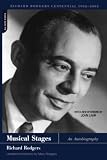 Richard Rodgers, Mary Rodgers
Musical Stages: An Autobiography
Da Capo Press
Paperback: 384 pages
(The composer tells anecdotes and relates the history of the song.)
|
|
|
|
|
|
|
|
Comment Policy
- Your comments are welcome, including why you like
this tune, any musical challenges it presents, or additional background information.
- Jazz musicians, fans, and students of all ages use this website as an educational resource.
As such, off-topic, off-color, unduly negative, and patently promotional comments will be removed.
- Once submitted, all comments become property of JazzStandards.com.
By posting, you give JazzStandards.com permission to republish or otherwise distribute your comments in any format or other medium.
JazzStandards.com reserves the right to edit or remove any comments at its sole discretion.
|
|
| Click on any CD for more details at Amazon.com |
 Kenny Dorham, Cannonball Adderley
Blue Spring
Ojc
Original Recording 1959
|
|
Trumpet virtuoso Dorham delivers a slyly swinging performance here, aided by a diverse cast of soloists including alto saxophonist Cannonball Adderley, pianist Cedar Walton and David Amram on French horn.
|
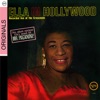
 Ella Fitzgerald
Ella in Hollywood
Verve
Original Recording 1961
|
|
In this live performance, Ella delivers “It Might As Well Be Spring” tenderly in an intimate small-group setting.
|
 Bill Evans Trio
Moon Beams
Ojc
Original recording 1962
|
|
Evans delivers a characteristically lyrical, searching ballad performance here, aided by the sensitive drumming of longtime collaborator Paul Motian.
|
 Stan Getz with Astrud Gilberto
Getz Au Go Go
Polygram Records
Original Recording 1964
|
|
Having already recorded “It Might As Well Be Spring” in a more traditional ballad format in 1951, saxophonist Getz re-invents the song here with a Brazilian lilt, featuring the vocals of Astrud Gilberto and the lush vibraphone comping of a young Gary Burton.
|
|
 Brad Mehldau
Progression: Art of the Trio Vol. 5
2001 Warner Bros 48005
Original recording 2001
|
|
High improvisation and a 7/4 time signature make this reading both intriguing and challenging for the listener. Pianist Mehldau meticulously sifts through the ballad, extracting nuggets and casting aside the fool’s gold.
|
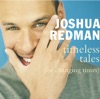
 Joshua Redman
Timeless Tales for Changing Times
1998 Warner Bros 47052
Original recording 1998
|
|
In a snappy reading from Redman, the saxophonist breathes fresh life into the song, accelerating the tempo and applying a layer of pure bop polish to the chassis.
|
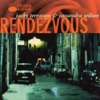
 Jacky Terrasson/Cassandra Wilson
Rendezvous
1997 Blue Note 55484
Original recording 1997
|
|
No surprise here that both pianist Terrasson and vocalist Wilson are engaged in a highly original interpretation of the song that plays with both style and tempo. It comes off as moody, atmospheric and deliciously dark.
|
 Monty Alexander, Ray Brown, Herb Ellis
Triple Scoop
2002 Concord Records
Original Recording 1987
|
|
Piano, bass, and guitar all have a turn at carrying the melody on this joyful rendition of the song. This 2-disc set is a compilation of three LP’s by the trio, two of which feature Johnny Frigo on violin.
|
|
|
|