|
|
|
| “[Arlen’s] songs seep into the heart of a people, of a nation, a world, and stay there.” |
|
 |
|
- Yip Harburg
|
|
| |
Originally titled “If You Believed in Me,” this Harold Arlen-Yip Harburg composition was written for the 1932 Broadway show The Great Magoo. The following year Paul Whiteman’s record leapt into the hit parade:
- Paul Whiteman and His Orchestra (1933, Peggy Healy, vocal, #9)
- Cliff Edwards (1933, vocal, #13)
- Ella Fitzgerald (1945, vocal, #9)
- Benny Goodman and His Orchestra (1945, Dorothy Reid, vocal, #10)
|
|
| |
|
| |
|
Paul Whiteman’s recording is a typical dance band recording of the early ‘30s, and the tune is played at a pretty fast clip in comparison to subsequent recordings. Trumpeter Bunny Berigan has a few bars of the spotlight and turns on the heat. By contrast the version by Cliff Edwards (Ukulele Ike) includes the verse and is at a slow, groovier tempo. A 1943 version by Nat “King” Cole didn’t get into the charts but paved the way for the two 1945 hits by Ella Fitzgerald and Benny Goodman.
|
| |
| |
|
| |
|
|
| |
| |
|
| |
|
“If You Believed in Me” was the second collaboration between lyricist Yip Harburg and pianist/composer Harold Arlen. Producer Billy Rose needed one song for a play by Ben Hecht and Gene Fowler entitled The Great Magoo, not a musical but a drama about a barker on Coney Island.
|
| |
| |
|
| |
|
|
| |
| |
|
| |
|
In Harold Meyerson and Ernie Harburg’s biography Who Put the Rainbow in The Wizard of Oz?: Yip Harburg, Lyricist, the authors include Harburg’s story of the tune. “They wanted a song for the barker, a man disillusioned with the world, and he had finally fallen in love. [Rose] called me up and said, ‘Do you have any kind of a song that would fit that situation?’ Harold had a tune. He had a whole tune. And I got an idea-there’s a guy who sees the lights of Broadway, thinks the whole world is that, that the moon is a paper moon, everything is a Barnum and Bailey world...Harold and I brought it to Billy Rose, and he said, ‘Gee, that’s great. Let’s sit down and do it.” Harburg considered himself a neophyte at the time and recalled, “When Billy Rose said ‘Let’s sit down and do it’...what are you going to do? You sit down.”
Although the tune was fine, the show wasn’t and expired after 11 performances. “If You Believed in Me” was the first time Arlen and Harburg had actually gotten together to work. Arlen had submitted music for “Satan’s Li’l Lamb,” to which both Harburg and Johnny Mercer had fitted lyrics. Harburg was pleased to be able to work with Arlen, whose music had made a strong impression on him.
Arlen and Harburg’s tune became part of the film score for the 1933 motion picture Take a Chance, where it was unveiled as “It’s Only a Paper Moon.” Six years later the pair would make motion picture history with their composition “Over the Rainbow” sung by Judy Garland in The Wizard of Oz.
In 1964 CBS aired a special on Arlen and his lyricists. Hosted by Walter Cronkite, Harburg expressed his admiration for the composer, saying that Arlen’s music contains “a particularly wonderful creative quality-imaginative, new, fresh and having identification. His songs live! His songs seep into the heart of a people, of a nation, a world, and stay there.”
|
|
|
|
| This section suggests definitive or otherwise significant recordings that will help jazz students get acquainted with
“It's Only a Paper Moon.” These recordings have been selected from the Jazz History and
CD Recommendations sections.
|
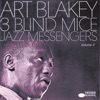
Most would agree that Nat “King” Cole’s performance of “It’s Only A Paper Moon” with his trio (The World of Nat King Cole) is a great place to start, both for the subtly swinging playing and for his fabulous vocal interpretation. Miles Davis, meanwhile, offered up the first important bop-influenced version of the song on a 1951 collaboration with Sonny Rollins (Dig). Art Blakey recorded numerous versions of “Paper Moon” featuring an arrangement in which he, Wayne Shorter and Lee Morgan are said to have had a hand; the 1962 live recording by Blakey’s sextet featuring Shorter, Freddie Hubbard, Curtis Fuller and Cedar Walton (Three Blind Mice Vol.2) is a particularly fiery.
Noah Baerman - Jazz Pianist and Educator
|
Harburg’s words are as hard-hitting today as they where in 1932. They describe a phony, cardboard world, like a carnival, but the one thing that can make it real is the love of a special someone. Chris Tyle
Musical analysis of “It’s Only a Paper Moon” | | Original Key | G major | | Form | A - A - B - A | | Tonality | Major throughout | | Movement | Initial upward leap, followed by step-wise descents; chromatic ascending figure, descending by skips | Comments (assumed background) | | Harmonically, there are no surprises here, but the melodic rhythm can be tricky. Each phrase of “A” begins on the second half of beat one, and many syncopations are tied over the bar-line from the second half of beat four. This can give one a constant feeling of being just a little behind or a little ahead of the beat. The best advice here is to thoroughly learn the ink, counting carefully. Thinking of the tune as being in 8/8 rather than 2/2 can be helpful to the novice. | | K. J. McElrath - Musicologist for JazzStandards.com |
|
While big bands were filling ballrooms in the 1930s, smaller groups worked in more intimate settings. “The Biggest Little Band in the Land” was the sobriquet given to bassist John Kirby’s six-piece group---a tight, sophisticated ensemble (they wore white tailcoats on their gigs). Their 1941 recording of “Paper Moon” exemplifies their approach, with fine solos by Billy Kyle (piano), Charlie Shavers (trumpet), Russell Procope (alto sax) and Buster Bailey (clarinet). Another intimate group was the trio of pianist/singer Nat “King” Cole. His 1943 recording of “Paper Moon” not only features his vocal talent but a great arrangement spotlighting his piano skills and those of guitarist Oscar Moore. Tenor saxophonist Lester Young’s 1945 recording of “Paper Moon” is, from the opening bars, a jazz performance as Prez eschews the melody and heads right into a marvelous solo backed up by his band with some nicely arranged passages.
Chris Tyle - Jazz Musician and Historian
|
Additional information for "It's Only a Paper Moon" may be found in:
|
|
|
 David Ewen
Great Men of American Popular Song
Prentice-Hall; Rev. and enl. ed edition
Unknown Binding: 404 pages
(1 paragraph including the following types of information: history.)
|
|
|
|
|
 Thomas S. Hischak
The Tin Pan Alley Song Encyclopedia
Greenwood Press
Hardcover: 552 pages
(1 paragraph including the following types of information: Broadway productions, film productions, history and performers.)
|
|
|
|
|
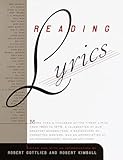 Robert Gottlieb, Robert Kimball
Reading Lyrics
Pantheon
Hardcover: 736 pages
(Includes the following types of information: song lyrics.)
|
|
|
|
|
|
|
|
Comment Policy
- Your comments are welcome, including why you like
this tune, any musical challenges it presents, or additional background information.
- Jazz musicians, fans, and students of all ages use this website as an educational resource.
As such, off-topic, off-color, unduly negative, and patently promotional comments will be removed.
- Once submitted, all comments become property of JazzStandards.com.
By posting, you give JazzStandards.com permission to republish or otherwise distribute your comments in any format or other medium.
JazzStandards.com reserves the right to edit or remove any comments at its sole discretion.
|
|
| Click on any CD for more details at Amazon.com |
 Ella Fitzgerald
75th Birthday Celebration
Verve
Original recording 1945
|
|
Ella Fitzgerald’s initial recording of “It’s Only A Paper Moon” was quite popular and for good reason. Subtly backed by the vocal group the Ink Spots, Fitzgerald swings unhurriedly and even gets in some great scatting in the cracks between the Ink Spots’ vocal phrases.
|
 Django Reinhardt
Django in Rome 1949-1950
Jsp Records
Original Recording 1949
|
|
This swinging recording features a latter-day collaboration between guitarist Reinhardt and violinist Stephane Grappelli. Reinhardt’s playing is particularly energetic and creative, even by his lofty standards.
|
 Miles Davis
Dig
Ojc
Original recording 1951
|
|
Davis comes up with a relaxed, bop-infused, medium-tempo take on “Paper Moon,” featuring his trumpet alongside the tenor saxophone of Sonny Rollins and the piano of Walter Bishop, Jr.
|
 Lionel Hampton & Oscar Peterson
The Complete Quartets & Quintets
Polygram Records
Original recording 1954
|
|
There are actually two versions of “Paper Moon” on this collection, with slightly different quintets led by vibraphonist Hampton. The longer version is actually a showcase for clarinetist Buddy DeFranco, who utterly shreds the tune at a bright tempo that is nonetheless relaxed thanks to the Oscar Peterson-led rhythm section. On the shorter version Hampton himself plays a great solo, as does guitarist Herb Ellis, who takes DeFranco’s place.
|
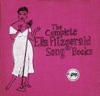
 Ella Fitzgerald
Ella Fitzgerald Sings the Harold Arlen Songbook
Umvd Labels
Original recording 1960
|
|
This re-recording of “It’s Only A Paper Moon” is much more brash than Fitzgerald’s original version, thanks to the iconic arrangement by Billy May. Nonetheless, her swinging vocals are rather subtle and understated.
|
|
 Stephane Grappelli/Martin Taylor
Reunion
1997 Linn Records 22
Original recording 1995
|
|
This charming duet finds veteran violinist Grappelli having not lost a step as he soars over the intricate plucking of guitarist Taylor.
|
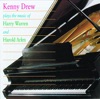
 Kenny Drew Trio
Kenny Drew Trio
1993 Original Jazz Classics 65
Original recording 1956
|
|
Pianist Drew leads bassist Paul Chambers and drummer Philly Joe Jones through a swinging reading that finds its soul in a bluesy base.
|
 Art Blakey and the Jazz Messengers
Three Blind Mice Vol.2
Blue Note
Original recording 1962
|
|
Trumpeter Freddie Hubbard and saxophonist Wayne Shorter present some blistering solo challenges to each other as drummer Blakey leads the group at an invigorating pace.
|
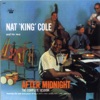
 Nat King Cole
Complete After Midnight Sessions
Blue Note Records
|
|
This was an inspired session that featured four different guest artists joining Cole’s quartet (which included drummer Lee Young, Lester’s brother). Harry “Sweets” Edison’s trumpet graces this track.
|
|
|
|