|
|
|
| Even though Calloway’s band was considered a swinging jazz ensemble, his version of “I’ve Got the World on a String” is a more sedate, dance band reading of the tune. |
|
 |
|
- Chris Tyle
|
|
| |
This Ted Koehler-Harold Arlen number was introduced in the 21st edition of the Cotton Club Parade, which opened on October 23, 1932. Cab Calloway’s orchestra, featured in the revue, had a hit on the charts with the number that year:
- Cab Calloway and His Orchestra (1932, vocal, #18)
- Bing Crosby, accompanied by the Dorsey Brothers’ Orchestra (1933, vocal, #19)
- Frank Sinatra, accompanied by Nelson Riddle’s Orchestra (1953, vocal, #14)
|
|
| |
|
| |
|
The 21st edition of the Cotton Club Parade was the second production that the songwriting team of Koehler and Arlen wrote for New York’s Cotton Club, and they would go on to write the music for two more of the shows, the 22nd and 24th editions. They had one outstanding number from each Parade that went on to be a hit, an impressive achievement. Koehler would continue on as lyricist for one more, and the productions ended in 1939. The Harlem Cotton Club closed in 1936, moving to a new location on Broadway and 48th Street, which closed in 1940.
|
| |
| |
|
| |
|
|
| |
| |
|
| |
|
Even though Calloway’s band was considered a swinging jazz ensemble, his version of “...String” is a more sedate, dance band reading of the tune. Record producers often would back a ballad or medium-tempo number with a “hot” tune, and the flip of the original 78 of “...String” was the jazz number “Harlem Hospitality,” another number from the Parade.
The tune was on a roll into 1933, as evidenced by Bing Crosby’s recording with the Dorsey Brothers’ Orchestra. Another reserved rendition (backed by a “hot” version of “My Honey’s Lovin’ Arms”) featured Crosby with the Mills Brothers.
Arlen and Koehler’s hit collaborations retained their popularity through the years, and “...String” continued to find favor with recording artists. Frank Sinatra’s swinging rendition from 1957, with a superb arrangement by Nelson Riddle and accompaniment by his orchestra, is a classic of Sinatra’s great work during his years with Capitol Records.
|
|
|
|
More information on this tune... |
|
|
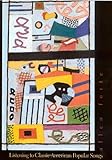 Allen Forte
Listening to Classic American Popular Songs
Yale University Press; Book & CD edition
Hardcover: 219 pages
(Author/educator Forte devotes six pages to the history of the song and analyses of the music and lyric. He includes the song lyrics and the book has a companion CD.)
|
|
|
|
See the Reading and Research page for this tune for additional references. |
|
Chris Tyle - Jazz Musician and Historian
|
|
| This section suggests definitive or otherwise significant recordings that will help jazz students get acquainted with
“I've Got the World on a String.” These recordings have been selected from the Jazz History and
CD Recommendations sections.
|
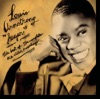
Louis Armstrong’s 1933 recording of “I’ve Got the World on a String” with his Orchestra (Sugar) is definitive, featuring great trumpet and vocal work as well as some expert piano playing by a young Teddy Wilson. Ella Fitzgerald is similarly masterful on her 1950 recording (More Priceless Jazz) with Sy Oliver’s Orchestra. Oscar Peterson, meanwhile, participated in numerous important version of the song, including two instrumental recordings by his own trios from 1954 and 1959 (Plays the Harold Arlen Songbook).
Noah Baerman - Jazz Pianist and Educator
|
Koehler’s lyrics tell the tale of an individual who is on top of the world--“lucky me, can’t you see, I’m in love.” Arlen’s melody on the bridge is oddly centered on one note, but this repetitiveness fits the wordy lyrics beginning with “life is a beautiful thing.” Chris Tyle
Musical analysis of “I’ve Got the World on a String” | | Original Key | F major | | Form | A1 - A2 - B - A3 | | Tonality | Primarily major | | Movement | “A” sections are basically made up of a descending scale (from the fifth degree, down one octave) with a great deal of leaping and neighboring embellishment; “B” is based on a single repeated pitch, similarly embellished. | Comments (assumed background) | | It is the “leaping” embellishments that make this tune both interesting and challenging. Leaps of a fifth and a sixth in both directions are frequent throughout the melody. Additionally, this melody has a very wide range, covering a twelfth (C - f1, in the original). This is not a song for inexperienced vocalists and requires an interpretation that is strong without being heavy-handed. Keeping the tempo fairly quick (c. 110-120 b.p.m. in 4/4 time) will facilitate an effective performance. | | K. J. McElrath - Musicologist for JazzStandards.com |
|
Louis Armstrong’s 1933 version of this tune was beautifully recorded by Victor Records, featuring Satch’s wonderful trumpet playing and a marvelous vocal. Teddy Wilson gets some solo space on this side, only his third recording session. Duke Ellington’s elegant vocalist Ivie Anderson graces Duke’s 1933 recording, which also features superb trombone by Lawrence Brown and trumpeter Cootie Williams. In 1944, despite the effects that the draft and other wartime woes had on big bands, Woody Herman surprised the music world by moving in a more modern direction, creating a band that would gain critical acclaim with young players and a few older hands. By 1945, with the end of the musicians’ union recording ban, Herman’s First Herd made a batch of fine sides for Columbia, including a great arrangement by Ralph Burns of “I’ve Got the World on a String” with vocal and clarinet by Woody and tenor sax by Flip Philips.
Chris Tyle - Jazz Musician and Historian
 Louis Armstrong
Sugar
RCA 63851
|
|
|
|
|
Additional information for "I've Got the World on a String" may be found in:
|
|
|
Allen Forte
Listening to Classic American Popular Songs
Yale University Press; Book & CD edition
Hardcover: 219 pages
(6 pages including the following types of information: history, lyric analysis, music analysis and song lyrics. (Book includes CD).)
|
|
|
|
|
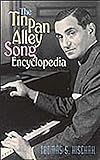 Thomas S. Hischak
The Tin Pan Alley Song Encyclopedia
Greenwood Press
Hardcover: 552 pages
(1 paragraph including the following types of information: film productions, history and performers.)
|
|
|
|
|
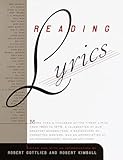 Robert Gottlieb, Robert Kimball
Reading Lyrics
Pantheon
Hardcover: 736 pages
(Includes the following types of information: song lyrics.)
|
|
|
|
|
|
|
|
Comment Policy
- Your comments are welcome, including why you like
this tune, any musical challenges it presents, or additional background information.
- Jazz musicians, fans, and students of all ages use this website as an educational resource.
As such, off-topic, off-color, unduly negative, and patently promotional comments will be removed.
- Once submitted, all comments become property of JazzStandards.com.
By posting, you give JazzStandards.com permission to republish or otherwise distribute your comments in any format or other medium.
JazzStandards.com reserves the right to edit or remove any comments at its sole discretion.
|
|
| Click on any CD for more details at Amazon.com |
 Ella Fitzgerald
More Priceless Jazz
Verve
Original Recording 1950
|
|
Fitzgerald is authoritative on this version of “I’ve Got the World on a String,” making the challenging melody sound effortless. The very slow swing groove is executed flawlessly by Sy Oliver’s Orchestra, with particularly strong work by Hank Jones on piano and Fitzgerald’s husband at the time, bassist Ray Brown.
|
 Oscar Peterson
Plays the Harold Arlen Song Book
Umvd Labels
Original Recordings 1954 and 1959
|
|
This album offers two contrasting performances by trios with pianist Peterson and bassist Ray Brown. The 1954 version is a lush, gentle ballad with guitarist Herb Ellis, while the 1959 version replaces Ellis with drummer Ed Thigpen and adds a healthy dose of swing to the groove.
|
 Anita O'Day
Anita Sings the Most
Polygram Records
Original Recording 1957
|
|
O’Day’s masterful singing here is sly, tender and generally understated. The slowly swinging vibe is put across wonderfully by guitarist Herb Ellis, bassist Ray Brown and pianist Oscar Peterson, who enter the mix gradually.
|
 Pee Wee Russell
Portrait Of Pee Wee
Everest Records
Original Recording 1958
|
|
Clarinetist Russell, while associated with Dixieland, always sounded modern. Here he plays an inventive solo on this relaxed, swinging performance that also features Vic Dickenson on trombone, Bud Freeman on tenor saxophone, Ruby Braff on trumpet and Nat Pierce on piano.
|
 Earl Hines
Live at the New School
Chiaroscuro Records
Original Recording 1973
|
|
This performance is an absolute tour de force, more than 16 minutes of stunningly inventive solo piano, at times involving jaw-dropping stride, at other times becoming more introspective and exploratory. In the midst of Hines’ explorations we also hear a long reference to “Honeysuckle Rose”
|
|
 Ernie Henry Quartet
Seven Standards & a Blues
1993 Original Jazz Classics 1722
Original recording 1957
|
|
The joyous spirit of the song is alive in the buoyant phrasing of alto saxophonist Henry, the bluesy delivery of pianist Wynton Kelly, and the swinging tempo of drummer Philly Joe Jones and bassist Wilbur Ware.
|
 Joe Lovano
Celebrating Sinatra
2002 Blue Note 37718
Original recording 1996
|
|
The unpredictability of both saxophonist Lovano’s playing and the orchestral arrangement by Marty Albam makes this a fresh and exciting exercise which includes Judi Silvano’s vocalizing.
|
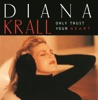
 Diana Krall
Only Trust Your Heart
1995 GRP Records 9810
Original recording 1995
|
|
Krall’s voice is intoxicating and her piano playing sparse but vibrant on this enjoyable rollick that features some wonderful swing rhythm from bassist Christian McBride and drummer Lewis Nash.
|
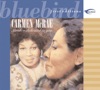
 Carmen McRae
Sarah: Dedicated to You
2003 RCA
Original recording 1990
|
|
Vocalist McRae is backed by the Shirley Horn trio here, and they swing this tune gently but with authority. McRae gives it an earthy touch.
|
|
|
|