Jazz Standards.com : Jazz Standards : Songs : History : Biographies
Home Overview Songs Biographies History Theory Search Bookstore About

Little Girl Blue (1935)

Visitor Comments
Share your comments on this tune...
Origin and Chart Information
“...these lyrics are deeply musical, perfectly tuned to the melodic line.”

- William Zinsser, Author

Rank 124
Music Richard Rodgers
Lyrics Lorenz Hart

The Hippodrome was a gigantic theater which opened in New York in 1905 as a venue for larger than life productions. It was the flamboyant producer/impresario Billy Rose who conceived of a spectacle--part Broadway comedy, part circus, part carnival--to fill the Hippodrome. It was the most expensive production that Broadway had ever seen. He signed composer Richard Rodgers and lyricist Lorenz Hart to create the score for Jumbo. The story concerned the rivalry of two circus owners whose respective daughter and son fall in love. Jimmy Durante played the role of the agent for the circus elephant, and the show opened with orchestra leader Paul Whiteman riding in on the elephant named Jumbo.


More on Lorenz Hart at JazzBiographies.com


More on Richard Rodgers at JazzBiographies.com
 

Gloria Grafton as Mickey Considine, the daughter of one of the circus owners, introduced “Little Girl Blue,” one of three popular songs from the show which included “My Romance” and “The Most Beautiful Girl in the World.” The show, the last to play the Hippodrome, opened in 1935 and ran for 253 performances. The giant theater, across the street from the Algonquin Hotel, was destroyed and replaced by a garage.

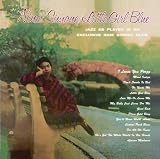
In his book The Song Is Ended: Songwriters and American Music, 1900-1950, William G. Hyland says, “The songs eventually caught on, but not at first because Rose insisted they not be played outside the theater, lest audiences lose interest.” That perhaps explains why Margaret Whiting’s version of “Little Girl Blue” didn’t chart until 1947 and played for only one week, topping at #25. It was left to vocalist/pianist Nina Simone to refocus attention on the song which became a signature tune for her in 1958 when she released her debut album entitled Little Girl Blue.

Even though the show lost money because of its exorbitant cost, it enhanced the reputation of Billy Rose and marked a triumphant return to Broadway for Rodgers and Hart who had not completely enjoyed their stint in Hollywood. The relationship of the two men was continuously strained--Rodgers the sober, reliable one and Hart the neurotic alcoholic who would periodically drop out of sight. However, together they produced a startling number of hit songs which have maintained popularity for generations.

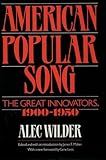
Alec Wilder, in his book American Popular Song: The Great Innovators, 1900-1950, describes Rodgers’ melody: “‘Little Girl Blue,’ a verseless song with an added ‘trio’ in ľ time, has an odd shape, A-A-B/A, in which the A’s are twelve measures long and the B/A only eight. It’s another loving, tender song, containing in its simplicity only one note out of the F major scale, a c sharp. In it Rodgers once more uses the by now familiar device of returning to the same notes. In this case they are three f’s. He moves from the first three to a d, from the second three to a c, and from the third three to a b flat.”

And of Hart’s lyrics Wilder says, “Only a master such as Hart was would have dared to begin a lyric so prosaically and know that its effect would be poetic: ‘Sit there and count your fingers, what can you do?’ And the next time he totally captivates by saying: ‘Sit there and count the raindrops falling on you.’”

Hart was unquestionably a genius with words. Philip Furia analyzes “Little Girl Blue” in his book The Poets of Tin Pan Alley: A History of America’s Great Lyricists. “Hart’s characteristic stance in these lyrics is a tenderly masochistic one, underscored by subtly oppressive rhymes that unfold from the most ordinary turns of phrase.... In a line like ‘No use, old girl,’ Hart uses Rodgers’ octave drop in ‘No use’ to emphasize ‘u’ enough so that it rhymes softly, but insistently, with ‘blue.’ In between those rhymes he deftly strings a sequence of double rhymes:

You may as well surrender,
Your hope is getting slender.
Why won’t somebody send a tender
Blue boy
To cheer a
Little girl blue?

As the double rhymes come more quickly--‘send a/tender’--they underscore the motif of passing time which runs throughout the song.”

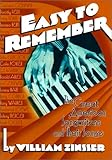
William Zinsser in his book Easy to Remember further praises Hart’s lyrics: “Among their many felicities of language, their internal rhymes and repetitions, these lyrics are deeply musical, perfectly tuned to the melodic line.”

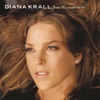
In 1962 Hollywood turned Jumbo into a film starring Doris Day, who sang “Little Girl Blue.” It was recorded by several pop singers and by jazz vocalists Betty Carter, Ella Fitzgerald, and Diana Krall. Instrumentally it has been performed by pianists Billy Taylor and Keith Jarrett, guitarists Charlie Byrd and Tal Farlow, and saxophonists Gerry Mulligan, Sonny Rollins, and Stan Getz.

More information on this tune...

Alec Wilder
American Popular Song: The Great Innovators, 1900-1950
Oxford University Press; Reprint edition
Hardcover: 576 pages


(Author/composer Wilder devotes two pages to a musical analysis of “Little Girl Blue” in his definitive book on American popular song.)
See the Reading and Research panel below for more references.

- Sandra Burlingame

Music and Lyrics Analysis

Musical analysis of “Little Girl Blue”

Original KeyF major
FormA - A - B
TonalityMajor throughout
MovementUpward skips, stepwise descents, and upward leaps, followed by stepwise descending motion returning to the tonic pitch.

Comments     (assumed background)

As a ballad with wide intervals and several sustained pitches, this one can pose real challenges to the performer, especially the vocalist. Breath control is key to successful execution of this song.

There is nothing unusual or exotic about the harmonic sequences here; however, the performer may wish to consult Rodgers’ original piano arrangement as there is some very nice “implied counterpoint” in his embellishing harmonies, especially in “A” (example: mm. 3-6 in which a chromatic line starting on the fifth degree of the tonic scale supports a pleasing harmonic sequence: F - F(+5) - F7 - Bb - Bbm).

K. J. McElrath - Musicologist for JazzStandards.com

Check out K. J. McElrath’s book of Jazz Standards Guide Tone Lines at his web site (www.bardicle.com).
Musicians' Comments

Are you a published Vocalist or Instrumentalist?

Add a comment and we'll credit you with a link to your site. (more...)

Reading and Research
Additional information for "Little Girl Blue" may be found in:

William Zinsser
Easy to Remember: The Great American Songwriters and Their Songs
David R. Godine Publisher
Hardcover: 279 pages


(1 page including the following types of information: lyric analysis and song lyrics.)

Alec Wilder
American Popular Song: The Great Innovators, 1900-1950
Oxford University Press; Reprint edition
Hardcover: 576 pages


(2 pages including the following types of information: music analysis.)

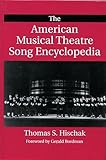
Thomas S. Hischak
The American Musical Theatre Song Encyclopedia
Greenwood Press
Hardcover: 568 pages


(1 paragraph including the following types of information: summary, lyric analysis and music analysis.)

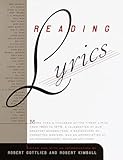
Robert Gottlieb, Robert Kimball
Reading Lyrics
Pantheon
Hardcover: 736 pages


(Includes the following types of information: song lyrics.)
Also on This Page...

Music & Lyrics Analysis
Musician's Comments
Reading & Research

Getting Started
CD Recommendations
By the Same Writers...

Jazz History Notes

Alto saxophonists were among the first to record this tune. “Cool” school associate Bud Shank’s playing shows the influence of Charlie Parker, but he’s definitely his own man. His 1954 recording group does an appealing rendition of this Rodgers and Hart tune.

Prior to the emergence on the scene of Charlie Parker, Johnny Hodges and Benny Carter were the role models on alto. Both men weathered stylistic changes in jazz and remained in the fore. Carter’s 1954 recording for Verve is ebullient and no doubt because of his company: brilliant pianist Teddy Wilson and “Mr. Swing,” Jo Jones, on drums.

A live recording of the Dave Brubeck Quartet from 1955 features a ten-minute version of “Little Girl Blue” with Paul Desmond at his best. Desmond’s style seemingly evolved directly from tenor saxophonist Lester Young, skipping over Charlie Parker’s strong presence.

Chris Tyle - Jazz Musician and Historian


Bud Shank
Mosaic Select: Bud Shank and Bob Cooper
Mosaic Select 10

benny carter
3, 4, 5: the verve small group sessions
polygram records

iTunes
Dave Brubeck. Jazz
Red, Hot and Cool
Sony 61468
Original recording 1955
iTunes
Getting Started
This section suggests definitive or otherwise significant recordings that will help jazz students get acquainted with “Little Girl Blue.” These recordings have been selected from the Jazz History and CD Recommendations sections.

Nina Simone is widely considered the definitive interpreter of “Little Girl Blue” and her first recording of the song, from 1957 (Little Girl Blue), is her most classic version. For a more straightforward reading of the song, Ella Fitzgerald’s 1956 live recording (Twelve Nights In Hollywood) is highly recommended. Jimmy Smith’s 1957 trio recording with Kenny Burrell (Standards) is a standout instrumental performance of the tune and demonstrates some of the blues undertones sometimes used when performing it.

Noah Baerman - Jazz Pianist and Educator

CD Recommendations for This Tune
Click on any CD for more details at Amazon.com
Hank Mobley
Messages
Prestige
Original recording 1956

Tenor saxophonist Mobley offers up a lyrical interpretation of the melody before he and pianist Barry Harris each play wonderful solos.

iTunes
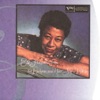
Ella Fitzgerald
Twelve Nights in Hollywood
Hip-O Select
Original recording 1956

Recorded two weeks before her lushly-arranged “songbook” rendition, this small-group performance took place live at the Hollywood Bowl. Fitzgerald’s reading of the melody is tender and straightforward

iTunes
John Lewis
The John Lewis Piano/Jazz Piano International
Collectables
Original recording 1957

In a trio setting (essentially the Modern Jazz Quartet minus Milt Jackson), Lewis plays a lyrical rendition of the melody with a subtle classical influence before moving into a swinging solo with a double-time feel.

iTunes
Jimmy Smith
Standards
Blue Note Records
Original recording 1957

Organist Smith plays lushly textured chords behind guitarist Kenny Burrell’s melody statement, before playing a slow, bluesy solo of his own.

iTunes
Eddie Harris
Exodus to Jazz
Collectables
Original recording 1961

Tenor saxophonist Harris gives a plaintive, remarkably lyrical performance here. His influential use of high register is well-displayed here, showing why some people mistook him for an alto saxophonist when hearing his recordings.

iTunes

- Noah Baerman

Nina Simone
Nina: The Essential Nina Simone
2000 Metro Music
Compilation
Over the years this song has become synonymous with vocalist/pianist Simone who performed and recorded it many times. She generates emotional power in even this delicate rendition.
Dave Brubeck. Jazz
Red, Hot and Cool
Sony 61468
Original recording 1955
The quartet chooses to bump up the pace to a mid tempo. Saxophonist Paul Desmond’s elegant sound flows like a stream throughout the piece, and Brubeck’s piano solo may be one of the best of his career.
iTunes
Laurindo Almeida/Bud Shank
Brazilliance Vol.2
1991 Blue Note 96102
Original recording 1991
The euphoric, dreamy atmosphere conjured by Shank on flute and Almeida on acoustic guitar is further advanced by the Latin tinged rhythm set by Gary Peacock on bass and Chuck Flores on drums.
iTunes
Andy Bey
Tuesdays in Chinatown
2001 Encoded Music
Original recording 1991
Bey draws the title character’s pain into his own bosom on this heart-wrenchingly beautiful rendition of the song. The result is a very personal glimpse into the vocalist’s soul.
iTunes

- Ben Maycock

Written by the Same Composer(s)...
This section shows the jazz standards written by the same writing team.

Lorenz Hart and Richard Rodgers

Year Rank Title
1937 6 My Funny Valentine
1939 82 I Didn't Know What Time It Was
1935 91 My Romance
1934 94 Blue Moon
1932 118 Lover
1938 123 This Can't Be Love
1935 124 Little Girl Blue
1940 181 It Never Entered My Mind
1937 208 Where or When
1937 222 Have You Met Miss Jones
1938 228 Spring Is Here
1927 246 My Heart Stood Still
1927 278 Thou Swell
1936 284 There's a Small Hotel
1938 289 Falling in Love with Love
1928 310 You Took Advantage of Me
1941 335 Bewitched
1937 336 The Lady Is a Tramp
1932 337 Isn't It Romantic
1926 429 Blue Room
1932 449 You Are Too Beautiful
1940 455 I Could Write a Book
1925 489 Manhattan
1935 527 It's Easy to Remember (and so Hard to Forget)
1929 536 With a Song in My Heart
1930 671 Dancing on the Ceiling
1936 825 Glad to Be Unhappy
1942 842 Ev'rything I've Got (Belongs to You)
1942 908 Wait Till You See Her

Copyright 2005-2012 - JazzStandards.com - All Rights Reserved      Permission & contact information

Home | Overview | Songs | Biographies | History | Theory | Search | Bookstore | About