|
|
|
| “...[O]ne of the most enchanting and cohesive musicals in the history of the genre.” |
|
 |
|
- Clive Hirschhorn
|
|
| |
The 1933 film Love Me Tonight, starring Jeanette MacDonald and Maurice Chevalier, introduced the song “Lover,” which was sung by MacDonald. In his book Can’t Help Singin’ Gerald Mast claims that the score by composer Richard Rodgers and lyricist Lorenz Hart “...is one of the best original scores ever written for films.” Further praise comes from Clive Hirschhorn in his book Hollywood Musicals where he says that the movie ...“remains one of the most enchanting and cohesive musicals in the history of the genre.”
|
| |
| |
|
| |
|
|
| |
| |
|
| |
|
The film is a fairy tale with MacDonald as a princess who falls in love with a tailor played by Chevalier. The standard “Isn’t It Romantic” was also introduced in the film as well as “Mimi” which became a signature song for Chevalier. Despite the manner in which it was featured in the movie, the lovely waltz “Lover” still managed to chart and to maintain its popularity over generations:
- Paul Whiteman and His Orchestra (1933, Jack Fulton, vocal, seven weeks, topping at #3)
- Guy Lombardo and His Orchestra (1944, instrumental, five weeks, topping at #8)
- Greta Keller (1933, two weeks, topping at #15)
- Les Paul (1948, instrumental, four weeks, topping at #21)
- Peggy Lee (1952, 13 weeks, topping at #3)
|
|
| |
|
| |
|
In his autobiography Musical Stages Richard Rodgers claims that the song was treated as a joke and never reprised. “Jeanette sang it in an outdoors scene while riding in a horse-drawn cart. Still yearning for an unknown lover, our lonely princess sings the romantic lyric with sincerity, except that certain words and phrases are directed to her occasionally frisky horse. As, for example:
Lover, when you find me
Will you blind me with your glow?
Make me cast behind me all my--WHOA!
Rodgers and Hart introduced an unusual aspect to the film explained by David Ewen in his book Great Men of American Popular Song. “Ever concerned with new approaches, they also evolved for this picture a new technique which they called ‘rhythm dialogue,’ in which a musical background was utilized behind spoken dialogue.”
In his book American Popular Song: The Great Innovators, 1900-1950 Alec Wilder qualifies his praise for “Lover.” “It’s a fascinating experience, this song. But for the life of me I can’t see why it would be to a non-musician. For it is only a series of chromatic intervals made palatable by means of an interesting chord progression, which, however, once the pattern is established, telegraphs its punches.”
In 1952 singer/songwriter Peggy Lee had a hit with her up-tempo, Latinized version of “Lover” which featured eight percussionists. According to Lee’s 1981 interview with John S. Wilson of the New York Times, Rodgers was said to bemoan Lee’s treatment of his “little waltz.” “But he must have liked it,” Miss Lee said, “because he made it the subject of a lecture in which he made the point that without different interpretations, a song won’t last as long as it otherwise might. And he gave me permission to do any of his songs.” Alec Wilder called Lee’s recording an “...extraordinary, driving almost whiplash version.”
In his 1975 autobiography Musical Stages Rodgers explains his feelings about new interpretations of his work. He cites a song that he and Hart wrote in 1939 called “I Like to Recognize the Tune” which voices objections to the musical distortions then so much a part of pop music because of the swing-band influence. The song was introduced in the 1939 Broadway show, Too Many Girls. “We really had nothing against swing bands per se, but as songwriters we felt it was tough enough for new numbers to catch on as written without being subjected to all kinds of interpretive manhandling that obscured their melodies and lyrics. To me, this was the musical equivalent of bad grammar. On the other hand, once a song has become established I see nothing wrong with taking certain liberties. A singer or an orchestra can add a distinctive, personal touch that actually contributes to a song’s longevity. I can’t say I’m exactly grief-stricken when something I’ve written years before suddenly catches on again because a new interpretation.”
Tony Bennett’s recording of “Lover” includes the seldom heard verse. Ella Fitzgerald, Jackie & Roy, and Anita O’Day featured “Lover” in their tributes to Rodgers and Hart, and it has been popular with big bands as diverse as those of Gene Krupa, Shorty Rogers, and Toshiko Akiyoshi. Jazz stalwarts such as Louis Armstrong and Charlie Parker included it in their repertoire, and it has been recorded by contemporary artists such as pianist Bill Charlap, vocalist Jeanie Bryson, saxophonist Kenny Garrett, and trumpeter Wynton Marsalis.
|
|
|
|
More information on this tune... |
|
|
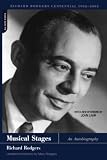 Richard Rodgers, Mary Rodgers
Musical Stages: An Autobiography
Da Capo Press
Paperback: 384 pages
(In his autobiography the composer himself tells anecdotes about “Lover.”)
|
|
|
|
See the Reading and Research page for this tune for additional references. |
|
- Sandra Burlingame
|
|
| This section suggests definitive or otherwise significant recordings that will help jazz students get acquainted with
“Lover.” These recordings have been selected from the Jazz History and
CD Recommendations sections.
|
At this point, “Lover” is most commonly played at a burning tempo, thanks in large part to Gene Krupa’s spirited reading of an Eddie Finckel arrangement for his band (20th Century Drum Master). Many beboppers and post-beboppers have used the song to flex their chops, an approach epitomized by John Coltrane’s recording featuring Donald Byrd (John Coltrane and the Jazz GIants). To hear the song as a vocal number and at a more relaxed tempo, Ella Fitzgerald’s “Songbook” recording (Sings the Rodgers and Hart Song Book) is an excellent place to start.
Noah Baerman - Jazz Pianist and Educator
|
Despite the fact that Hart himself never experienced romance and yearned for love, his lyrics capture the thrill and the intensity of love and desire. His lyrics for “Lover” have an almost breathless quality that matches the urgency of the melody:
Lover, when I’m near you
And I hear you speak my name
Softly in my ear you breathe a flame.
Sandra Burlingame
Musical analysis of “Lover” | | Original Key | C major; false key changes to E major and G major during “B” | | Form | A1 - A2 - B - A3 | | Tonality | Major throughout | | Movement | “A” is strongly chromatic downward; “B” moves stepwise back and forth between neighboring pitches. | Comments (assumed background) | | This is a fun and challenging tune for the improviser, as it goes through nearly every key. The original chord progression is straightforward, descending chromatically with the melody during “A.” But modern players often insert a “minor v substitution” between one chord and its lower chromatic neighbor. For example: ORIGINAL: C - C - B(sus4) - B7 - Bb(sus4) - Bb7 - A (etc.) MODERN: C - C - F#m7 - B7 - Fm7 - Bb7 -Em7 - A (etc.) Another aspect of this tune which has changed since its creation is the style in which it is played. Rodgers originally wrote this as a “Viennese waltz,” but most jazz players today perform this in 4/4 at a breakneck tempo. | | K. J. McElrath - Musicologist for JazzStandards.com |
|
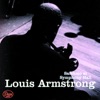
Composer Richard Rodgers must have raised an eyebrow upon hearing his sedate waltz turned into an up-tempo romp by Gene Krupa’s big band. Their 1945 recording showcases Krupa’s stickmanship and wild man of the tenor sax Charlie Ventura. Ex-Krupa sideman trumpeter Roy Eldridge was part of a splendid jam group assembled for a WNEW radio broadcast in May 1947. Their highly-charged version of “Lover” not only features “Little Jazz” on trumpet but includes some marvelous tenor saxophone by Flip Phillips By 1947 trombonist/vocalist Jack Teagarden had given up his none-too-successful big band and joined trumpeter/vocalist Louis Armstrong’s All-Stars. It was a generally happy association that lasted for four years. Jack’s solo feature with Louis was “Lover,” and a live recording from Boston’s Symphony Hall is a corker, aided by the ebullient drumming of Sid Catlett.
Chris Tyle - Jazz Musician and Historian
|
Additional information for "Lover" may be found in:
|
|
|
Richard Rodgers, Mary Rodgers
Musical Stages: An Autobiography
Da Capo Press
Paperback: 384 pages
(1 paragraph including the following types of information: anecdotal.)
|
|
|
|
|
|
|
|
Comment Policy
- Your comments are welcome, including why you like
this tune, any musical challenges it presents, or additional background information.
- Jazz musicians, fans, and students of all ages use this website as an educational resource.
As such, off-topic, off-color, unduly negative, and patently promotional comments will be removed.
- Once submitted, all comments become property of JazzStandards.com.
By posting, you give JazzStandards.com permission to republish or otherwise distribute your comments in any format or other medium.
JazzStandards.com reserves the right to edit or remove any comments at its sole discretion.
|
|
| Click on any CD for more details at Amazon.com |
 Erroll Garner
Long Ago and Far Away
Sony
Original recording 1950
|
|
Garner’s and his trio are tight and swinging here and provide us with an inventive, lightly swinging arrangement of “Lover.”
|
 Art Tatum
The Complete Capitol Recordings
Blue Note Records
|
|
By 1952 Art Tatum had cut several recordings “Lover” at a medium tempo, albeit with some double-time runs. Here he cranks the tempo way up with his trio and burns throughout. Bassist Slam Stewart gets in an appealing sung/bowed solo before Tatum’s blazing solo.
|
 Ella Fitzgerald
Sings the Rodgers and Hart Song Book
Polygram Records
Original recording 1956
|
|
In the context of Buddy Bregman’s lush, somewhat syrupy mid-tempo arrangement, Ella treats us to a wonderfully relaxed and swinging, interpretation of “Lover.”
|
 John Coltrane
John Coltrane and the Jazz Giants
Fantasy
Original recording 1958
|
|
This recording really burns. The rhythm section of Red Garland, Paul Chambers and Louis Hayes keeps things fiery yet steady at a lightning-fast tempo, while Coltrane trumpeter Donald Byrd solo ferociously.
|
 Art Blakey
Drums Around the Corner
Blue Note Records
Original recording 1958
|
|
Got drums? This up-tempo recording certainly does as soloists Lee Morgan and Bobby Timmons give way to Blakey’s amped-up “drum section,” also featuring “Philly” Joe Jones, Roy Haynes and Ray Barretto.
|
|
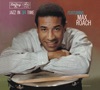
 Max Roach
Jazz in 3/4Time
2005 Verve 202102
Original recording 1957
|
|
Drummer Max Roach does a splendid job of overseeing this mid-tempo waltz as he settles back to allow saxophonist Sonny Rollins and trumpeter Kenny Dorham the spotlight in which to burn brightly.
|
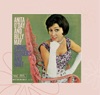
 Anita O'Day/Billy May
Swing Rodgers and Hart
2004 Verve 314235302
Original recording 1960
|
|
Anita O’Day has found in Billy May the perfect arranger to complement her power. In this rendition the orchestra quickens the tempo, attempting to match the ferocity at which O’Day tackles the lyrics.
|
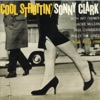
 Sonny Clark
Cool Struttin'
1999 Blue Note 95327
Original recording 1958
|
|
Not included on the original vinyl offering, the song is a welcome addition to the reissue. The rhythm section has fun here, switching up signatures from hard bop to waltz while trumpeter Art Farmer and saxophonist Jackie MacLean take pithy solos.
|
 George Van Eps
Soliloquy
2002 Euphoria Records
Original recording 1969
|
|
This is the 7-string guitarist’s first solo album, and it is stunning. Although “Lover” is the shortest cut on the CD, Van Eps makes the song sit up and be noticed.
|
 Tommy Flanagan
Solo Piano
2005 Storyville Records
Original recording date 1974
|
|
Elegant is the most appropriate word to describe Flanagan’s playing. His touch is remarkably light as he flies over the keys and brings “Lover” to life.
|
|
|
|