|
|
|
| “...well-written melody, highly unusual for the time, and certainly not a piece of hack work.” |
|
 |
|
- Alec Wilder
|
|
| |
This song was likely introduced by vaudeville performer Jack O’Leary, known as “That Singer,” who is pictured on the original sheet music. A 1915 recording by vaudeville stage actor/vocalist Walter Van Brunt became a popular hit. The song has charted several times over the years:
- Walter Van Brunt (1915, vocal, #9)
- Gene Austin (1928, vocal, #3)
- Al Bowlly (1935, vocal, #20)
- Teddy Wilson and His Orchestra (1936, Ella Fitzgerald, vocal, #6)
- Bing Crosby (1939, vocal, #14)
- Sam Donohue and His Orchestra (1947, #5)
|
|
| |
|
| |
|
The original title for “My Melancholy Baby” was “Melancholy.” It was copyrighted in 1911 with music by Ernie Burnett and lyrics by Maybelle Watson, Burnett’s wife. Burnett sold the piece to Theron C. Bennett, music publishers who liked the song but not the lyrics. George A. Norton, a composer and lyricist, wrote new lyrics, and the song was published in 1912 with a dedication to “Miss Maybelle Watson of Berkeley, California.” That same year, the copyright was transferred to Joe Morris Music using the title “My Melancholy Baby.” During the 1930s, Miss Watson’s name found its way onto the music as co-lyricist, but the ASCAP website now lists only Burnett and Norton.
To add even more intrigue, Ben Light, a pianist who recorded a number of successful albums in the 1950s, claimed he had written the music, although he would have been a teenager in 1911. Composer Burnett wrote a follow-up in 1938 entitled “I Married My Melancholy Baby.”
|
| |
| |
|
| |
|
|
| |
| |
|
| |
|
Alec Wilder, author of American Popular Song: The Great Innovators 1900-1950, expresses how impressed he was with the “well-written melody, highly unusual for the time, and certainly not a piece of hack work.”
Vocalist/composer Tommy Lyman, a cabaret and radio artist of the 1920s and ‘30s, is credited with first using the term “torch song” when introducing his version of “My Melancholy Baby.” The tune had a brisk comeback in 1927 with a hit recording by vocalist Gene Austin and recordings by groups such as Paul Whiteman and His Orchestra, the Charleston Chasers, the Dorsey Brothers’ Orchestra, and clarinetist Jimmie Noone.
Bandleader Isham Jones brought the tune back in 1934, and English vocalist Al Bowlly had success on both sides of the Atlantic with his version from 1935. Since that time the tune has been recorded by a significant number of artists from Steve Allen to Ray Charles, Bill Evans to Burl Ives, and Thelonious Monk to Jerry Vale.
|
|
|
|
| This section suggests definitive or otherwise significant recordings that will help jazz students get acquainted with
“My Melancholy Baby.” These recordings have been selected from the Jazz History and
CD Recommendations sections.
|
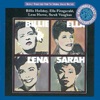
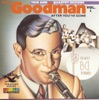
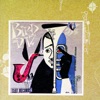
Pianist Teddy Wilson is at the center of two of the classic swing-era renditions of “My Melancholy Baby” from 1936. As a member of Benny Goodman’s quartet, he and vibraphonist Lionel Hampton play remarkable solos (Original Benny Goodman Trio and Quartet Sessions, Vol. 1: After You’ve Gone), while a session under Wilson’s own name (Billie, Ella, Lena, Sarah) revolves around the lighthearted, swinging vocals of a young Ella Fitzgerald. Among more modern versions, Charlie Parker and Dizzy Gillespie came up with perhaps the definitive interpretation in 1950 (Bird and Diz) with a rhythm section featuring Thelonious Monk.
Noah Baerman - Jazz Pianist and Educator
|
George Norton’s lyrics to the verse are a plea to discover why one’s love is blue. The chorus is a reassurance that “all your fears are foolish fancies” and “every cloud must have its silver lining.” Chris Tyle
Musical analysis of “My Melancholy Baby” | | Original Key | Eb major | | Form | A - B - A - C | | Tonality | Primarily major | | Movement | fairly balanced between ascending and descending motion; combination of stepwise motion with periodic leaps of a fourth or fifth; several instances of chromatic movement | Comments (assumed background) | | For all its lyrical qualities and nostalgic charm, this can be a challenging melody. The range is a full 10th, with several wide and unusual intervals (including a tri-tone), along with chromatic passing and embellishing tones. Harmonically the progression is not unusual; all cadences resolve in expected ways according to dominant-tonic relationships. “C” consists of the IV - #IV(ct°7) - I followed by the VI - II - V turnaround ending (“I Can’t Give You Anything But Love,” section “C”). | | K. J. McElrath - Musicologist for JazzStandards.com |
|
Despite the stereotype of the intoxicated customer requesting this tune, it actually has been a favorite among musicians and has been recorded by performers as diverse as Sidney Bechet and Sonny Rollins. A rollicking version by the Dorsey Brothers Orchestra from 1928 features Tommy on trombone and trumpet, Jimmy on clarinet and alto, and the master of the bass saxophone, Adrian Rollini. Ella Fitzgerald made her first guest appearance on a session from 1936 under the leadership of pianist Teddy Wilson, who recorded the tune a few months later with the Benny Goodman Quartet. Pianists Herman Chittison and Earl Hines recorded marvelous solo versions of the tune in 1938 and 1941, respectively. Trumpeter Dizzy Gillespie might seem to some to be out of his element in a session with Chicago-style clarinetist Joe Marsala from 1945, but definitely more at home with alto saxophonist Charlie Parker in a version from 1950.
Chris Tyle - Jazz Musician and Historian
 Charlie Parker
Bird & Diz
1997 Verve 521436
Original recording 1950
|
|
|
|
|
Additional information for "My Melancholy Baby" may be found in:
|
|
|
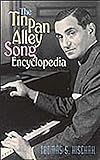 Thomas S. Hischak
The Tin Pan Alley Song Encyclopedia
Greenwood Press
Hardcover: 552 pages
(1 paragraph including the following types of information: film productions, history, performers and style discussion.)
|
|
|
|
|
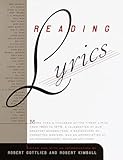 Robert Gottlieb, Robert Kimball
Reading Lyrics
Pantheon
Hardcover: 736 pages
(Includes the following types of information: song lyrics.)
|
|
|
|
|
|
|
|
Comment Policy
- Your comments are welcome, including why you like
this tune, any musical challenges it presents, or additional background information.
- Jazz musicians, fans, and students of all ages use this website as an educational resource.
As such, off-topic, off-color, unduly negative, and patently promotional comments will be removed.
- Once submitted, all comments become property of JazzStandards.com.
By posting, you give JazzStandards.com permission to republish or otherwise distribute your comments in any format or other medium.
JazzStandards.com reserves the right to edit or remove any comments at its sole discretion.
|
|
| Click on any CD for more details at Amazon.com |
 Jimmie Lunceford
Life is Fine (Quadromania)
Quadromania
Original Recording 1938
|
|
Vocalist Dan Grissom takes center stage on this classic Lunceford arrangement, but the real star is arranger by Edwin Wilcox, whose sophisticated arrangement culminates in a fabulous saxophone soli
|
 Ray Charles
The Great Ray Charles
Warner Music France
Original recording 1956
|
|
Though best known for his singing, Ray Charles’ offers an instrumental performance here, contributing a swinging solo on piano as well as co-arranging with Quincy Jones. Saxophonist David “Fathead” Newman is prominently featured as well.
|
 Coleman Hawkins
Genius of Coleman Hawkins
Polygram Records
Original recording 1957
|
|
This performance builds steam over time thanks to the swinging rhythm section playing of Oscar Peterson’s quartet. Hawkins himself contributes an inventive, husky-toned solo on tenor saxophone.
|
 Lee Konitz, Bill Evans
Live at the Half Note
Polygram Records
Original recording 1959
|
|
Recorded live at the Half Note in New York, alto saxophonist Konitz and his all-star band swing like mad on this crackling performance. Drummer Paul Motian is heard at his most swinging, and there are powerhouse solos by Konitz, tenor saxophonist Warne Marsh and pianist Bill Evans
|
 Dave Mckenna
Dave Fingers Mckenna
Chiaroscuro Records
Original recording 1977
|
|
Dave McKenna treats “My Melancholy Baby” to one of his characteristic solo piano arrangements, moving from slow, relaxed stride to remarkably swinging walking bass lines with his left hand.
|
|
 Dave Brubeck Quartet/Jimmy Rushing
Brubeck & Rushing
1998 Legacy Recordings 65727
Original recording 1960
|
|
Pianist Brubeck conjures up a pleasant study in contrasts as he introduces the husky, blues-infused voice of Jimmy Rushing to the honey rich tone of Paul Desmond’s alto saxophone.
|
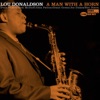
 Lou Donaldson
A Man with a Horn
1999 Blue Note 21436
Original recording 1961
|
|
Saxophonist Donaldson swings through a toe-tapping version of the song that is augmented by the prodigious talents of Grant Green on guitar and Jack McDuff at the organ.
|
 Rebecca Kilgore, Dave Frishberg
Not a Care in the World
Arbors Records
|
|
Kilgore’s voice is pure, rich, and smooth as cream. She prefers the old songs, and she sings them here with composer/pianist/vocalist extraordinaire Dave Frishberg who sticks to the keys on this date. Kilgore picks up her guitar for additional accompaniment on this cut.
|
|
|
|