|
|
|
The publisher of the Yiddish song on which “Nature Boy” was based sued and settled out of court. |
|
 |
|
- Sandra Burlingame
|
|
| |
Nat “King” Cole introduced this unusual tune, based on a Yiddish song “Schwieg Mein Hertz” (Be Still My Heart), in 1948, when it leaped to number one in the charts for 18 weeks:
|
|
| |
|
| |
|
The composer of “Nature Boy,” eden ahbez (no capitals per his request), was born Alexander Aberle in Brooklyn in 1908. The original sheet music of the song shows a photo of ahbez-long hair and beard, an almost Christ-like figure, highly unusual for the 1940s. In some respects, ahbez was the prototypical hippie twenty years ahead of his time, for in addition to his appearance he lived a simple life, wore a robe and sandals, was a vegetarian, and even was reputed to be living with his wife under the “L” letter of the famous “HOLLYWOOD” sign.
|
| |
| |
|
| |
|
Early in his life Aberle and his 12 siblings were orphaned, some sent to a foster home in Kansas. Alexander didn’t stay long and embarked on a wandering life, eventually ending up in Los Angeles. In 1947 he left a tattered manuscript of his composition “Nature Boy” backstage at a Nat “King” Cole performance. Cole liked the tune and subsequently recorded it for Capitol. The label’s executives, however, didn’t know what to think about it and held off releasing the record. Yet Cole believed in the song and its simple message, and live performances proved the song’s appeal to the public. Eventually the Capitol hierarchy released Cole’s recording and the rest is history, as it’s said.
Many in the music biz refer to people like eden as a “one hit wonder,” and, even though he did write a few more songs and recorded an album in the early 1960s, none of his compositions drew much attention. He continued to live in his simple way and died, in 1995 at age 86, after being struck by a car.
His unusual story and life still capture the public’s fancy, and a television special filmed in 2000 dealt with “Nature Boy” and eden’s experience with Nat “King” Cole.
|
|
|
|
”Nature Boy” is a musical self-portrait of eben, a “strange, enchanted boy, who traveled far...over land and sea, but very wise, was he.” Yet the song’s most important message is “just to love and be loved in return.” Chris Tyle
Musical analysis of “Nature Boy” | | Original Key | E minor | | Form | A - B1 - A - B2 | | Tonality | Minor throughout | | Movement | Following initial octave leap upwards, primarily arpeggiated, outlining the “chord of the moment” in both directions. Some descending chromaticism. | Comments (assumed background) | | Although the chord progression is fairly straight-forward (i - iv - i with II7 - V7 turnarounds), the performer should be aware of the numerous altered tones, especially the descending chromatic movement in mm. 5-8 and 21-24 and the altered pitches (b9 of II7, chromatic passing tone and #5 of V7) in mm. 13 and 29-30. | | K. J. McElrath - Musicologist for JazzStandards.com |
|
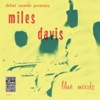
Two jazz violinists feature preeminently in the recorded history of this tune. First, the “Swinging Viking,” Danish violinist Svend Asmussen, made a version in 1948, followed in 1949 by French violinist Stephane Grappelli. Grappelli’s rendition, a reunion with guitarist Django Reinhardt, is extremely moving, and this session proved to be their last together. Fast forward to 1955 and a session with the Miles Davis Quintet featuring heavy-hitters Charlie Mingus on bass and Elvin Jones on drums (who would record the tune with John Coltrane ten years later). Davis’ piano-less group, with Teddy Charles on vibes, is the prototypical cool jazz version and features a sterling solo by Mingus. And for something completely different, tenor saxophonist Ike Quebec’s treatment from 1961 is a duo with the great bassist, Milt Hinton. Svend Asmussen: recording out-of-print
Chris Tyle - Jazz Musician and Historian
 Miles Davis
Blue Moods
1991 Original Jazz Classics 43
Original recording 1955
|
|
|
|
|
Additional information for "Nature Boy" may be found in:
|
|
|
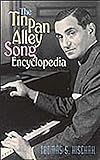 Thomas S. Hischak
The Tin Pan Alley Song Encyclopedia
Greenwood Press
Hardcover: 552 pages
(1 paragraph including the following types of information: film productions, history and performers.)
|
|
|
|
|
|
|
|
Comment Policy
- Your comments are welcome, including why you like
this tune, any musical challenges it presents, or additional background information.
- Jazz musicians, fans, and students of all ages use this website as an educational resource.
As such, off-topic, off-color, unduly negative, and patently promotional comments will be removed.
- Once submitted, all comments become property of JazzStandards.com.
By posting, you give JazzStandards.com permission to republish or otherwise distribute your comments in any format or other medium.
JazzStandards.com reserves the right to edit or remove any comments at its sole discretion.
|
|
| Click on any CD for more details at Amazon.com |
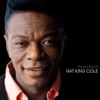
 Nat King Cole, Nat King Cole
The Very Best of Nat King Cole
Capitol
Original recording 1956
|
|
Though the lush orchestral accompaniment here marked a huge departure from Cole’s piano trio work, along the way he landed upon one of the most iconic pop hits of the era.
|
 John Coltrane Quartet
John Coltrane Quartet Plays
Verve
Original recording 1965
|
|
In their first session after recording the landmark A Love Supreme, Coltrane’s quartet exploits the minor modality and exoticism of “Nature Boy” with this intense and exploratory performance.
|
 Johnny Hartman
For Trane
Blue Note Records
Original recording 1972
|
|
Ostensibly a tribute to his former collaborator John Coltrane, this performance with a Japanese rhythm section treats “Nature Boy” to an infectious, hard-swinging interpretation bearing little resemblance to Coltrane’s version.
|
 Ella Fitzgerald with Joe Pass
Fitzgerald and Pass...Again
Ojc
Original recording 1976
|
|
Fitzgerald and Pass offer a tender and straightforward reading of “Nature Boy” as a duo ballad.
|
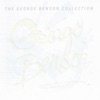
 George Benson
The George Benson Collection
Warner Bros UK
Original recording 1976
|
|
What do you get when you cross Nat “King” Cole and Stevie Wonder? Probably something like this soulful R&B interpretation by guitarist and vocalist Benson, which raised eyebrows of some jazz purists but also brought extra visibility to this song in 1976.
|
 Sun And His Arkestra Ra
Some Blues But Not The Kind That's Blue (1977)
ATAVISTIC
Original recording 1977
|
|
Pianist and bandleader Sun Ra manages to be simultaneously experimental and faithful in his frequently dissonant interpretation of “Nature Boy.” Tenor saxophonist John Gilmore adds a great deal of soul and creativity as well.
|
|
 Kurt Elling
The Messenger
1997 Blue Note 52727
Original recording 1997
|
|
Vocalist Elling kicks off the album with a wonderfully melancholic reading of the song, managing to play with both tempo and range without interfering with the sorrow-filled foundation of the song.
|
 Art Pepper
Straight Life
1990 Original Jazz Classics 475
Original recording 1979
|
|
Wistful, breathy playing from saxophonist Pepper and minimal play from his sidemen strip the song down to its barest bones. It is emotional to the point of heartbreaking beauty.
|
 Jacky Terrasson
Alive
1998 Blue Note Records 59651
|
|
Pianist Terrasson’s early trio with Ogonna Okegwo on bass and Leon Parker on drums was something to behold for its energy and creativity. They leave no stone unturned on their excursion through “Nature Boy.”
|
 Abbey Lincoln
A Turtle's Dream
1995 Polygram Records 527382
|
|
Vocalist Lincoln holds onto each word for its full measure of time, giving weight to the story of “Nature Boy.” Beautiful horn lines from trumpeter Roy Hargrove and saxophonist Julien Lourau complement the melody.
|
 Nnenna Freelon
Shaking Free
2003 Concord 1012
Original recording 1996
|
|
An unusually energetic, swinging version of the song is delivered by vocalist Freelon who keeps the tempo moving at a clip as the song threatens to slip into a rumba at times.
|
|
|
|