|
|
|
| Vocalist Mildred Bailey, along with husband Red Norvo’s Orchestra, recorded one the premier versions of this Willard Robison composition. |
|
 |
|
- Chris Tyle
|
|
| |
Willard Robison and Dedette Lee Hill’s plaintive song was introduced in 1938 by the orchestra of Larry Clinton, and it was one of the few occasions a song by Robison hit the charts:
Larry Clinton and His Orchestra (1938, Bea Wain, vocal, #4)
|
|
| |
|
| |
|
With the exception of “Old Folks” and “A Cottage for Sale,” Willard Robison’s compositional output is largely forgotten. Yet his tunes are charming and have been favorites of singers like Lee Wiley, Peggy Lee, and Mildred Bailey, and jazz artists like Jack Teagarden, who recorded a whole album of Robison material in 1962. It’s intriguing that “Old Folks” has become such a popular jazz ballad, clearly something its composer didn’t have in mind.
|
| |
| |
|
| |
|
|
| |
| |
|
| |
|
Robison’s background was rural Missouri, and all of his tunes deal with basic, folksy themes. He was heavily involved with radio and recording in the 1920s as a pianist, vocalist and bandleader. Although he recorded quite a number of his compositions, his twangy Missourian voice didn’t really find a niche with the public, and many of his tunes found better interpreters. (For example, Frank Sinatra’s version of “A Cottage for Sale” brings out the incredible sadness of the song.) Although Robison continued to compose into the 1950s, his nostalgic compositions rarely caught on with the public, who found solace in more upbeat “look for the silver lining” type of material. And because he never had a career writing for Broadway, he’s now barely mentioned in the histories of American song.
The lyrics for “Old Folks” were written by Dedette Lee Hill, the wife of composer Billy Hill, who was a folk-themed composer. (Hill composed a number of successful cowboy tunes such as “The Last Round-Up” and “Wagon Wheels.”) The cover of the sheet music shows a grandfatherly figure smoking a pipe, and, rather than being referred to as “grandpa,” he’s known as “Old Folks.” The lyrics paint a clear picture of the old fellow who “sits and whittles,” has his “napkin up under his chin” and “his yellow cob pipe.” In a melancholy twist, the last eight bars begin “someday there’ll be no more Old Folks.”
|
|
|
|
| This section suggests definitive or otherwise significant recordings that will help jazz students get acquainted with
“Old Folks.” These recordings have been selected from the Jazz History and
CD Recommendations sections.
|
Full-toned tenor saxophonist Don Byas’ gives us perhaps the first definitive version of “Old Folks,” courtesy of his 1946 recording (Don Byas 1946). A more modern classic performance was recorded fifteen years later by Miles Davis (Someday My Prince Will Come), who certainly had a knack for coming up with definitive interpretations of ballads. Among vocal renditions, Etta Jones 1963 recording (The Best of Etta Jones: The Prestige Singles) is a standout.
Noah Baerman - Jazz Pianist and Educator
|
Musical analysis of “Old Folks” | | Original Key | F major | | Form | A1 - A2 - B - A2 | | Tonality | Primarily major | | Movement | “A” is a downward moving motivic figure, repeated in two higher registers, followed by a rising and falling stepwise figure that repeats in successive lower registers. “B” is constructed in a similar fashion except that the melodic contour starts high and progresses to the lower register | Comments (assumed background) | | This piece has a folk-song quality about it, with a laid-back, “bluesy” melody and a harmonic progression reminiscent of “Aura Lee” and certain gospel songs. “A” is based on a I -V7/vi - vi - V7/IV - IV - iv - I sequence (in the original, F - A7 - Dm - F7 - Bb - Bbm - F), while “B” adds a I - vi - II7 - V7 turnaround to the last four chords in this sequence. | | K. J. McElrath - Musicologist for JazzStandards.com |
|
Vocalist Mildred Bailey, along with husband Red Norvo’s Orchestra, recorded one the premier versions of this Willard Robison composition. (Robison was a good friend of Bailey, who was a champion of his works.) Bailey’s brother, Al Rinker, was a member of the Rhythm Boys, the group that was the springboard for Bing Crosby, who recorded the tune with brother Bob’s swinging band in 1938. Another friend of Robison’s, Lee Wiley, waxed a version with Eddie Condon’s band in 1944.
The transitional swing-to-bop saxophonist Don Byas did what was probably the most influential recording of the tune in 1946 for indie jazz label Savoy.
Chris Tyle - Jazz Musician and Historian
|
|
|
|
Comment Policy
- Your comments are welcome, including why you like
this tune, any musical challenges it presents, or additional background information.
- Jazz musicians, fans, and students of all ages use this website as an educational resource.
As such, off-topic, off-color, unduly negative, and patently promotional comments will be removed.
- Once submitted, all comments become property of JazzStandards.com.
By posting, you give JazzStandards.com permission to republish or otherwise distribute your comments in any format or other medium.
JazzStandards.com reserves the right to edit or remove any comments at its sole discretion.
|
|
| Click on any CD for more details at Amazon.com |
 Wes Montgomery
Far Wes
Blue Note Records
Original Recording 1958
|
|
Guitarist Montgomery gives “Old Folks” a gentle ballad interpretation. His brothers Monk and Buddy (on bass and piano, respectively) hold down the fort and tenor saxophonist Harold Land takes a lyrical solo.
|
 Max Roach
Award-Winning Drummer
Time Records
Original Recording 1959
|
|
This piano-less quintet performance is taken at an assertive, swinging tempo and is a feature for the young trumpet virtuoso Booker Little.
|
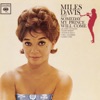
 Miles Davis
Someday My Prince Will Come
Sony
Original Recording 1961
|
|
This incarnation of the Miles Davis Quintet represents, to many, the pinnacle of highly refined hard bop. In addition to Davis’ own achingly lyrical melody statement, there are beautiful solos by saxophonist Hank Mobley and pianist Wynton Kelly.
|
 Etta Jones
The Best of Etta Jones: The Prestige Singles
Prestige
|
|
This sparsely-arranged performance puts the focus on James’ soulful, understated vocals. Guitarist Kenny Burrell shines in support of James and with a solo of his own.
|
 Pat Metheny with Dave Holland and Roy Haynes
Question & Answer (Remastered)
Nonesuch
|
|
A comparatively rare example of his playing on standards, guitarist Metheny gives a creative and highly interactive performance of “Old Folks” in a trio with Dave Holland and Roy Haynes.
|
|
Kenny Dorham
Quiet Kenny
2001Prestige Records 250
Original recording 1959
|
|
What a version and what an album! Dorham’s trumpet is concise and emotive, making the slow swing crackle with vitality without being flashy or insincere.
|
 Keith Jarrett
The Cure
2000 ECM Records 849650
Original recording 1990
|
|
This live recording contains a thoughtful and lyrical reading of “Old Folks” by pianist Jarrett. It’s uncharacteristically straight-ahead for the innovative pianist, yet it still shows flashes of invention.
|
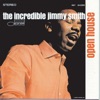
 Jimmy Smith
Open House/ Plain Talk
1992 Blue Note 84269
Original recording 1960
|
|
This solid, hard bop outing during a stellar jam session boasts organist Smith and tenor sax legend Ike Quebec, whose introspective playing stands out in an impressive cast that elsewhere on the album also includes trumpeter Blue Mitchell, and alto-saxophonist Jackie Mclean.
|
 Ernestine Anderson
Never Make Your Move Too Soon
1990 Concord 4147
Original Recording 1981
|
|
Vocalist Anderson captures the endearing quality of “Old Folks” in a somewhat unusual setting with Monty Alexander on Fender Rhodes instead of piano. The group, with Ray Brown on bass and Frank Gant on drums, treats the melody gently even as they explore its hidden qualities.
|
|
|
|