|
|
|
| Benny Goodman seems to have had a fondness for the number.... |
|
 |
|
- Chris Tyle
|
|
| |
This heartrending song, written about the main character from Pucinni’s Madame Butterfly, was introduced by Haru Onuki in The Big Show, which opened at the Hippodrome Theater in New York on August 13, 1916, closing in September, 1917, after 425 performances. The song charted several times the following year and was revived in 1954:
- Victor Military Band (1917, #1)
- Prince’s Orchestra (1917, #3)
- Charles Harrison (1917, vocal, #5)
- Grace Kerns (1917, vocal, #7)
- Fritz Kreisler (1917, #9)
- Hilltoppers (1954, vocal, #12)
|
|
| |
|
| |
|
Lyricist John L. Golden, in his 1930 autobiography Stagestruck, recalled the collaboration with Raymond Hubbell on the writing of “Poor Butterfly” during the summer of 1916. Trying desperately to find a cool place in the Hippodrome Theater to work, the two descended to the elephant pens in the basement, where a pen was cleaned up and a small piano installed. Hubbell, a violinist, began playing a melody for Golden, who had been asked by producer Charles Dillingham to come up with a “Japanese-style” number relating to Madame Butterfly. Soon Golden, despite the nearby proximity of the elephants and the associated aroma, had created a lyric telling the sad tale of Butterfly waiting for her American lover to return to Japan.
|
| |
| |
|
| |
|
|
| |
| |
|
| |
|
Although a Japanese American actress/vocalist, Haru Onuki, introduced the song, she was replaced soon after the opening by soprano Sophie Bernard. The number’s popularity, however, came from early performances and recordings by artists such as vocalist Edna Brown, the Joseph C. Smith Orchestra, and especially the Victor Military Band. The song was so popular that over two million copies of the sheet music were sold, and it was played and sung by almost every musical artist of the day. The tune’s huge popularity waned, but it was performed and recorded over the decades. A 1954 hit record by the vocal group the Hilltoppers bought a new lease on life for the number, resulting in a number of vocal recordings by artists such as Sarah Vaughan and Frank Sinatra, and instrumental recordings by a number of musical groups.
Pianist Zez Confrey, a popular solo artist and bandleader famous for his piece “Kitten on the Keys,” wrote a piano solo in 1921 entitled “Poor Buttermilk,” poking fun at “Poor Butterfly.”
Golden’s lyric for the verse set the stage for the song in a garden in Japan where a young maiden met an American sailor “’neath the cherry blossoms.” He taught her how to love “the ‘Merican Way” but left, “promising to return some day.” The chorus then finds her waiting underneath the cherry blossoms as the “moments pass into hours,” the hours to years, yet she “smiles through her tears,” hoping for his return.
|
|
|
|
| This section suggests definitive or otherwise significant recordings that will help jazz students get acquainted with
“Poor Butterfly.” These recordings have been selected from the Jazz History and
CD Recommendations sections.
|
The early jazz roots of “Poor Butterfly” are perhaps best displayed on Red Nichols’ 1928 recording (Red Nichols), mixing ballad and up-tempo grooves. Benny Goodman’s important 1940 recording (The Benny Goodman Sextet Featuring Charlie Christian: 1939-1941) is at a medium-slow swing tempo and also features excellent solos by guitarist Charlie Christian, vibraphonist Lionel Hampton and pianist Johnny Guarnieri. Sarah Vaughan was arguably the definitive jazz vocal interpreter of the song, and her 1961 ballad recording (Soft & Sassy) is particularly strong, thanks to her vocals and a trio led by pianist Sir Roland Hanna.
Noah Baerman - Jazz Pianist and Educator
|
Musical analysis of “Poor Butterfly” | | Original Key | Ab major | | Form | A - B - A - C | | Tonality | Primarily major | | Movement | A great deal of chromatic and whole-step, scale-wise motion, punctuated by dramatic leaps of a sixth and more in both directions. The third degree of the scale is often preceded by a chromatic lower neighbor. | Comments (assumed background) | | This song is typical of the sub-genre of sentimental, “pseudo-Oriental” ballads popular between 1910 and ca. 1925. Wide interval leaps over augmented fifth chords add emotion and melodrama, perfectly complimenting the dated lyrics (which would probably be offensive to people of Asian descent today). The melodic line is, however, quite lyrical and lends itself readily to extended harmonies and chord substitutions (several are already “built-in” to the melody, such as the ninth in measure 3 of “A” and the augmented fifth of a V7/VI chord, enabling the insertion of an embellishing IV chord prior to the V7(+5). | | K. J. McElrath - Musicologist for JazzStandards.com |
|
William Grant Still, who now is getting a great deal of well-deserved recognition as a pioneering African-American orchestral composer, arranged Red Nichols’ 1928 version of this tune, which includes some nice solos by Nichols (cornet), Dudley Fosdick (mellophone), and Fud Livingston (clarinet).
Ten years later, another cornetist, Bobby Hackett, recorded a lyrical version of the tune with a small band that included Pee Wee Russell on clarinet and Brad Gowans on valve trombone.
Benny Goodman seems to have had a fondness for the number, recording it in 1935 with his first big band, then again in 1940 with his sextet (which included Lionel Hampton on vibes and Charlie Christian on electric guitar), and almost a dozen times more.
Chris Tyle - Jazz Musician and Historian
|
Additional information for "Poor Butterfly" may be found in:
|
|
|
 Thomas S. Hischak
The Tin Pan Alley Song Encyclopedia
Greenwood Press
Hardcover: 552 pages
(1 paragraph including the following types of information: film productions, history and performers.)
|
|
|
|
|
|
|
|
Comment Policy
- Your comments are welcome, including why you like
this tune, any musical challenges it presents, or additional background information.
- Jazz musicians, fans, and students of all ages use this website as an educational resource.
As such, off-topic, off-color, unduly negative, and patently promotional comments will be removed.
- Once submitted, all comments become property of JazzStandards.com.
By posting, you give JazzStandards.com permission to republish or otherwise distribute your comments in any format or other medium.
JazzStandards.com reserves the right to edit or remove any comments at its sole discretion.
|
|
| Click on any CD for more details at Amazon.com |
 Art Tatum
V-Discs-Remastered
Original Recording 1945
|
|
This solo piano interpretation of “Poor Butterfly” is rhythmically relaxed, while containing the harmonica ingenuity that was one of Tatum’s hallmarks.
|
 Erroll Garner
The Essence of Erroll Garner
Sony
Original Recording 1950
|
|
This tight, slyly swinging trio performance has a nice mix of flowing single-note melodic work by pianist Garner and his signature block chords.
|
 Cannonball Adderley
Cannonball Takes Charge
Blue Note Records
Original Recording 1959
|
|
This quartet recording begins with a relaxed, swinging groove before digging in for some characteristic hard-swinging intensity from alto saxophonist Adderley. Pianist Wynton Kelly swings hard on a solo of his own, as well as offering some brilliant comping alongside Percy and “Tootie” Heath.
|
 Count Basie, Oscar Peterson
Yessir Thats My Baby
Pablo
Original Recording 1978
|
|
Pianists Oscar Peterson, known for his stunning technique, and Count Basie, known for his elegant sparseness, meld flawlessly on this relaxed and extremely swinging quartet recording.
|
|
 Sonny Rollins
Vol. 2
1999 Blue Note 97809
Original recording 1957
|
|
Rollins is at his most sentimental on this robust, blues-tinged interpretation of the song. An all-star squad joins the saxophonist with trombonist J.J. Johnson almost stealing the show from the leader on this one.
|
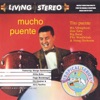
 Tito Puente
Mucho Puente
2004 Sony BMG Music Norte 13616
Original recording 1957
|
|
A light, airy version of the song is populated by plucked strings and gentle percussion. 50’s lounge music at its coolest.
|
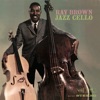
 Ray Brown
Jazz Cello
2003 Verve 440065295
Original recording 1960
|
|
Bass player Ray Brown picks up the cello for this outing, proving his virtuosity on an instrument too seldom heard in jazz. He swings “Poor Butterfly” with style in an arrangement punctuated by razor sharp horns.
|
 Sarah Vaughan
Soft & Sassy
1994 Hindsight Records 601
Original Recording 1961
|
|
The “Divine One” sings the verse for this song which lends special charm to the lyrics. Sarah shines in this trio setting throughout the disc.
|
|
|
|