|
|
|
| Ellington later utilized the chord changes for his 1940 composition, “In a Mellotone.” |
|
 |
|
- Chris Tyle
|
|
| |
West Coast bandleader Art Hickman introduced his composition in an instrumental version in 1917 while performing in the Rose Room at the St. Francis Hotel in San Francisco. In 1919 Columbia Records brought the band to New York to record, and they waxed “Rose Room” in a marathon session that September. The next year their recording was a bestseller for Columbia Records:
- Art Hickman and His Orchestra (1920, #5)
- Duke Ellington and His Orchestra (1932, #15)
|
|
| |
|
| |
|
The first recording of “Rose Room” was made by Joseph C. Smith’s Orchestra for Victor Records in June, 1918. The group had a residency at the Plaza Hotel in New York and a successful recording career from 1917-1922. Their version of the number utilizes an arrangement similar to that of Hickman’s recording the following year, which might indicate that Hickman arranged the tune for publication as an orchestra “stock” which could be purchased at any music store. Yet Hickman’s recording undoubtedly scored higher with the public due to the prominently featured saxophone and Hickman’s snappy, ragtime piano solo.
|
| |
| |
|
| |
|
|
| |
| |
|
| |
|
It wasn’t until 1928 that a vocal version of the tune was recorded for Columbia Records. Although the band name on the label reads as the Garden Dancing Palace Orchestra, collectors and historians feel it is a Seattle-based group led by trombonist Jackie Souders. Souder’s orchestra was a popular Northwest group with a residency in the mid-1920s at Seattle’s Olympic Hotel, and vocalists Bing Crosby and Al Rinker both worked with the band before heading to Los Angeles for fame and fortune with Paul Whiteman.
“Rose Room” was an unusual tune for its time when ragtime’s popularity was fading in favor of the 32-bar song and the 12-bar blues. Composer Alec Wilder, in his book American Popular Song: The Great Innovators, 1900-1950, calls it “a good, loose, natural song, definitely ahead of its time.” Wilder’s assessment is spot-on, as the tune’s heyday was during the swing era when the open melody and moving chord changes found favor with arrangers and improvisers alike.
Vocal recordings of “Rose Room” are few and far between, with good reason. The lyrics are very flowery, almost an early 20th period piece. No doubt the lyrics were tacked on by a worrisome publisher knowing that instrumental sheet music sold less than songs. The title is never even mentioned in the tune, and the lyrics’ sole purpose is to relate how wonderful it is to be in “sunny roseland,” where flowers sway and breezes blow.
|
|
|
|
| This section suggests definitive or otherwise significant recordings that will help jazz students get acquainted with
“Rose Room.” These recordings have been selected from the Jazz History and
CD Recommendations sections.
|
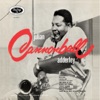
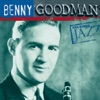
Duke Ellington’s 1932 recording of “Rose Room” (The Duke Ellington Anthology, Vol. 9: 1931-1932) is an early classic, featuring his sophisticated arranging and piano playing as well as the clarinet of Barney Bigard. Benny Goodman’s 1940 recording (Essential Benny Goodman) updates the song for the swing era and also features fine work by Lionel Hampton, Charlie Christian and Fletcher Henderson. Saxophonist Julian “Cannonball” Adderley’s swinging 1955 recording of a Quincy Jones arrangement (Julian Cannonball Adderley) updates the song once again and features solos by his brother Nat on cornet, Cecil Payne on baritone saxophone and Max Roach on drums.
Noah Baerman - Jazz Pianist and Educator
|
Musical analysis of “Rose Room” | | Original Key | G major | | Form | A - B1 - A - B2 | | Tonality | Predominantly major | | Movement | Wide intervals with ascending scale patterns; frequent chromatic passing tones and embellishments | Comments (assumed background) | | From a rhythmic and harmonic standpoint, this song is remarkably similar to a much later Ellington composition, “In a Mellotone”--rhythmically because of the alternation of sustained notes with active, moving passages and harmonically because of its initial V7/V and return via the cycle of fifths. The “B” section here differs from the Ellington tune only in that it uses minor chords in the spots where the other uses diminished chords. However, a comparison of the two shows that the same harmonic function serves in both cases. As this tune is actually from the ragtime era, one would not expect the kind of “hep” extended harmonies heard in the Ellington piece. Nevertheless, composer Art Hickman (“Father of the Modern Big Band,” whose orchestra was the first dance band known to use saxophones) does not back away from melodic tones landing on the ninth and, in two spots, the thirteenth-quite adventurous for the time. | | K. J. McElrath - Musicologist for JazzStandards.com |
|
Duke Ellington’s 1932 recording of this 1919 number seems to have been the catalyst bringing it back into popularity. Duke’s version is mostly a feature for exceptionally talented clarinetist Barney Bigard (from a musical New Orleans family), who would perform it regularly throughout his career. Ellington later utilized the chord changes for his 1940 composition, “In a Mellotone.”
Quite possibly the most interesting anecdote regarding the tune is that it served to bring the great electric guitarist, Charlie Christian, to the attention of clarinetist and bandleader Benny Goodman. Goodman’s brother-in-law, impresario John Hammond, snuck Christian onto the bandstand one night while Goodman’s Quartet was playing. Christian’s playing knocked Goodman out and he was hired, later recording his “audition” number.
Chris Tyle - Jazz Musician and Historian
|
Additional information for "Rose Room" may be found in:
|
|
|
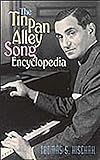 Thomas S. Hischak
The Tin Pan Alley Song Encyclopedia
Greenwood Press
Hardcover: 552 pages
(1 paragraph including the following types of information: film productions, history and performers.)
|
|
|
|
|
|
|
|
Comment Policy
- Your comments are welcome, including why you like
this tune, any musical challenges it presents, or additional background information.
- Jazz musicians, fans, and students of all ages use this website as an educational resource.
As such, off-topic, off-color, unduly negative, and patently promotional comments will be removed.
- Once submitted, all comments become property of JazzStandards.com.
By posting, you give JazzStandards.com permission to republish or otherwise distribute your comments in any format or other medium.
JazzStandards.com reserves the right to edit or remove any comments at its sole discretion.
|
|
| Click on any CD for more details at Amazon.com |
 Jimmie Lunceford
Sweet Rhythm
Membran/Cja
Original Recording 1934
|
|
Lunceford’s big band offers up a classic rendition of “Rose Room,” with pristine ensemble work and a relaxed swing feel. The real star here is Willie Smith, who contributes the great arrangement and orchestration.
|
 Django Reinhardt
1937
Classics
Original Recording 1937
|
|
Guitarist Reinhardt interprets the melody to “Rose Room” fabulously and takes a great solo, as does his cohort Stephane Grappelli on violin.
|
 Artie Shaw
King of the Clarinet 1938-39
Hindsight Records
Original Recording 1939
|
|
This performance by Shaw’s band is tight and swinging yet relaxed. Shaw’s arrangement is sophisticated, as is his work on clarinet.
|
 Sidney Bechet
Sidney Bechet 1941 1944
Classics
Original Recording 1941
|
|
Bechet offers some great soprano saxophone work on this appealing old-school performance. His “New Orleans Feetwarmers” include guitarist Everett Barksdale, pianist Willie “the Lion” Smith” and trumpeter Charlie Shavers, who recorded “Rose Room” on numerous occasions.
|
 Lester Young
Comp Lester Young Studio Session on Verve
Polygram Records
Original Recording 1954
|
|
This quintet performance has a flowing swing feel, and some extremely fluid and inventive tenor saxophone work by Young. The other solos here are by Jesse Drakes on trumpet and Gildo Mahones on piano, and these are very good as well.
|
|
 Cannonball Adderley
Julian Cannonball Adderley
2003 Verve 422830381
Original recording 1956
|
|
Quincy Jones arranged this sophisticated mid-tempo swing set which features saxophonist Adderley and his stellar horn section delivering some outstanding solos.
|
 Lennie Niehaus
Lennie Niehaus, Vol. 3: The Octet, Pt. 2
Original Jazz Classics 1767
Original recording 1955
|
|
Saxophonist Niehaus leads this splendid group through an arrangement that combines the big sound of a large group with the intimacy of a small one . It’s heavy on the brass with a dynamite rhythm section.
|
 Farlow/Jones/Norvo/...
On Stage
1999 Concord Jazz 4143
Original recording 1976
|
|
An engaging, buoyant reading of “Rose Room” marks this live set. The energetic and inventive interplay between Red Norvo on vibes and Tal Farlow on guitar is magical.
|
|
|
|