|
|
|
Trombonist Jack Teagarden is undoubtedly a big reason for the song’s jazz standard status, first with his 1930 recording with cornetist Red Nichols and again in 1939 with his own big band version. |
|
 |
|
- Chris Tyle
|
|
| |
“The Sheik” was introduced in late 1921 on a Victor record by the Club Royal Orchestra. The following year, their recording and Ray Miller’s landed in third place in the charts.
- Club Royal Orchestra (1922, #3)
- Ray Miller and His Orchestra (1922, #3)
- Jack Teagarden and His Orchestra (1939, #14)
- Spike Jones and His City Slickers (1943, #19)
- Super-Sonics (1953, #22)
|
|
| |
|
| |
|
Tin Pan Alley was ever vigilant to cash in on popular trends, whether it be automobiles, airplanes, radio or motion pictures. A 1921 film The Sheik, starring Rudolph Valentino, was perfect fodder, and on the heels of its release music publishers Waterson, Berlin and Snyder published “The Sheik of Araby,” sometimes known as just “The Sheik.”
Valentino’s movie appearance solidified his status as a screen icon, especially among women who were known to swoon during his film appearances. The Sheik was based on a 1919 romance novel by English writer Edith Maude Hull and relates the story of an English girl who is kidnapped and seduced by an Arab sheik. The girl eventually falls in love with him and they marry. She discovers in reality that he is a British aristocrat. Valentino starred in a follow-up, The Son of the Sheik, in 1926, prior to his untimely death.
|
| |
| |
|
| |
|
The Club Royal Orchestra was led by saxophonist Clyde Doerr, who had risen to fame through his work with Art Hickman’s Orchestra. The group performed at the Club Royal and substituted for Paul Whiteman at the Palais Royal in New York. Whiteman, who was a friend of Doerr’s from their days working in San Francisco, secured a contract for the saxophonist to record for Victor Records. Their first recording was “The Sheik.” Whiteman resented the record’s success and severed his ties with Doerr, although he continued to record with the Club Royal Orchestra for Victor and under his own name for Columbia. Eventually he severed his ties with the band and became involved with freelance recording and radio work.
|
| |
| |
|
| |
|
|
| |
| |
|
| |
|
Popular vocalist/actor Eddie Cantor performed “The Sheik” in a short-lived Broadway show, Make It Snappy. In true Tin Pan Alley fashion publishers came out with a number of offspring, including “She’s My Sheba, I’m Her Sheik” and another success for Cantor, “Lovin’ Sam, the Sheik of Alabam.”
Trombonist Jack Teagarden is undoubtedly a big reason for the song’s jazz standard status, first with his 1930 recording with cornetist Red Nichols and again in 1939 with his own big band version.
|
|
|
|
| This section suggests definitive or otherwise significant recordings that will help jazz students get acquainted with
“Sheik of Araby.” These recordings have been selected from the Jazz History and
CD Recommendations sections.
|
Perhaps the first great jazz recording of the “Sheik of Araby” is by trumpeter Red Nichols in 1930 (Red Nichols and His Five Pennies, 1926-1930), featuring excellent solos by clarinetist Benny Goodman and trombonist Jack Teagarden, who also contributes vocals. Tommy Dorsey’s 1938 recording with his “Clambake 7” (The Tommy Dorsey Centennial Album) is similar in spirit, though a bit more refined, while Goodman’s 1940 sextet recording (The Benny Goodman Sextet Featuring Charlie Christian: 1939-1941) modernizes the interpretation a bit, particularly through the soloing of Lionel Hampton and Charlie Christian.
Noah Baerman - Jazz Pianist and Educator
|
Composer Snyder cleverly wrote a minor, mysterious-sounding verse for the tune, leading into a major chorus. The lyrics of the verse describe the sheik riding over the desert “wild and free” with his “Arab band.” The chorus then tells of the seduction, “into your tent I’ll creep,” and claims that someday they’ll be together to rule the land as husband and wife. Chris Tyle
|
Musical analysis
of “Sheik of Araby”
|
|
Original Key |
Bb |
|
Form |
A
- B - A - C |
|
Tonality |
Major
throughout |
|
Movement |
Primarily
step-wise; a few skips of a third.
The largest interval is an ascending
fifth. |
|
Comments
(assumed
background)
|
|
Although usually played up tempo,
the melodic and harmonic rhythm
is fairly slow with many sustained
pitches and rarely more than one
chord change per measure. As such,
it is a favorite vehicle for improvisations,
especially for the novice. |
|
K. J. McElrath - Musicologist for JazzStandards.com |
|
Cornetist Red Nichols’ session from 1930 had future bandleaders Gene Krupa (drums), Benny Goodman (clarinet), Glenn Miller and Jack Teagarden (trombone) among the personnel. It’s a corker of a record, featuring a sizzling Goodman solo and bluesy sliphorn by Teagarden. Jack’s instructive vocal explains why the typically sappy vocal treatment of the period “is all out-of-date.” An interesting treatment from 1941 by New Orleans native Sidney Bechet is an early example of overdubbing, where Bechet plays clarinet, soprano and tenor sax, piano, bass and drums. Trombonist Benny Morton, a fine swing-era soloist who graced the bands of Fletcher Henderson, Count Basie, and Teddy Wilson, recorded “The Sheik of Araby” on his own date for Blue Note in 1945, featuring a blistering solo by ex-Ellington tenor saxist Ben Webster and fluid clarinet by another ex-Ellington bandsman, Barney Bigard.
Chris Tyle - Jazz Musician and Historian
 Ben Webster
Big Ben
Proper Box (UK) 1037
|
|
|
|
|
Additional information for "Sheik of Araby" may be found in:
|
|
|
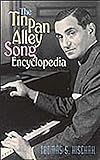 Thomas S. Hischak
The Tin Pan Alley Song Encyclopedia
Greenwood Press
Hardcover: 552 pages
(1 paragraph including the following types of information: film productions, history and performers.)
|
|
|
|
|
|
|
|
Comment Policy
- Your comments are welcome, including why you like
this tune, any musical challenges it presents, or additional background information.
- Jazz musicians, fans, and students of all ages use this website as an educational resource.
As such, off-topic, off-color, unduly negative, and patently promotional comments will be removed.
- Once submitted, all comments become property of JazzStandards.com.
By posting, you give JazzStandards.com permission to republish or otherwise distribute your comments in any format or other medium.
JazzStandards.com reserves the right to edit or remove any comments at its sole discretion.
|
|
| Click on any CD for more details at Amazon.com |
 Duke Ellington
Duke Ellington 1932-1933
Classics France/Trad Alive
Original recording 1932
|
|
This is a classic early example of Ellington arranging existing material, as he crafts a sophisticated and intricately textured performance for his Orchestra at a relaxed tempo. The whole band shines, though the spotlight is brightest on Lawrence Brown, who plays a creative and nimble solo on trombone. Johnny Hodges and Barney Bigard are prominently featured as well.
|
 Art Tatum
Classic Early Solos (1934-1937)
Verve
Original recording 1937
|
|
A young Tatum provides a harmonically rich solo piano performance here that belies both his age and the basic simplicity of the tune itself. His playing is fluid, effortless and features some stunningly fast stride playing in his left hand.
|
Tommy Dorsey & His Orchestra
The Tommy Dorsey Centennial Album
Sounds of Yesteryear
Original recording 1938
|
|
This upbeat Tommy Dorsey performance of “Sheik of Araby” is slickly arranged, yet manages to capture a strong sense of Dixie-esque urgency, in large part due to the spirited playing of his “Clambake 7.” .
|
 Coleman Hawkins
Body & Soul
RCA
|
|
This performance showcases some great, muscular playing by Hawkins on the tenor saxophone. Other featured soloists here include J.C. Higganbotham on trombone and Benny Carter, putting down his saxophone for a turn on trumpet.
|
 Benny Goodman
The Benny Goodman Sextet Featuring Charlie Christian: 1939-1941
Sony
Original recording 1940
|
|
This sextet performance has a couple different grooves and features some unusually raw clarinet by Goodman. Vibraphonist Lionel Hampton and guitarist Charlie Christian eventually take the spotlight, both contributing fabulous solos.
|
|
 Louis Cottrell Trio
Bourbon Street New Orleans The Living Legends
1994 Original Jazz Classics 1836
|
|
A delightful, easy-going version of the song features Cottrell playing a subtle, sophisticated clarinet over the light, mid-tempo strumming of guitarist Emmanuel Sayles.
|
 Oscar Peterson
This is Oscar Peterson
2002 RCA Bluebird 63990
Original recording 1952
|
|
Pianist Peterson substitutes aggression for elegance on this rousing swinger of a version heavy with bluesy barrel rolls and saloon bombast.
|
 Teddy Wilson Trio
Revisits the Goodman Years
2005 Storyville 8364
Original recording 1980
|
|
Wilson treats the listener to a wonderful version of the song that contains all the energy and technical pyrotechnics of a stride piano master having the time of his life.
|
 Billy May
Sorta May (Sorta Dixie)
1996 Creative World 1051
Original recording 1954
|
|
This is a spoof of the tune, presented in Dixieland style with Arabic overtones by the big band of the great arranger Billy May. His modernistic and quirky touches keep the music in this CD endlessly listenable.
|
|
|
|