|
|
|
| Although rarely a lyricist, Whiting agreed to write lyrics for “She’s Funny That Way,” the only time in his career he wrote words for another songwriter. |
|
 |
|
- Chris Tyle
|
|
| |
This composition of Charles N. Daniels (a.k.a. Neil Moret) and Richard Whiting was introduced by vocalist Gene Austin and released in early 1929 on a Victor recording. Two versions of the song made the charts that year:
- Gene Austin (1929, vocal, #3)
- Ted Lewis and His Orchestra (1929, vocal, #15)
|
|
| |
|
| |
|
Austin and Cliff “Ukulele Ike” Edwards were two of the most popular pre-Bing Crosby vocalists specializing in what was known as “crooning,” a soft manner of singing perfectly suited to the electrical condenser microphone, a new invention in the mid-1920s. Austin in particular had million-seller hits in 1925 (“Yes Sir, That’s My Baby”), in 1926 (“Five Foot Two, Eyes of Blue”), and a mega-hit from 1927 (“My Blue Heaven”). By recording “She’s Funny That Way” in 1928 the tune was almost assured to be a hit.
|
| |
| |
|
| |
|
|
| |
| |
|
| |
|
Songwriters Whiting and Daniels had rarely worked together, yet their association went back to when they were both employed by Remick publishing company’s Detroit office. A 1925 collaboration of the two, “Moon Deer,” with words by Whiting’s frequent lyricist Raymond Egan, was recorded by a few bands but basically faded.
Although Whiting was content in Detroit, his wife Eleanore knew he needed to be either in New York or Los Angeles where opportunities for his talents were greater. Reluctantly he relocated to New York where a chance meeting brought Daniels and Whiting together. Although rarely a lyricist, Whiting agreed to write lyrics for “She’s Funny That Way,” the only time in his career he wrote words for another songwriter.
In Max Wilk’s book They’re Playing Our Song, Richard Whiting’s daughter, vocalist Margaret Whiting, explained the circumstances surrounding her father’s lyrics for “She’s Funny That Way.” It seems that Remick wanted Whiting to move to Los Angeles to compose songs for Hollywood. Whiting wasn’t sure his wife would agree to move from Detroit to the coast, so he wrote the line “I’m only human, a coward at best, I’m more than certain, she’d follow me West,” as a plea to Eleanore. Margaret stated: “You can see that he didn’t think she was going to leave him, but he loved her so much and he was using that for a reason for writing the song.” The song did the trick and the family moved to California in 1929.
“She’s Funny That Way” was one of a run of hits for Charles Daniels. In 1927 the bands of Earl Burtnett and Art Landry scored highly with “Song of the Wanderer,” and Paul Whiteman’s 1928 recording of “Chloe-Song of the Swamp” also did well. The popular Midwest band, the Coon-Sanders Nighthawks, had triumphs with two of Daniels’ 1928 songs, “Ready for the River” and “Slue-foot.”
|
|
|
|
| This section suggests definitive or otherwise significant recordings that will help jazz students get acquainted with
“She's Funny That Way.” These recordings have been selected from the Jazz History and
CD Recommendations sections.
|
“She’s/He’s Funny That Way” is a song that is strongly associated with vocalist Billie Holiday and tenor saxophonist Lester Young. Probably the definitive version of the song is Holiday’s gently swinging 1937 recording alongside Young (A Musical Romance). Both of them subsequently recorded slower versions of the song, Young in 1946 as an instrumental (Complete Aladdin Recordings) and Holiday in 1952 (Ultimate Billie Holiday) on a wistful recording featuring Young disciple Paul Quinchette on saxophone and including the song’s verse.
Noah Baerman - Jazz Pianist and Educator
|
For rarely writing lyrics, Whiting did a fine job with “She’s Funny That Way.” The verse tells the story of a wealthy woman giving up her “silks and lace” and “Rolls Royce car” and questions “why she fell for me.” The chorus picks up the thread, that the fellow is “not much to look at, nothing to see,” and “she’d be better off without” him. Yet “she’d be unhappy without” him, despite all of his perceived shortcomings. Chris Tyle
Musical analysis of “She’s Funny That Way” | | Original Key | Eb major | | Form | A1 - B - A2 - A2 | | Tonality | Predominantly major | | Movement | Mostly stepwise; phrases in “A” alternate between two notes followed by an ascending, syncopated arpeggio, while “B” is an ascending scale followed by a descending arpeggio. | Comments (assumed background) | | Rhythmically and stylistically this piece seems to have been inspired by Kern’s “Can’t Help Lovin’ Dat Man O’ Mine,” and even the lyric seems to tell the same story from the man’s point of view. Harmonically, the basic chord progression and harmonic direction of “A” is a variation of that heard in “Smoke Rings,” with alternating I - V7(#5) sequences followed by a IV - iv - I turnaround. The use of the minor Ab (“iv”) chord in “B” might seem purely for embellishment but is actually inextricably tied to the altered tones in measure 2. Because of the D natural, the substitution of an altered Db chord would not work here. Although not notated in the original score, some surprisingly modern sounding harmonies occur in mm. 6-7 of “B,” where the melodic tones form the ninth and the eleventh of a C minor chord. This could be a point of departure for the advanced jazz performer wishing to experiment with harmonic extensions and chord substitutions. | | K. J. McElrath - Musicologist for JazzStandards.com |
|
Trombonist Tommy Dorsey had a strange, Jekyll/Hyde relationship to his instruments: he was an extremely hot, rough-edged trumpet player---the total opposite of his clean “Sentimental Gentleman” approach to the trombone. Early in his career, when co-leading the Dorsey Brothers Orchestra, he let loose with a trumpet solo here and there. He opens the Brothers’ 1928 recording of “She’s Funny That Way” on trumpet, and, in some respects, it’s the best part of the record. In 1933 the Brothers recorded the tune again, but with trumpeter Bunny Berigan leading the opening fireworks in a totally different arrangement.
Tenor saxophonist Bud Freeman and Jess Stacy, both working with Benny Goodman in 1939, recorded a stunning duet version of the tune for the indie label Commodore.
Chris Tyle - Jazz Musician and Historian
|
Additional information for "She's Funny That Way" may be found in:
|
|
|
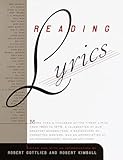 Robert Gottlieb, Robert Kimball
Reading Lyrics
Pantheon
Hardcover: 736 pages
(Includes the following types of information: song lyrics.)
|
|
|
|
|
|
|
|
Comment Policy
- Your comments are welcome, including why you like
this tune, any musical challenges it presents, or additional background information.
- Jazz musicians, fans, and students of all ages use this website as an educational resource.
As such, off-topic, off-color, unduly negative, and patently promotional comments will be removed.
- Once submitted, all comments become property of JazzStandards.com.
By posting, you give JazzStandards.com permission to republish or otherwise distribute your comments in any format or other medium.
JazzStandards.com reserves the right to edit or remove any comments at its sole discretion.
|
|
| Click on any CD for more details at Amazon.com |
 Billie Holiday, Lester Young
A Musical Romance
Sony
Original Recording 1937
|
|
This gently swinging ballad performance inverts “She’s Funny That Way” gender-wise (“He’s Funny That Way” instead) and revolves around the interactions between Holiday’s lighthearted vocals and the airy tenor saxophone of her important collaborator Lester Young. Buck Clayton gets an excellent trumpet solo in as well.
|
 Lester Young
Complete Aladdin Recordings
Blue Note Records
Original Recording 1946
|
|
Saxophonist Young re-examines “She’s Funny That Way” here with an emotionally intimate, breathy and significantly embellished interpretation of the melody. Also noteworthy is some nice comping by Joe Albany on piano.
|
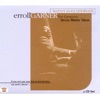
 Erroll Garner
Complete Savoy Master Takes
Savoy Jazz
Original Recording 1949
|
|
Pianist Garner takes this song at a ballad tempo, but is nonetheless very playful with his use of block chords, managing to be creative and playful while remaining faithful to the original melody.
|
 Billie Holiday
Ultimate Billie Holiday
Polygram Records
Original Recording 1952
|
|
This Holiday version is much slower and more wistful than her first and includes the song’s verse. The backing comes from an all-star band, with trumpeter Joe Newman and tenor saxophonist Paul Quinchette (nicknamed “Vice-Pres” for his devotion to Lester Young’s style) are featured.
|
 Count Basie, Oscar Peterson
Satch & Josh Again
Ojc
Original Recording 1974
|
|
Pianists Oscar Peterson and Count Basie engage in some wonderful interplay with one another and with bassist Ray Brown on this elegant ballad performance.
|
|
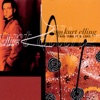
 Kurt Elling
This Time It's Love
1998 Blue Note 93543
Original recording 1998
|
|
Vocalist Elling delivers a sophisticated, melancholy reading of the song, a highlight of which is his vocalese run based on the Lester Young solo. The overall result is an unparalleled, hypnotic performance.
|
 Earl Hines/Joe Venuti
Hot Sonatas
1999 Chiaroscuro 145
Original recording 1975
|
|
In this fantastic session two veteran musicians inspire each other to dig deep. Pianist Hines and violinist Venuti put heart and soul into the song, adding a little grit to the elegance of the two instruments.
|
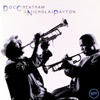
 Doc Cheatham/Nicholas Payton
Doc Cheatham & Nicholas Payton
1997 Verve 314537062
Original recording 1997
|
|
This wonderful collaboration is between the veteran trumpeter and his hot young protege. The real treat is the wistful vocals of Cheatham as he takes a turn crooning at the microphone.
|
 Bob Brookmeyer
Out of this World
1998 Koch Records 6913
|
|
Trombonist Brookmeyer is featured with the world class Metropole Orchestra out of Holland. The arrangement of “She’s Funny...” is lush with strings providing a perfect backdrop for the warmth of the trombone.
|
|
|
|