Composer Duke Ellington introduced his composition on a Victor recording date in January, 1934. Duke’s second recording of the tune from September, 1934, this time for Brunswick Records, hit the chart the following year:
The music to “Solitude” bears the names of Eddie DeLange and Irving Mills as lyricists. Mills was Ellington’s agent and naturally he cut himself in on anything “Ellingtonian” while he managed the Duke. DeLange was employed by Mills as a staff arranger and lyricist for Mills Music Publishing and by 1936 would be co-leader, along with Will Hudson, of the Hudson-DeLange Orchestra, managed by, of course, Irving Mills.
Another of Mills’ properties was the Blue Rhythm Band whose recording of “Solitude” hit the charts in 1935. The Blue Rhythm Band was a fine jazz ensemble that formed in 1931, and, although never quite as highly regarded as Ellington’s band, they did have some formidable jazz talent (trumpeters Henry “Red” Allen and Harry “Sweets” Edison and trombonist J.C. Higginbotham). But their recording of “Solitude” is pretty standard, mid-1930s dance music.
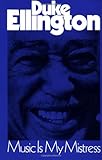
Duke Ellington’s autobiography, Music is My Mistress, relates the tale of how “Solitude” was created. “We had arrived in a Chicago recording studio [Victor Records]...with three numbers ready and a fourth needed. The band ahead of us went into overtime...so, standing up, leaning against the studio’s glass enclosure, I wrote the score of ’Solitude’ in 20 minutes.”
It’s interesting to note that the session which produced the first recording of “Solitude” was done over two days, December 9 and 10th, 1934. Duke’s band cut two masters on each day, highly unusual for that time when the norm was to cut three to four masters at a session. “Solitude” was recorded on the second day. In listening to the recording, it’s evident that it was a quickly yet cleverly assembled arrangement and could easily have been a basic “head” arrangement.
According to Ellington’s reminiscences, it was trumpeter Artie Whetsol who gave the tune its title. One of the soloists on the 1934 recording, trumpeter Cootie Williams, attested to the fact that it was totally an Ellington composition and not something “contributed” by another band member.
The number went on to be Duke’s most successful song at the time, both in record and sheet music sales.
More information on this tune...
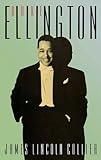
James Lincoln Collier
Duke Ellington Oxford University Press, USA
Hardcover: 352 pages
(Ellington biographer Collier analyzes the musical content of the song in his book.)
See the Reading and Research page for this tune for additional references.
This section suggests definitive or otherwise significant recordings that will help jazz students get acquainted with
“Solitude.” These recordings have been selected from the Jazz History and
CD Recommendations sections.
Not surprisingly, any list of definitive recordings of “Solitude” is dominated by Ellington himself. His original 1934 recording (Ken Burns Jazz) is unquestionably the place to start with this song, and of the numerous wonderful vocal performances, his own 1940 recording with vocalist Ivie Anderson (Duke Ellington and His Great Vocalists) is similarly definitive, as well as featuring some great tenor saxophone work by Ben Webster. Sonny Rollins, meanwhile, gives us a model for using the tune as a small-group ballad vehicle on his trio version from 1957 (Way Out West).
DeLange’s lyrics poignantly describe the anguish brought on by a broken love affair, “You haunt me, with reveries of days gone by,” and the loneliness of this solitude, “I sit in my chair, filled with despair.” Chris Tyle
Musical analysis of “Solitude”
Original Key
Db major
Form
A - A - B - A
Tonality
Primarily major
Movement
“A” - Upward by steps, leaps (down a sixth and up a fifth) followed by stepwise descent. “B” -intervallic downward motifs repeated in rhythmic variation
This ballad is reminiscent of a spiritual. A lyrical, almost folk-like melodic line is combined with a simple, straightforward harmonic progression. There are, however, two unusual elements about this song; it neither starts nor ends on the tonic, and there is a slight alteration in the chord progression the second time through “A”; the IV chord in measure 3 is replaced by a II7 the second time. A small change, this adds some interest to what can be a sluggish tune in the hands of an inexperienced performer.
K. J. McElrath - Musicologist for JazzStandards.com
Jazz History Notes
Although Duke Ellington first recorded his composition in 1934, it wasn’t until 1940 that he recorded a vocal version, featuring his marvelous singer Ivie Anderson. In the meantime a number of vocal versions had appeared, but Ivie’s was clearly the best.
A Billie Holiday session in 1940 found her in the company of trumpeter Roy Eldridge, whose superb obligati mesh seamlessly with her bluesy vocal approach to Ellington’s tune.
Alto saxophonist Johnny Hodges, on leave from the Ellington ranks and commanding his own group in 1951, dipped into his former boss’ repertoire and laid down a sensitive rendition of “Solitude” for Verve.
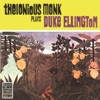
Pianist Thelonious Monk, an avowed Ellington fan, recorded an all-Duke album for his Riverside Records date in 1955. “Solitude” is considered by many to be the best track on the album, an evocative exposition of the tune.
(1 paragraph including the following types of information: anecdotal.)
James Lincoln Collier
Duke Ellington Oxford University Press, USA
Hardcover: 352 pages
(3 paragraphs including the following types of information: music analysis.)
Robert Gottlieb, Robert Kimball
Reading Lyrics Pantheon
Hardcover: 736 pages
(Includes the following types of information: song lyrics.)
Comments
Comment Policy
Your comments are welcome, including why you like
this tune, any musical challenges it presents, or additional background information.
Jazz musicians, fans, and students of all ages use this website as an educational resource.
As such, off-topic, off-color, unduly negative, and patently promotional comments will be removed.
Once submitted, all comments become property of JazzStandards.com.
By posting, you give JazzStandards.com permission to republish or otherwise distribute your comments in any format or other medium.
JazzStandards.com reserves the right to edit or remove any comments at its sole discretion.
Ellington’s original recording is stunning in its elegance. Harry Carney’s playing on the first bridge is fabulous, but for the most part the band as a whole is in the spotlight.
What better way to evoke solitude than in an intimate setting? Fitzgerald does just that in a wonderfully tender duet with guitarist Barney Kessel.
Duke Ellington Indigos
Sony
Original recording 1957
Ellington’s 1957 reinterpretation of “Solitude” prominently features his piano and generally stirs up more of a romping energy than on previous versions of the tune.
This collaboration between Ellington and tenor saxophone patriarch Coleman Hawkins is predictable in the sense that Ellington’s arrangement is fabulous, and so is the saxophone solo by Hawkins. Ray Nance also offers a tender interpretation of the melody.
- Noah Baerman
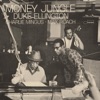
Duke Ellington, Charles Mingus, Max Roach Money Jungle
2002 Blue Note Records
Original recording 1962
Ellington plays an introspective solo on “Solitude” before the bassist and drummer join him for an improvisational turn on the song.
Helen Humes Swingin' with Humes
1991 Original Jazz Classics 608
Original recording 1961
While vocalist Humes leads the group with the grace and charm that the song demands, it is the light, bluesy playing of pianist Wynton Kelly that makes this a winner.
Johnny Lytle Quintet The Village Caller
1998 Original Jazz Classics 110
Original recording 1965
A heavy soul version of the song is courtesy of vibraphonist Lytle and the two Milts, Harris on organ and Hinton on bass. The heaviness of the organ is balanced with the airy ring of the vibes.
Sonny Rollins Way Out West
2000 Original Jazz Classics 337
Original recording 1957
One of only a couple of non-Western tunes on the album, Rollins still manages to make it fit within the theme. The piano-less rhythm section of Ray Brown and Shelley Manne sets a slow tempo over which the tenor saxophonist reverently improvises.