|
|
|
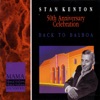
”Stan Kenton’s...1959 Latin-tinged version of “Speak Low,” arranged by Johnny Richards, is strikingly different....” |
|
 |
|
- Chris Tyle
|
|
| |
The musical comedy One Touch of Venus, scored by Kurt Weill, opened on Broadway in October, 1943, and ran for 567 performances. S. J. Perelman and Ogden Nash (who also served as lyricist), based their book on the 1885 farcical romance novella, The Tinted Venus, by F. Anstey. In the production Mary Martin played a statue of Venus who came to life when a barber, Rodney Hatch (played by Kenny Baker) slipped the engagement ring which he had bought for his girlfriend on the statue’s finger. The goddess of love tempts Hatch and tries to win him over with the seductive “Speak Low,” the outstanding song from the show sung by Martin. Much to his consternation, she follows him all over the city of New York before resolving not only his romance but the complicated love affairs of others before finally returning to her art gallery pedestal.
|
| |
| |
|
| |
|
|
| |
| |
|
| |
|
“Speak Low” went to number 5 on the charts in 1944, recorded by Guy Lombardo and His Royal Canadians with vocalist Billy Leach.
|
|
| |
|
| |
|
In 1948 the musical was adapted for the screen starring Ava Gardner as Venus and Robert Walker as Hatch. Few of the sixteen original songs created for the stage production were included in the film. But “Speak Low,” dubbed for Gardner by Eileen Wilson and sung also by popular vocalist Dick Haymes playing Hatch’s best friend, was a highlight. Another delight was the sarcastic and witty Eve Arden talking/singing “That’s Him” from the original show.
“Speak Low” appeared in the 1972 Off-Broadway revue Berlin to Broadway with Kurt Weill and is featured in LoveMusik, the 2007 “bio musical” that tells the love story of Weill and his actress/wife Lotte Lenya based on their letters.
A variety of instrumentalists have explored the beauty of the melody: harmonica player Hendrik Meurkens from Germany, organist Richard “Groove” Holmes, Argentinian saxophonist Gato Barbieri, percussionist Tito Puente, free jazz saxophonist Pharoah Sanders, and Danish bassist Palle Mikkelborg.
“Speak Low” was recorded by Lotte Lenya, Weill’s wife; Carmen McRae cut a sensual version of it in 1952; both the Hi-Lo’s and Nat “King” Cole recorded it; Andy Bey included it on his 2004 CD American Song: and even opera singer Dame Kiri Te Kanawa has performed it. Of the four Weill compositions rated within the top 300 jazz standards, only “September Song,” written in 1938 with lyricist Maxwell Anderson, has been recorded more often.
|
|
|
|
More information on this tune... |
|
See the Reading and Research page for this tune for additional references. |
|
- Sandra Burlingame
|
|
| This section suggests definitive or otherwise significant recordings that will help jazz students get acquainted with
“Speak Low.” These recordings have been selected from the Jazz History and
CD Recommendations sections.
|
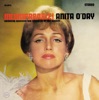
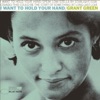
Billie Holiday’s wonderfully relaxed reading of “Sweet Low” (All Or Nothing At All) and Anita O’Day’s brighter-tempo version with Bill Holman (Incomparable!) give a fairly diverse and thorough sense of the song. There are many examples of “Speak Low” as a vehicle for improvisation, and Grant Green’s spirited 1965 recording with Hank Mobley (I Want To Hold Your Hand) offers an accurate sense of the tune’s standard modern-day interpretation.
Noah Baerman - Jazz Pianist and Educator
|
Not only the gorgeous melody but the breathless urgency of Nash’s lyric has lured vocalists. Take as an example the imagery of “Our moment is swift, like ships adrift, we’re swept apart, too soon” or “Love is a spark, lost in the dark too soon, too soon.” Nash describes time as “a thief” capable of bringing love to an untimely end. He concludes the song with the plea “Will you speak low to me, speak love to me and soon.”
- Sandra Burlingame
Musical analysis of “Speak Low” | | Original Key | G major | | Form | A1 - A2 - B - A3 | | Tonality | Primarily major | | Movement | Initial upward leap of a sixth, followed by a recurring triplet figure consisting of a descending and ascending fourth, interspersed with some descending scale figures. | Comments (assumed background) | | For all its choppy intervals (primarily fourths), this tune flows nicely. Most of the rhythmic activity takes place in beats 3-4 of the measure, giving the melody forward momentum. The main rhythmic motif is a sustained note followed by a quarter-note, triplet figure. In section “B,” however, Weill turns this around for eight measures, starting the measure with the triplet figure followed by a sustained pitch; however, the dotted half and quarter-note figure in mm. 3 and 6 of “B” maintains rhythmic momentum and interest. Harmonically, Weill has taken a simple chord sequence-in this case the ii7 - V7 progression-and used it in new ways to produce exotic sounding changes that do not always resolve in expected fashion. For example, mm. 9-12 go back and forth between Cm9 and F9, which we tend to hear as a ii7 - V7 sequence leading to Bb. The last two notes of m. 12 are G and A, which we expect to lead to Bb. Instead, the next note is B natural over an Em7 chord. Because of the melody note and the scale-wise run up to it, the ear is surprised but easily accepts the deceptive resolution. This, of course, begins a cycle of fifths that returns the song to the G major tonality. Many of the melodic notes fall on the chord extensions-primarily the seventh and the ninth and, in one spot, the raised eleventh. This being the case, there is little room to improve on Weill’s original changes by using chord alterations or substitutions. | | K. J. McElrath - Musicologist for JazzStandards.com |
|
Brazilian guitarist Laurindo Almeida and alto saxophonist Bud Shank’s quartet introduced the bossa nova rhythm to the American public in 1953, nine years before tenor saxophonist Stan Getz’ highly-touted foray into the samba’s rhythm. Almeida and Shank’s version of “Speak Low” is a relaxed interpretation of Kurt Weill’s lovely melody.
That same year another quartet, the famous piano-less collaboration between trumpeter Chet Baker and baritone saxophonist Gerry Mulligan, produced a short, sparse, easy-going version of the tune.
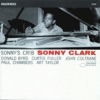
Pianist Sonny Clark’s 1957 session brought together a stellar ensemble that included tenor saxophonist John Coltrane, trombonist Curtis Fuller, and trumpeter Donald Byrd. They give “Speak Low” a Latin-touch, but then it’s a swinging hard-bop forum for solos.
Stan Kenton’s big band was an exciting ensemble, and their 1959 Latin-tinged version of “Speak Low,” arranged by Johnny Richards, is strikingly different from the previous quartet versions.
Chris Tyle - Jazz Musician and Historian
|
Additional information for "Speak Low" may be found in:
|
|
|
|
|
|
Comment Policy
- Your comments are welcome, including why you like
this tune, any musical challenges it presents, or additional background information.
- Jazz musicians, fans, and students of all ages use this website as an educational resource.
As such, off-topic, off-color, unduly negative, and patently promotional comments will be removed.
- Once submitted, all comments become property of JazzStandards.com.
By posting, you give JazzStandards.com permission to republish or otherwise distribute your comments in any format or other medium.
JazzStandards.com reserves the right to edit or remove any comments at its sole discretion.
|
|
| Click on any CD for more details at Amazon.com |
 Billie Holiday
All Or Nothing at All
Polygram Records
Original Recording 1956
|
|
Holiday takes “Speak Low” at a relaxed but swinging tempo, singing the tune with a lot of heart and maturity. Pianist Jimmy Rowles and guitarist Barney Kessel solo, while tenor saxophonist Ben Webster engages in dialogue with Holiday as she sings.
|
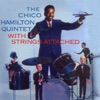
 Hamilton, Chico
The Chico Hamilton Quintet With Strings Attached
Collectables
Original recording 1958
|
|
This quirky, appealing performance features a somewhat edgy string section and the brilliant bass clarinet of Eric Dolphy. Hamilton would record “Speak Low” again four years later at a much faster tempo as a feature for saxophonist Charles Lloyd.
|
 Anita O'Day
Incomparable!
Umvd Labels
Original recording 1960
|
|
Having already recorded “Speak Low” with a small group in 1952, O’Day gives it another go here, aided the creative arranging and fiery playing of the Bill Holman band. Her singing is cool and authoritative.
|
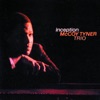
 Mccoy Tyner, Elvin Jones, Art Davis
Inception
Grp Records
|
|
Pianist Tyner and drummer Elvin Jones were already established members of John Coltrane’s quartet at the time of this recording with bassist Art Davis, Tyner’s first full-length recording as a bandleader. In a trio setting, they interpret “Speak Low” in an exceptionally locked-in and rhythmically flowing manner.
|
 Grant Green
I Want to Hold Your Hand
Blue Note Records
Original recording 1965
|
|
Here is Elvin Jones again, this time in a rhythm section with organist Larry Young. This is quintessential progressive hard bop, featuring solos by guitarist Green and tenor saxophonist Hank Mobley, who recorded the song under his own name a few years before this.
|
 Woody Shaw
Solid
Savoy Jazz
Original recording 1986
|
|
Influential trumpet player Shaw had something of a late-career resurgence in the 1980s and his affection for standards shows on tracks like his version of “Speak Low.” This track also features a 25-year-old Kenny Garrett on alto saxophone.
|
|
 Laurindo Almeida/Bud Shank
Brazilliance, Vol. 1
Blue Note Records 96339
Original recording 1953
|
|
The delicate guitar of Almeida and the breathy sax from Shank add up to a “romantic bottle of champagne by the fireside” version of the song. Weill with a bossa nova beat.
|
 Booker Ervin
The Trance
1997 Original Jazz Classics 943
Original recording 1965
|
|
Ervin’s muscular saxophone pushes forward with more power than finesse; however, he gets the job done, presenting an uncharacteristically gritty, up-tempo interpretation of the song.
|
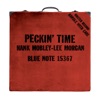
 Hank Mobley
Peckin' Time
1988 Blue Note 81574
Original recording 1958
|
|
In a captivating reading of the song, pianist Wynton Kelly sets up a bouncing rumba over which saxophonist Mobley and trumpeter Lee Morgan lay down some smooth hard bop solos.
|
 Dee Dee Bridgewater
This Is New
2002 Universal
|
|
Vocalist Bridgewater devotes this CD to the music of Kurt Weill, and happily it contains some of his seldom recorded work along with the supremely popular “Speak Low.” Bridegwater gives the song a sensual reading against a backdrop of strings in a beautiful arrangement by Cecil Bridgewater.
|
 Blue Wisp Big Band
Butterfly and the Smooth One
1995 Sea Breeze Records 2066
Original recording 1982
|
|
Rich with horns, this upbeat arrangement leaves sentimentality out of the picture as the band swings the Weill tune with abandon. This Cincinnati group has been an institution for almost a quarter of a century.
|
|
|
|