|
|
|
”’Stormy Weather’ was originally written...for vocalist and bandleader Cab Calloway....” |
|
 |
|
- Chris Tyle
|
|
| |
“Stormy Weather” was originally written by Harold Arlen and Ted Koehler for vocalist and bandleader Cab Calloway, who, along with his fine big band, had been a fixture at New York’s Cotton Club. Calloway took over the prestigious slot from Duke Ellington in February, 1931. Before the 1933 Cotton Club Parade show went into production, Calloway left the club and Ellington returned. This left the show’s producers in tight spot since Ellington didn’t sing and they needed a “name” to feature the tune. In a fortuitous turn of events, vocalist Ethel Waters returned to New York from Chicago. The show’s producers and the tune’s composers met with Miss Waters, and she agreed perform the song in the show, her only appearance as part of the revue.
|
| |
| |
|
| |
|
|
| |
| |
|
| |
|
Waters took to the tune immediately. She had just been through the breakup of her marriage, and the song almost seemed to have been written with her feelings in mind. In Edward Jablonski’s biography Harold Arlen: Rhythm, Rainbows & Blues, Waters is quoted: “When I got out there in the middle of the Cotton Club floor, I was telling things I couldn’t frame in words. I was singing the story of my misery and confusion, of the misunderstandings in my life I couldn’t straighten out, the story of wrongs and outrages done to me by people I had loved and trusted.” Waters’ initial performance in the show drew twelve encores.
|
| |
| |

|
More on Ethel Waters
|
|
| |
|
Even before the show’s opening night (April 6, 1933), composer Arlen contacted old friend and bandleader Leo Reisman in hopes of recording the tune. Reisman sensed the tune’s potential and let Arlen perform the number on a Victor record date. Recorded in late February, 1933, this introductory performance of “Stormy Weather” was quickly released and grabbed the public’s attention. The song quickly took off in the charts:
- Leo Reisman Orchestra (1933, Harold Arlen, vocal, #1)
- Dorsey Brothers’ Orchestra (1933, Ethel Waters, vocal, #1)
- Guy Lombardo and His Royal Canadians (1933, #2)
- Duke Ellington and His Orchestra (1933, Ivie Anderson, vocal #4)
- Ted Lewis and His Orchestra (1933, Shirley Jay, vocal, #6)
- Lena Horne (1943, vocal, #21)
|
|
| |
|
| |
|
Although backed by Duke Ellington’s Orchestra in the show, Waters recorded the tune with the Dorsey Brothers’ Orchestra (Tommy on trombone and Jimmy on alto sax and clarinet) in May, 1933, after Reisman’s recording had been released. At the time, Ellington was under contract to Brunswick Records, and Waters and the Dorseys were under contract to Columbia. However, Ellington’s Orchestra and vocalist Ivie Anderson grabbed the honors for being the first to perform the number on film, a short feature from 1933 entitled Bundle of Blues.
Harold Arlen and Ted Koehler had collaborated on a number of songs prior to “Stormy Weather,” including a previous Cotton Club show. Supposedly the two were together at a party when the tune began to take form. Another half-an-hour of work and it was finished. The two continued to collaborate on Cotton Club revues and eventually went to Hollywood to write for films.
Spotted by composer Irving Berlin during a performance of the Cotton Club Parade, Ethel Waters went on to star in Berlin’s As Thousands Cheer, performing “Heat Wave” and “Suppertime.” The appearance rejuvenated her career.
Vocalist Lena Horne starred in the 1943 motion picture Stormy Weather and performed the title tune. The movie was a splendid showcase for African-American talent, including Bill “Bojangles” Robinson, Thomas “Fats” Waller, the Nicholas Brothers, and Cab Calloway.
Koehler’s masterful lyrics tell the tale of the breakup of a romance and the sadness such an event brings. An interesting twist to the song occurs before the bridge, where there are two extra bars. George Gershwin pointed this out to Arlen, who stated he was unaware of it, but the repeated line “so weary all the time” adds an extra impetus to the line, and it’s hard to imagine that Arlen and Koehler weren’t aware of the extra bars.
|
|
|
|
More information on this tune... |
|
|
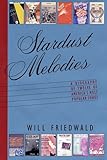 Will Friedwald
Stardust Melodies
Pantheon; 1st edition
Hardcover: 416 pages
(“Stormy Weather” is one of a dozen standards which Friedwald thoroughly investigates in his book. He discusses the songwriters and the history of the song in 31 pages, analyzes the music and lyric, and offers information on performers and recordings.)
|
|
|
|
See the Reading and Research page for this tune for additional references. |
|
Chris Tyle - Jazz Musician and Historian
|
|
| This section suggests definitive or otherwise significant recordings that will help jazz students get acquainted with
“Stormy Weather (Keeps Rainin' All the Time).” These recordings have been selected from the Jazz History and
CD Recommendations sections.
|
Vocalist Ethel Waters recorded “Stormy Weather” with Tommy Dorsey’s band in 1933 (The Incomparable Ethel Waters) and a strong case could be made that she made it her own. That is, at least until 1941 when Lena Horne sang what is quite possibly the definitive version of the tune (Lena Horne - RCA Victor: Greatest Hits), a tune that would become one of her signature pieces for the remainder of her career. Meanwhile, pianist Red Garland’s tender trio version of “Stormy Weather” (All Kinds of Weather) is a good representation of the typical modern approach to playing the tune as an instrumental ballad.
Noah Baerman - Jazz Pianist and Educator
|
|
Musical analysis
of “Stormy Weather (Keeps Rainin’
All the Time)”
|
|
Original Key |
G
major |
|
Form |
A
- A - B - A |
|
Tonality |
Major
throughout |
|
Movement |
Primarily
arpeggiated with some chromaticism;
upward skips and downward leaps.
Nice, balanced melodic “arc.” Some
repeated notes in “B.” |
|
Comments
(assumed
background)
|
| A soaring, lyrical melody with fairly
standard changes; the “A” section’s
harmonic progression is I - vii°/ii
- ii - V7 with slight variations,
while “B” spends most of its time
alternating between IV and I, with
a final VI7 - II7 - V7 turnaround
just before the last “A.” Since
this melody consists mainly of diatonic
chord pitches, there are plenty
of opportunities for the adventurous
jazzer to experiment with chord
extensions and harmonic substitutions. |
|
K. J. McElrath - Musicologist for JazzStandards.com |
|
Of the many recordings of this tune from
1933, one of the most extraordinary is that
by a New Orleans group led by pianist Joe
Robichaux. A hot, swingy, seven-piece combo,
they had the distinction of recording 22
sides in four days for Vocalion Records
while visiting New York. Their version of
“Stormy Weather” is instrumental with some
nice double-time work by trumpeter Eugene
Ware.
Duke Ellington also recorded a distinctive
instrumental in 1933, but the band’s version
from 1940 features a superlative vocal by
Ivie Anderson and a sultry tenor sax
solo by Ben Webster.
Pianist Herman Chittison had a successful
career on both sides of the Atlantic until
World War II broke out. His amazing playing
was at times reminiscent of Art Tatum, and
his 1934 recording of “Stormy Weather” is
a treat.
Chris Tyle - Jazz Musician and Historian
|
Additional information for "Stormy Weather (Keeps Rainin' All the Time)" may be found in:
|
|
|
 David Ewen
Great Men of American Popular Song
Prentice-Hall; Rev. and enl. ed edition
Unknown Binding: 404 pages
(1 paragraph including the following types of information: anecdotal and performers.)
|
|
|
|
|
 Thomas S. Hischak
The Tin Pan Alley Song Encyclopedia
Greenwood Press
Hardcover: 552 pages
(1 paragraph including the following types of information: film productions, history, music analysis and performers.)
|
|
|
|
|
Will Friedwald
Stardust Melodies
Pantheon; 1st edition
Hardcover: 416 pages
(31 pages including the following types of information: history, lyric analysis, music analysis, performers, recordings and song writer discussion.)
|
|
|
|
|
|
|
|
Comment Policy
- Your comments are welcome, including why you like
this tune, any musical challenges it presents, or additional background information.
- Jazz musicians, fans, and students of all ages use this website as an educational resource.
As such, off-topic, off-color, unduly negative, and patently promotional comments will be removed.
- Once submitted, all comments become property of JazzStandards.com.
By posting, you give JazzStandards.com permission to republish or otherwise distribute your comments in any format or other medium.
JazzStandards.com reserves the right to edit or remove any comments at its sole discretion.
|
|
|