|
|
|
| “[Bing Crosby] recorded a stunning version of ‘Sweet and Lovely’ in September, 1931.” |
|
 |
|
- Chris Tyle
|
|
| |
Gus Arnheim’s orchestra was the most popular dance band on the West Coast in the late 1920s and early ‘30s, and they were the house band at the posh Cocoanut Grove nightclub in Los Angeles. With vocal honors by vocalist Donald Novis, Arnheim’s version of “Sweet and Lovely” scored a prime spot in the charts for 14 weeks in 1931. Other versions of the song also charted:
- Gus Arnheim and His Cocoanut Grove Orchestra (1931, Donald Novis, vocal, #1)
- Guy Lombardo and His Royal Canadians (1931, #2)
- Bing Crosby (1931, vocal, #9)
- Ben Bernie and His Orchestra (1931, #12)
- Russ Columbo (1931, vocal, #19)
- Bing Crosby (1944, #27)
|
|
| |
|
| |
|
Tunes with the ambiguous “words and music by” followed by a listing of several names beg the question: who wrote what? In the case of “Sweet and Lovely,” it’s an easy mystery to solve. First, Harry Tobias was the lyricist. Second, Gus Arnheim was a bandleader and shrewd businessman--not a songwriter. So the tune’s composer was Charles N. Daniels. But the original sheet music lists him under one of his pseudonyms, “Jules Lemare.” (His other pen name was “Neil Moret.”)
|
| |
| |
|
| |
|
|
| |
| |
|
| |
|
|
| |
| |
|
| |
|
Once Arnheim’s ensemble began performing the number, it became increasingly popular, eventually becoming the band’s theme song. Vocalist Donald Novis recorded the tune with Arnheim in the summer of 1931, but it’s likely that Arnheim’s previous vocalist, Harry Lillis “Bing” Crosby, also sang the tune with the band.
Crosby joined Arnheim’s band in 1930, which, coupled with live radio broadcasts and recordings, brought him more recognition, and by mid-1931 he was on his way with a solo career. He recorded a stunning version of “Sweet and Lovely” in September, 1931.
Russ Colombo began his vocal career under Arnheim’s aegis, too. Originally a saxophone player in the group, he began singing with the band after Crosby’s departure, eventually moving on to a solo career, which, for a short time, vied for popularity with Crosby. Sadly his life was cut short as the result of a gun accident in 1934.
“Sweet and Lovely” made a return appearance in 1944 in the film Two Girls and a Sailor, and Crosby did a remake of his 1931 hit, again making the charts.
The lyrics, written from a male perspective, extol the virtues of a woman “sweeter than the roses in May.” There is a marvelous rhythmic figure toward the end of the bridge that Crosby used to great effect on his 1931 recording, utilizing a crescendo when singing the words “taunting me, melody, haunting me” and then quickly dropping his volume back for a reprise of the tune’s title.
|
|
|
|
| This section suggests definitive or otherwise significant recordings that will help jazz students get acquainted with
“Sweet and Lovely.” These recordings have been selected from the Jazz History and
CD Recommendations sections.
|
Bing Crosby’s 1931 hit version of “Sweet and Lovely” (The Essentials) is an excellent starting point for learning the basics of this song, which has been recorded comparatively infrequently by major jazz vocalists. Thelonious Monk, meanwhile, is the modern jazz musician most closely associated with the song. He recorded it solo, trio and in quartets alongside saxophonists Gerry Mulligan, John Coltrane and Charlie Rouse. His 1962 recording with Rouse (Monk’s Dream) is an excellent choice for studying the Monk approach to the song.
Noah Baerman - Jazz Pianist and Educator
|
Musical analysis of “Sweet and Lovely” | | Original Key | C major | | Form | A - A - B - A | | Tonality | Major throughout | | Movement | “A” moves in upward steps and/or skips (thirds) and downward leaps (fifths). The general pattern is reversed in “B”; chromatic passing and neighbor tones give the melody a “bluesy” flavor. | Comments (assumed background) | | Although in C major, the tonality can be somewhat vague. The harmonic progression begins with the tonic chord of C, but the seventh is added and it alternates with Gm7, so there is a strong tendency to resolve to F. To further reinforce this tendency, the F itself includes the seventh, followed by Bb and Bbm7. The abrupt shift to I - V7 - I in C major is jarring and difficult to accept. One solution is to replace the Bb - Bbm7 sequence with an Fm7 chord, which makes the perfect cadence and which makes what follows much more logical. The harmonic progression of “B” is also odd. The “mixolydian”sound of I - bVII (C - Bb) itself is not unusual today, but in the early 1930s was far from common. After four measures of this, there is an abrupt shift to Db followed by Eb--with no sort of voice leading. The Eb resolves to Ab7, however, which becomes the N6 of G7, leading back to the original key. The best advice to the performer here is to watch the ink carefully until the piece is thoroughly memorized--this is not a tune to which one can trust one’s ears. | | K. J. McElrath - Musicologist for JazzStandards.com |
|
Tenor saxophonist Flip Phillips began his career as a clarinetist but switched to the tenor saxophone, on which instrument his playing was decidedly inspired by Coleman Hawkins. One of his first sessions as a leader was in 1944 while he was working in Woody Herman’s First Herd, and his accompanying group is composed of his fellow Herman bandsmen. Phillips’ version of “Sweet and Lovely” is a marvelous ballad rendition, one which he would reprise the following year (accompanied by the superlative pianist Teddy Wilson) in a concert at New York’s Town Hall (Flip Phillips. Town Hall Concert 1945. Commodore CCD 7006. Out of print).
Another great tenor sax player, Dexter Gordon, turned in a consummate performance in 1947 in one of his first sessions as a leader. Gordon recorded and performed with tenor saxophonist Wardell Gray, who turned in yet another wonderful ballad version on his 1952 date.
Chris Tyle - Jazz Musician and Historian
|
Additional information for "Sweet and Lovely" may be found in:
|
|
|
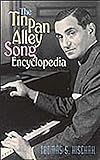 Thomas S. Hischak
The Tin Pan Alley Song Encyclopedia
Greenwood Press
Hardcover: 552 pages
(1 paragraph including the following types of information: film productions, history and performers.)
|
|
|
|
|
|
|
|
Comment Policy
- Your comments are welcome, including why you like
this tune, any musical challenges it presents, or additional background information.
- Jazz musicians, fans, and students of all ages use this website as an educational resource.
As such, off-topic, off-color, unduly negative, and patently promotional comments will be removed.
- Once submitted, all comments become property of JazzStandards.com.
By posting, you give JazzStandards.com permission to republish or otherwise distribute your comments in any format or other medium.
JazzStandards.com reserves the right to edit or remove any comments at its sole discretion.
|
|
| Click on any CD for more details at Amazon.com |
 Bing Crosby
The Essentials
Big Eye Music
Original recording 1931
|
|
In one of the versions that helped popularize “Sweet and Lovely,” Bing Crosby croons the song appealingly over a gently swinging backdrop.
|
 Erroll Garner
Contrasts
Polygram Records
Original recording 1954
|
|
Pianist Garner Latin-izes “Sweet and Lovely” with some aggressively playing piano playing and a trio augmented by the great Candido Camero on percussion.
|
 Booker Little
Booker Little 4 and Max Roach
Blue Note Records
|
|
Only twenty years old at the time of this recording, Little shows off his mastery of the trumpet. The tempo is slow and sly, but Little’s wide-ranging playing is fleet, bluesy and adventurous. Pianist Tommy Flanagan gets a solo as well and plays beautifully.
|
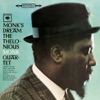
 Thelonious Monk Quartet
Monk's Dream
Sony
|
|
This quartet recording is slow yet playful, angular yet soulful. Monk takes melody duties and plays a wonderful solo before handing the reins to one of the most sympathetic collaborators of his career, saxophonist Charlie Rouse.
|
 Thelonious Monk
Solo Monk
Sony
Original recording 1964
|
|
There are many classic Monk versions of “Sweet and Lovely” beginning in 1952. This haunting solo rendition is one of the best and one of the last, and hearing Monk perform it alone gives us more insight into his relationship with the song.
|
 Lou Donaldson
Lush Life
Blue Note Records
Original recording 1967
|
|
Duke Pearson’s arrangement and an all-star band set the stage perfectly for Donaldson’s soulful alto saxophone work. Freddie Hubbard gets a solo on trumpet as well.
|
|
 Coleman Hawkins
Sirius
Ojc
Original recording 1966
|
|
Although in the twilight of his career, Hawkins still delivers a strong, straight-up reading. His full, robust tones and lingering notes promote the romantic ambience.
|
 Phineas Newborn Jr
Harlem Blues
1991 Original Jazz Classics 662
Original recording 1969
|
|
Newborn treats the listener to a bewitching blues interpretation of the song, languishing over the piece and embellishing it with elaborate stride accents.
|
 Cecil Taylor
Jazz Advance
Blue Note Records
Original Recording 1956
|
|
Taylor’s debut on the recording scene is rich with musical treasure, his treatment of “Sweet and Lovely” being one of the most brilliant. Meditative, intricate and highly original, the pianist’s approach is unimpeded by convention.
|
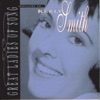
 Keely Smith
Spotlight on Keely Smith (Great Ladies of Song)
1995 Capitol 80327
Original recording 1958
|
|
This is a fine compilation drawn from three early LP’s. On this cut the vocalist is featured in a lyrical reading of the song with the great bandleader/arranger Billy May.
|
|
|
|