|
|
|
| Early versions of this tune lean towards the sentimental, syrupy side. |
|
 |
|
- Chris Tyle
|
|
| |
In all likelihood the West Coast-based band of Earl Burtnett may have introduced this number, as his version hit the charts in June, 1928. The tune enjoyed popularity in several later versions as well:
- Earl Burtnett and His Los Angeles Hotel Biltmore Orchestra (1928, Biltmore Trio, vocal, #3)
- Ben Pollack and His Californians (1928, #3)
- Mills Brothers (1932, vocal, #8)
- Tommy Dorsey and His Orchestra (1939, #13)
- Johnny Long and His Orchestra (1949, #19)
|
|
| |
|
| |
|
Since “Sweet Sue” wasn’t introduced in a Broadway show or a film, it’s a little difficult to ascertain who actually premiered the tune. A recording by a Chicago band led by pianist Charlie Straight may have been the first, since composer Victor Young was a member of Ted Fio Rito’s Orchestra in Chicago when the song was published in 1928 and was also doing freelance arranging for a number of Chicago bands. Young had also been a member of drummer Ben Pollack’s band, which recorded the tune in April, 1928, probably using an arrangement by Young.
|
| |
| |
|
| |
|
|
| |
| |
|
| |
|
“Sweet Sue” was likely the biggest hit of lyricist Will J. Harris who began in the early 1900s writing mainly cowboy and Hawaiian numbers popular at the time.
The original sheet music of “Sweet Sue” has silent film star Sue Carol (1906-1982) pictured on the cover. Some sources state that the song was written for her, which is possible, but more likely it was simply a way of plugging her film career which began in 1927 and ended ten years later. (She appeared in Check and Double Check with Duke Ellington.) Nevertheless, she was born in Chicago, so there may be a connection to Victor Young and Will J. Harris, both of whom worked in the Windy City. Sue Carol married actor Alan Ladd in 1942 and became his manager.
“Sweet Sue” contains a repeated rhythmic figure, two quarter notes followed by a half-note, played on the same tone. This figure occurs with great frequency in early jazz music, especially with Louis Armstrong. It is a strong feature on his 1926 recording of “Struttin’ with Some Barbeque,” written by his then wife Lil Hardin-Armstrong. It doesn’t require a great stretch of the imagination to believe that Victor Young heard Armstrong during his time in Chicago in the mid-to-late 1920s.
|
|
|
|
| This section suggests definitive or otherwise significant recordings that will help jazz students get acquainted with
“Sweet Sue, Just You.” These recordings have been selected from the Jazz History and
CD Recommendations sections.
|
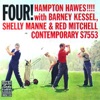
“Sweet Sue, Just You” has lent itself well to different stylistic interpretations through the years. It was frequently played in a pre-swing era context, as exemplified by Jimmy Noone’s 1928 recording (Best Of Jimmie Noone 1923-1940) featuring Earl Hines on piano. Jimmie Lunceford’s 1938 version (Life Is Fine) featuring Sy Oliver’s arranging and vocal skills demonstrates the song in a swing era big band context. Meanwhile, Hampton Hawes’ 1958 recording (Four!) shows the song translated into a more modern setting, with flowing post-bop solos by Hawes, guitarist Barney Kessel and bassist Red Mitchell.
Noah Baerman - Jazz Pianist and Educator
|
Will J. Harris’ lyrics are a declaration of love to “Sweet Sue.” “Every star above, knows the one I love,” and “no one else it seems, ever shares my dreams,” but “without you dear, I don’t know what I’d do.” Chris Tyle
Musical analysis of “Sweet Sue, Just You” | | Original Key | G major | | Form | A - A - B - A | | Tonality | Primarily major | | Movement | “A” is based on a pentatonic scale that ascends gently from the fifth degree to the third degree above the tonic, and then leaps back down to the sixth below. “B” is a variation of the same pattern except that the fourth scale degree is included as well as a chromatically-embellished neighbor tone. | Comments (assumed background) | | A generally undemanding tune except for a descending major seventh leap in measure four of section “B.” A fairly slow harmonic rhythm (90% of the song contains only one chord change per measure or less) makes it a good vehicle for novice improvisers, especially when they are ready to start experimenting with the very common I - vii°7/ii- V cadence (this appears in the fourth measure of “A” sections) and the “half-diminished” chord (virtually identical to the minor (b5) chord). | | K. J. McElrath - Musicologist for JazzStandards.com |
|
Early versions of this tune lean towards the sentimental, syrupy side. On Paul Whiteman’s 1928 recording, the great cornetist Bix Beiderbecke rises from a turgid pseudo-symphonic treatment to play a magical chorus into a derby hat (unusual for him, as he generally played without mutes).
By 1937 the tune had become a swinging jam vehicle. Illustrating this perfectly is a session from Paris featuring visiting firemen Bill Coleman (trumpet) and Dicky Wells (trombone) (on tour with Teddy Hill’s Orchestra) with Belgian guitarist Django Reinhardt. The results are beautiful, swinging jazz.
One of the great small group recordings prior to World War II brought together New Orleans clarinetist and soprano saxophone giant Sidney Bechet with Chicago cornetist Muggsy Spanier. Ably supported by Tommy Dorsey guitarist Carmen Maestren and New Orleans bassist (ex-Duke Ellington) Wellman Braud, the results were pure magic.
Chris Tyle - Jazz Musician and Historian
|
Additional information for "Sweet Sue, Just You" may be found in:
|
|
|
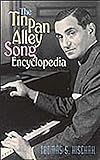 Thomas S. Hischak
The Tin Pan Alley Song Encyclopedia
Greenwood Press
Hardcover: 552 pages
(1 paragraph including the following types of information: film productions, history and performers.)
|
|
|
|
|
|
|
|
Comment Policy
- Your comments are welcome, including why you like
this tune, any musical challenges it presents, or additional background information.
- Jazz musicians, fans, and students of all ages use this website as an educational resource.
As such, off-topic, off-color, unduly negative, and patently promotional comments will be removed.
- Once submitted, all comments become property of JazzStandards.com.
By posting, you give JazzStandards.com permission to republish or otherwise distribute your comments in any format or other medium.
JazzStandards.com reserves the right to edit or remove any comments at its sole discretion.
|
|
| Click on any CD for more details at Amazon.com |
 Jimmie Noone
Best Of Jimmie Noone 1923-1940
Best Of Jazz/City Hall
Original Recording 1928
|
|
Clarinetist Noone interprets this song with a relaxed, swinging groove in the New Orleans jazz tradition. His clarinet is authoritative, as is the piano of Earl Hines.
|
 Joe Venuti, Eddie Lang
Volume 1&2 1920's & 1930's Sides
Jsp Records
Original Recording 1930
|
|
Violinist Joe Venuti and guitarist Eddie Lang are in the forefront of this appealingly chaotic jam on “Sweet Sue.” They both contribute excellent, spirited solos, and Jimmy Dorsey pitches in with a melody statement on saxophone.
|
 Fats Waller
The Fats Waller Legacy (Digitally Remastered)
0
Original Recording 1935
|
|
Pianist and vocalist Waller sings “Sweet Sue” quite appealingly before offering up a powerful, swinging piano solo with elements of both stride and boogie-woogie. Herman Autrey is featured as well, on trumpet.
|
 Jimmie Lunceford
Life is Fine (Quadromania)
Quadromania
Original Recording 1938
|
|
This relaxed, swinging performance revolves around the work of Sy Oliver. In addition to penning the arrangement, he also steps in for an appealing vocal interpretation of “Sweet Sue.”
|
 Miles Davis
Round About Midnight (Spec)
Sony
Original Recording 1956
|
|
Davis and his quintet recorded this song to demonstrate a modern approach to reinterpreting older, more traditional material. And reinterpret they do, playing only an opening fragment of the melody before launching into a fabulous improvisation based on the tune’s harmonic structure.
|
|
 Charlie Byrd
Solo Flight
2003 Original Jazz Classics 1093
Original recording 1965
|
|
This is a rather straight forward treatment of the song. The guitarist’s solo effort slows down the tempo a notch, allowing the listener a glimpse at the inner workings of the tune without the breezy gypsy swing.
|
 Martin Taylor
Stepping Stones
2000 Linn Records 144
Original recording 2000
|
|
The song sparkles in the hands of the dexterous guitarist. Both Martin and accordionist Jack Emblow play as if they are possessed of extra digits, trading scintillating runs in an effort to outdo each other.
|
 Hampton Hawes
Four!
1997 Original Jazz Classics 165
Original recording 1958
|
|
Pianist Hawes rules supreme on this crisp bop version of the song. Guitarist Barney Kessel, drummer Shelly Manne, and bassist Red Mitchell also shine without detracting from the stellar play of their leader.
|
|
|
|