|
|
|
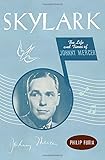
| “Arlen’s music is rife with repeated notes and octave drops, and Mercer’s phrasing makes the lyric mime the musical motion....” |
|
 |
|
- Philip Furia
|
|
| |
This gem of a song, “That Old Black Magic,” written by composer Harold Arlen and lyricist Johnny Mercer for the 1942 film Star-Spangled Rhythm was played behind the opening credits and sung by relative unknown Johnny Johnston. Susan Sackett in Hollywood Sings! An Inside Look at Sixty Years of Academy Award-Nominated Songs says, “In a routine that centered mostly around a dance number performed by ballerina Vera Zorina (choreographed by her then-husband, the legendary George Balanchine) Johnston introduced the song.”
|
| |
| |
|
| |
|
|
| |
| |
|
| |
|
The movie was a “feel good” musical intended to entertain troops. With little plot, the movie featured Paramount Studio contract players such as Bob Hope, Bing Crosby, Dorothy Lamour, Veronica Lake, Paulette Goddard, Eddie “Rochester” Anderson, Dick Powell and more. The film also introduced another memorable song from the duo of composer Harold Arlen and lyricist Johnny Mercer, “Hit the Road to Dreamland.”
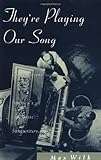
Max Wilk in They’re Playing Our Song: Conversations with America’s Classic Songwriters tells a behind-the-scenes story of how Mercer got the idea for his lyric from Cole Porter’s “You Do Something to Me.” “That one came from one of the early Cole Porter songs I heard when I first came to New York,” Mercer says. “...It had a phrase in it--‘do do that voo-doo that you do so well.’...Anyway, that thing about voodoo must have stuck with me, because I paraphrased it in ‘Old Black Magic.’”
“That Old Black Magic” enjoyed several trips to the charts over an eighteen year period. The Miller aggregation took it to number one for a week in 1943, and it remained on the list for another 18 weeks. Two other band versions charted that same year, one by boogie woogie pianist Freddie Slack that hovered at #10 and the other by Horace Heidt, pianist and radio/TV personality, who took it to #11:
- Glenn Miller and His Orchestra (1943, Skip Nelson and the Modernaires, vocal)
- Freddie Slack and His Orchestra (1943, Margaret Whiting, vocal)
- Horace Heidt and His Orchestra (1943, instrumental)
- Sammy Davis, Jr. (1955, # 13)
- Louis Prima and Keely Smith (1958, #18)
- Bobby Rydell (1961, #21)
|
|
| |
|
| |
|
The song was nominated for a Best Song Oscar in 1943; however, Jerome Kern’s “The Last Time I Saw Paris” with lyrics by Oscar Hammerstein II won. Kern thought the Arlen/Mercer song should have won because it was created specifically for a film while his song was interpolated into The Fleet’s In. According to David Ewen in his book Great Men of American Popular Song, Kern felt strongly enough that he urged the members of the Academy of Motion Picture Arts and Sciences to change the rules, which they did. Subsequently, only songs composed expressly for the screen would be eligible.
In 1959 the Grammy awards were started by the National Academy of Recording Arts and Sciences. Several categories were established to represent different branches of the industry. The Louis Prima/Keely Smith version of “That Old Black Magic” was voted the Best Performance by a Vocal Group.
Perhaps more than anyone else, singer, night club performer, and Broadway/film star Billy Daniels brought attention to “That Old Black Magic” which he sang in the 1950 movie When You’re Smiling. His up tempo reading of the torch song became his signature song. Others who have performed the song on film include Bing Crosby in Here Come the Waves (1944), Frank Sinatra in Meet Danny Wilson (1952), and Marilyn Monroe in Bus Stop (1956).
Spike Jones and His City Slickers, a profoundly goofy band popular in the ‘40s, desecrated many of the most popular songs of the day to the great amusement of their fans. “Chloe,” “Cocktails for Two,” “Holiday for Strings,” and “That Old Black Magic” were among the songs receiving the Jones touch of madness that included animal sounds, special effects such as breaking glass or jarring bursts from whistles or pistols. Their costumed, on-stage antics were worthy of the best circus clowns. And once a song had been through a Jones arrangement, it was uncertain if it could be taken seriously thereafter.
Fortunately, Arlen’s dramatic and bluesy melody and the exotic nature of Mercer’s lyrics have enabled “That Old Black Magic” to survive Jones’ nutty arrangement. In his book Listening to Classic American Popular Songs Allen Forte points out how well Mercer’s lyrics fit the melody. “The poetic devices flow with the music and even seem often to drive it. The key phrase ‘black magic’ inspires the elevator and tide metaphors and the more immediate physical responses expressed by ‘icy fingers,’ aflame,’ and ‘burning,’ while the unforgettable images of motion, ‘down and down’ and ‘round and round’ perfectly match the melodic contours with which they are associated.” Forte elaborates on how the rhythm of the repeated notes in the song suggests incantation, a perfect fit with Mercer’s “witchcraft” theme. As Philip Furia says in The Poets of Tin Pan Alley: A History of America’s Great Lyricists, “Arlen’s music is rife with repeated notes and octave drops, and Mercer’s phrasing makes the lyric mime the musical motion....”
Mercer himself recorded a delightful rendition of the song as did vocalists Peggy Lee, Sarah Vaughan, Shirley Horn, and most recently Holly Cole. Jazz instrumentalists who have recorded “That Old Black Magic” include Dizzy Gillespie, Erroll Garner, Lionel Hampton, Dave Brubeck, and even expatriate harmonica player Larry Adler (who preferred to call his instrument a mouth organ).
|
|
|
|
More information on this tune... |
|
|
 Allen Forte
Listening to Classic American Popular Songs
Yale University Press; Book & CD edition
Hardcover: 219 pages
(Author/educator Forte devotes six pages to the history of the song and analyses of its music and lyric. The lyric is included and there is a companion CD.)
|
|
|
|
- Sandra Burlingame
|
|
| This section suggests definitive or otherwise significant recordings that will help jazz students get acquainted with
“That Old Black Magic.” These recordings have been selected from the Jazz History and
CD Recommendations sections.
|
Bud Powell’s 1954 trio recording of “That Old Black Magic” (Bud Powell 57) is hard-driving, and on the A-sections uses a Latin feel, a common device on the song. Benny Carter’s recording from the same year (Cosmopolite: The Oscar Peterson Verve Sessions) is played as a swinger, featuring excellent solo work by Carter and pianist Oscar Peterson, who recorded the song frequently. Ella Fitzgerald’s 1961 recording of the song (The Very Best Of The Harold Arlen Song Book) is more subtle in its presentation and includes a definitive vocal interpretation by Fitzgerald.
Noah Baerman - Jazz Pianist and Educator
|
Musical analysis of “That Old Black Magic” | | Original Key | Eb major; some shifting key centers during the first half of section “B” | | Form | Rondo (A1 - B - A2 - C - D- E - A3 - F, broken down into eight measure sections) | | Tonality | Primarily major with some minor tonality during section “C” | | Movement | Repeated note broken up by an occasional descending major sixth or octave leap; step-wise ascending patterns, arpeggiation outlining the chord of the moment | Comments (assumed background) | | Some may consider this form more properly classified as A1 - A2 - B - A3 in sixteen measure sections. If this is indeed the case, one can nonetheless hear substantial differences between the last eight measures of each “A” that go beyond simple variation. Because of the repeated notes in the first half of each “A” section, this melody cries out for harmonic embellishment, which is missing in the original sheet music. Indeed, a number of big band arrangements of this piece include such embellishments. The nature of the melodic contour makes harmonization fairly flexible. | | K. J. McElrath - Musicologist for JazzStandards.com |
|
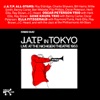
Pianist Mel Powell’s career began with a lucky break---being hired by Benny Goodman in 1941; by 1952 he had basically given up jazz to be a classical composer. His arranging and playing on “That Old Black Magic” for a 1947 small group recording foreshadows his career change. Canadian-born pianist Oscar Peterson had a life-long champion in producer Norman Granz. Granz utilized Peterson’s trio for his Jazz at the Philharmonic tours and for recording sessions. A 1953 live performance in Tokyo by the trio illustrates what a brilliant and cohesive group it was and what an impressive pianist Oscar is. Peterson’s Trio was onboard for a session led by alto saxophonist Benny Carter in 1954, also for Granz. Trombonist Bill Harris and drummer Buddy Rich augment the Trio, and this is a corker of a recording, building to a wonderful drum solo on the last chorus by Rich.
Chris Tyle - Jazz Musician and Historian
|
Additional information for "That Old Black Magic" may be found in:
|
|
|
Allen Forte
Listening to Classic American Popular Songs
Yale University Press; Book & CD edition
Hardcover: 219 pages
(6 pages including the following types of information: history, lyric analysis, music analysis and song lyrics. (Book includes CD).)
|
|
|
|
|
 David Ewen
Great Men of American Popular Song
Prentice-Hall; Rev. and enl. ed edition
Unknown Binding: 404 pages
(1 paragraph including the following types of information: history.)
|
|
|
|
|
 Robert Gottlieb, Robert Kimball
Reading Lyrics
Pantheon
Hardcover: 736 pages
(Includes the following types of information: song lyrics.)
|
|
|
|
|
|
|
|
Comment Policy
- Your comments are welcome, including why you like
this tune, any musical challenges it presents, or additional background information.
- Jazz musicians, fans, and students of all ages use this website as an educational resource.
As such, off-topic, off-color, unduly negative, and patently promotional comments will be removed.
- Once submitted, all comments become property of JazzStandards.com.
By posting, you give JazzStandards.com permission to republish or otherwise distribute your comments in any format or other medium.
JazzStandards.com reserves the right to edit or remove any comments at its sole discretion.
|
|
| Click on any CD for more details at Amazon.com |
 Dizzy Gillespie
Dizzy Gillespie 1947-1949
Classics France/Trad Alive
Original Recording 1949
|
|
Trumpet giant Gillespie leads his Orchestra through a great Latin-ized performance of “That Old Black Magic.” Johnny Hartman contributes ethereal vocals to the intro before crooning the melody.
|
 Erroll Garner
Mambo Moves Erroll
Polygram Records
Original Recording 1954
|
|
Garner’s trio is augmented here by conga master Candido Camero for a playful performance with a Latin feel. Garner’s piano playing here revolves around the rhythmic use of rich block chords, both on the melody and on his solo.
|
 Bud Powell
Bud Powell 57
Polydor Japan
Original Recording 1954
|
|
In a trio with bassist Percy Heath and drummer Max Roach, pianist Powell takes “That Old Black Magic” at a fast tempo, fluctuating between Latin, swing and even some free time.
|
 Ella Fitzgerald
The Very Best Of The Harold Arlen Song Book
Verve
Original Recording 1961
|
|
This songbook recording is subtly swinging, with Fitzgerald’s picture-perfect melody statement accompanied by Billy May’s Orchestra, with Plas Johnson featured on tenor saxophone.
|
 Herbie Hancock
Trio ‘81
Sony
Original Recording 1981
|
|
Pianist Hancock is heard here on a remarkably flowing and inventive live track at a bright, swinging tempo. His trio-mates here are his longtime cohorts Ron Carter on bass and Tony Williams on drums.
|
|
 Bobby Troup
...Sings Johnny Mercer
2003 Westside UK
Original recording 1955
|
|
Troup has that casual, intimate way with a vocal that was typical of Mercer himself. This is a great collection of Mercer tunes, including fine versions of “That Old Black Magic” and “Skylark” and the seldom heard “Jamboree Jones.”
|
 Pete Rugolo
Introducing Pete Rugolo/Adventures in Rhythm
1998 Collectables 5893
Original recordings 1955
|
|
Bandleader Rugolo put his stamp on many of the tunes that he arranged for Stan Kenton’s band. Here he lays a little of his magic on the Arlen/Mercer tune for his own aggregation.
|
 Johnny Hartman
Unforgettable
1995 Impulse! 152
Original recording 1966
|
|
Hartman swings with gusto, and the band is swept away by his infectious enthusiasm on this up-tempo, energetic, and wildly entertaining rendition of the song.
|
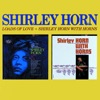
 Shirley Horn
Loads of Love & Shirley With Horns
Polygram Records
Original Recording 1963
|
|
This quiet, introspective rendition is punctuated with little bursts of color. Horn’s voice is a seductive whisper as it floats over a samba shuffle.
|
 Ike Quebec
Blue & Sentimental
1988 Blue Note 84098
Original recording 1961
|
|
Tenor saxophonist Quebec makes a meal of the song, swaggering throughout as guitarist Grant Green, drummer Philly Joe Jones, and bassist Paul Chambers swing in the background.
|
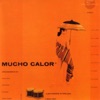
 Mucho Calor
Mucho Calor
1997 VSOP Records
Original recording date not available
|
|
A group of West coast musicians put together this “presentation in latin jazz,” interspersing original compositions with standards and featuring arrangements by Bill Holman, Benny Carter, Art Pepper, Conte Candoli, and Johnny Mandel. Such songs as “That Old Black Magic,” “Autumn Leaves,” and “I’ll Remember April” get a Latin lease on life.
|
|
|
|