|
|
|
”...Undoubtedly one of the most oft-played tunes of the 1930s and ‘40s.”
|
|
 |
|
- Chris Tyle
|
|
| |
Vocalist Al Bowlly introduced this tune in two different recorded versions in 1934. The first recording was with piano accompaniment by Monia Liter, and the second was as vocalist with composer Ray Noble’s Orchestra. The second version climbed to number one in the charts:
- Ray Noble and His Orchestra (1934, Al Bowlly, vocal, #1)
- Bing Crosby (1934, vocal, #11)
- Vaughn Monroe and His Orchestra (1944, vocal, #19)
|
|
| |
|
| |
|
English composer/bandleader Ray Noble’s first big success, “Good Night Sweetheart” (1931), had become a hit due in part to an excellent Bing Crosby recording. The tune soon became the closer for many bands, undoubtedly one of the most oft-played tunes of the 1930s and ‘40s. In 1932 Noble wrote “Love Is the Sweetest Thing,” and his recording of the tune hit number one in the charts for 16 weeks. “The Very Thought of You” did the very same thing in 1934. Noble was soon getting offers from across the pond.
|
| |
| |
|
| |
|
|
| |
| |
|
| |
|
Noble’s bands were made up of English musicians from other successful bands, such as those led by Lew Stone and Roy Fox. Noble, a keen judge of talent, was basically a band organizer even though his groups performed publicly on radio and on recordings. Another “borrowed” band member was vocalist Al Bowlly, who had a large following in England and even a fan-base in the U.S.
In addition to Bowlly’s two recordings mentioned above, he was the first person to perform “The Very Thought of You” on film, appearing in a short feature with pianist Monia Liter.
Due to the American success of Noble’s recordings with Bowlly, both men, along with Noble’s drummer and manager Billy Harty, came to the U.S. towards the end of 1934. Noble and Harty engaged the services of trombonist Glenn Miller to assemble a band of top-flight American musicians to perform at Radio City’s swanky Rainbow Room in New York, quite possibly one of the choicest gigs in the U.S. Loaded with such fine jazz players as Bud Freeman (tenor sax), George Van Eps (guitar), Claude Thornhill (piano), Will Bradley (trombone), and Pee Wee Erwin (trumpet), the band opened at the Rainbow Room in early 1935.
Even with such a talented line-up and a recording contract with Victor Records, the band was never a huge success. The ensemble went through personnel changes and then broke up in 1937 when Noble and Harty headed to Hollywood for movie and radio work, Bowlly returned to England, and the remaining band members either worked for other leaders or formed their own bands (Miller, Bradley, Thornhill, and Freeman).
The American sojourn basically short-circuited Bowlly’s career. He had high hopes of huge success in the States, both with Noble’s band and in films, but his career never made the big leap like that of the hugely popular and successful Bing Crosby. Once back in the U.K. the momentum he had created before the American adventure had dissipated, and he was a “has-been” despite the fact that he had recorded more than 1000 sides, several of them huge hits. Yet his engaging and unusual vocal style still appeals to fans worldwide. Sadly, he was a victim of a German air raid in London in 1941.
Ray Noble was a songwriter who, like Irving Berlin, wrote both music and lyrics. “The Very Thought of You” is a lament for a lover who is physically far away but who is mentally seen “in every flower” and “in stars above.” It’s a simple yet touching ballad.
|
|
|
|
More information on this tune... |
|
|
 Robert Gottlieb, Robert Kimball
Reading Lyrics
Pantheon
Hardcover: 736 pages
(This book includes a short biography of songwriter/bandleader Ray Noble and the lyrics to four of his hit songs.)
|
|
|
|
See the Reading and Research page for this tune for additional references. |
|
Chris Tyle - Jazz Musician and Historian
|
|
| This section suggests definitive or otherwise significant recordings that will help jazz students get acquainted with
“The Very Thought of You.” These recordings have been selected from the Jazz History and
CD Recommendations sections.
|
“The Very Thought of You” has been recorded in a wide variety of settings, ranging from jazz to middle-of-the-road pop. Nobody has put a more distinctive stamp on the song, however, than Billie Holiday (The Quintessential Billie Holiday, Vol.6: 1938) with her wonderful 1938 recording. Sarah Vaughan’s intimate 1962 recording (Sarah + Two) is not nearly as celebrated, but it is wonderful and offers some useful insight into the song. Among instrumental versions, Art Farmer’s 1958 quartet performance with Hank Jones on piano (Portrait of Art Farmer) is a great place to start.
Noah Baerman - Jazz Pianist and Educator
|
Musical analysis of “The Very Thought of You” | | Original Key | Ab major | | Form | A - B1 - A - B2 | | Tonality | Major throughout | | Movement | “A” ascends primarily by steps with periodic skips (mostly thirds); “B” descends primarily by thirds with periodic steps before resuming melodic ascent. | Comments (assumed background) | | On the surface, this tune is very simple; 80% of the melody is based on an Ab pentatonic scale. Only during the last four measures of “B” are the fourth and seventh degrees of the scale used. Because of this construction, this piece lends itself very well to the use of chord substitutions and reharmonization. | | K. J. McElrath - Musicologist for JazzStandards.com |
|
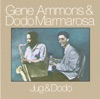
Some of Billie Holiday’s best work was in the company of musicians from Count Basie’s Orchestra, especially tenor saxophonist Lester Young. Billie’s recording of “The Very Thought of You” is three minutes of perfection, not only for her wonderful vocal but for the contributions of Buck Clayton on trumpet and Young on clarinet. In jazz history there are musicians who, by some twist of fate, were brushed by and spent their careers in semi-obscurity. Pianist Dodo Marmarosa suffered that fate. His early career, from 1943 to 1950, was a flurry of activity with the big bands of Charlie Barnet, Tommy Dorsey, and Artie Shaw, and small groups led by luminaries like Charlie Parker and Lester Young. He then slipped into the void, emerging occasionally. One of those phoenix-like moments occurred in 1962 on a session with tenor saxophonist Gene Ammons. Half of the recording is just Dodo with the rhythm section, and he does a scintillating rendition of Ray Noble’s elegant number.
Chris Tyle - Jazz Musician and Historian
|
Additional information for "The Very Thought of You" may be found in:
|
|
|
 Thomas S. Hischak
The Tin Pan Alley Song Encyclopedia
Greenwood Press
Hardcover: 552 pages
(1 paragraph including the following types of information: film productions, history and performers.)
|
|
|
|
|
Robert Gottlieb, Robert Kimball
Reading Lyrics
Pantheon
Hardcover: 736 pages
(Includes the following types of information: song lyrics.)
|
|
|
|
|
|
|
|
Comment Policy
- Your comments are welcome, including why you like
this tune, any musical challenges it presents, or additional background information.
- Jazz musicians, fans, and students of all ages use this website as an educational resource.
As such, off-topic, off-color, unduly negative, and patently promotional comments will be removed.
- Once submitted, all comments become property of JazzStandards.com.
By posting, you give JazzStandards.com permission to republish or otherwise distribute your comments in any format or other medium.
JazzStandards.com reserves the right to edit or remove any comments at its sole discretion.
|
|
| Click on any CD for more details at Amazon.com |
 Pee Wee Russell
Swingin' with Pee Wee
Milestone
Original recording 1960
|
|
Clarinetist Russell made his name during the early jazz era, but he proved to be versatile enough to fit comfortably into multiple stylistic contexts. This wonderful 1960 swing-themed session matches Russell with a band including trumpeter Buck Clayton and pianist Tommy Flanagan. Russell’s take on “The Very Thought of You” is lyrical and sophisticated.
|
 Sheila Jordan & Harvie Swartz
The Very Thought of Two
M.a. Recordings
Original recording 1988
|
|
This wonderful recording documents two of vocalist Jordan’s enduring relationship. One is her relationship with “The Very Thought of You,” which she recorded several times after this. The other is her relationship with bassist Harvie S (at the time known as Harvie Swartz), with whom she has recorded frequently, including numerous duet recordings like this one.
|
 Art Farmer
Portrait of Art Farmer
Ojc
Original recording 1958
|
|
Farmer was a remarkably lyrical interpreter of ballads, and he is in top form on “The Very Thought of You” a performance also featuring pianist Hank Jones.
|
 Sarah Vaughan
Sarah + 2
Blue Note Records
Original recording 1962
|
|
Vaughan’s confident, precise and emotionally compelling vocal delivery is a great fit for this tune. Her performance here is particularly spacious and lyrical, accompanied only by Barney Kessel’s guitar and Joe Comfort‘s bass.
|
 Hank Jones
Live at Maybeck 16
Concord Records
Original Recording 1991
|
|
Many pianists have tackled “The Very Thought of You” alone at the piano through the years, and Hank Jones has proved to be one of the song’s foremost interpreters. This is his second solo recording of the song and is a great example of the lyricism, touch and harmonic richness that define his sound.
|
 Sonny Rollins
Love at First Sight
Ojc
Original recording 1980
|
|
Saxophonist Rollins was past his most influential period by the time of this 1980 recording, but his take on “The Very Thought of You” shows that he was still capable of creating stunning music. His playing is tender and lyrical for much of the recording, but with some edgier moments as well. He is accompanied only by pianist George Duke, who shows off his straight-ahead jazz pedigree.
|
|
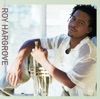
 Roy Hargrove
Moment to Moment
2000 Verve 314543540
Original recording 2000
|
|
Hargrove reins in some of his explosive energy to present a proper romantic reading of the song. Backed by strings, the trumpeter’s muted tones are dreamy and genteel.
|
 Charlie Haden/Kenny Barron
Night and the City
1996 Verve 314539961
Original recording 1998
|
|
There is no other way to describe this live recording than intensely beautiful. Bassist Haden and pianist Barron have an incredible repartee which translates to a reading of the song that touches the very soul.
|
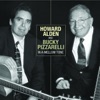
 Howard Alden, Bucky Pizzarelli
In a Mellow Tone
Concord Records
|
|
Two master guitarists, two creative minds, two sensibilities in sync, and 13 marvelous standards make this duo performance a memorable one. Their gentle reading of this song swings softly.
|
|
|
|