|
|
|
| “‘This Can’t Be Love’ is a splendid song, a great illustration of control, direction, choice, and what I might call essence....” |
|
 |
|
- Alec Wilder
|
|
| |
Composer Richard Rodgers and lyricist Lorenz Hart along with the multi-talented writer/producer/director George Abbott were the first to create an American musical based on Shakespeare. The 1938 Broadway show The Boys from Syracuse was the threesome’s interpretation of The Comedy of Errors which pivoted around confused identities in ancient Greece. It was Rodgers’ idea to use Shakespeare as a basis for the show, and the success of the production was based on the acting, the witty dialogue, and the humorous songs. “This Can’t Be Love” was introduced by Marcy Wescott and Eddie Albert, and the show featured another song that would enter the standards repertoire, “Falling in Love with Love.”
|
| |
| |
|
| |
|
|
| |
| |
|
| |
|
“This Can’t Be Love” charted twice and appeared ten times on the popular radio program Your Hit Parade:
- Horace Heidt and His Orchestra (1938, five weeks, topping at #6)
- Benny Goodman and His Orchestra (1938+, 13 weeks, two weeks at #1)
|
|
| |
|
| |
|
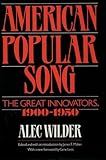
Alec Wilder in his book American Popular Song: The Great Innovators, 1900-1950 says, “‘This Can’t Be Love’ is a splendid song, a great illustration of control, direction, choice, and what I might call essence....The song has that glow about it which suggests great fun in the writing of it.” He then explains Rodgers’ structuring of the tune: “The verse of ‘This Can’t Be Love’ moves about in chromatic sinuosities, but carefully stops in time to prepare the listener, by means of whole notes, for the more straightforward diatonic half and quarter note line of the chorus.”
Hollywood turned The Boys from Syracuse into a film in 1940 and a new production was made for TV in 1986. A new show was mounted on Broadway in 1963 and produced a cast album. Cyd Charisse danced to “This Can’t Be Love” in Words and Music, the 1948 fictionalized film biography of Rodgers and Hart, and Doris Day sang it in the 1962 movie Jumbo.
“This Can’t Be Love” remains a favorite of vocalists from Chris Connor, Shirley Horn, Abbey Lincoln, Nat Cole, and the Four Freshmen to Ernestine Anderson, Rebecca Kilgore, Mary Stallings, and Diana Krall. Violinist Johnny Frigo has recorded it as well as saxophonists Cannonball Adderley and Paul Desmond, pianists Gene Harris and Adam Makowicz, and guitarists Howard Alden and Bireli Lagrene.
|
|
|
|
More information on this tune... |
|
See the Reading and Research page for this tune for additional references. |
|
- Sandra Burlingame
|
|
| This section suggests definitive or otherwise significant recordings that will help jazz students get acquainted with
“This Can't Be Love.” These recordings have been selected from the Jazz History and
CD Recommendations sections.
|
Benny Goodman’s 1938 recording of “This Can’t Be Love” (The Essential Benny Goodman) is a definitive swing-era rendition of the tune and certainly one of the most popular versions in any context. Erroll Garner’s swinging trio version from 1949 (Complete Savoy Master Takes) offers us a more intimate look into the song. As for vocal performances, Ella Fitzgerald’s live version with Oscar Peterson from 1961 (Ella Returns to Berlin) is a standout.
Noah Baerman - Jazz Pianist and Educator
|
Many of Hart’s lyrics compare love to physical pain or ailments, but in this song the irony lies in the lack of any discomfort:
This can’t be love, because I feel so well,
No sobs, no sorrows, no sighs.
This can’t be love; I get no dizzy spells,
My head is not in the skies.
- Sandra Burlingame
Musical analysis of “This Can’t Be Love” | | Original Key | G major | | Form | A - B - A | | Tonality | Primarily major; brief E minor tonality in mm. 1-4 of “B” | | Movement | Variety of leaps (5ths and 6ths) and stepwise diatonic motion in both directions, centered on the initial tonic pitch. | Comments (assumed background) | | A peppy little tune in the classic Broadway “2-beat” tradition, this piece holds few surprises. “A” sections are completely diatonic (no altered pitches or accidentals) following the I -IV - I - V7 formula. The contrasting “B” theme goes to the relative minor key of E minor, returning to the tonic using a cycle of fifths. Rodgers does use an embellishing ct°7 chord in m. 13 of “A” as well as a ii7/V7 substitution in the modulation to E minor at the beginning of “B.” But for the most part, the harmonic progression is standard and predictable. This is an ideal tune for the novice and is undemanding vocally. | | K. J. McElrath - Musicologist for JazzStandards.com |
|
A 1939 radio broadcast captured clarinetist Artie Shaw’s band in a groovy mood on their arrangement of this tune. Propelled by young Buddy Rich on drums, vocalist Helen Forrest does an especially fine vocal followed by some spectacular upper-register clarinet by Shaw. Flip Phillips, a fine tenor saxophonist and veteran of the Woody Herman First Herd, did a tasty version of “This Can’t Be Love” in 1949 for Norman Granz’s Verve label. Red Norvo’s Trio, with Red on vibes, Tal Farlow on guitar, and Charles Mingus on bass, was a critical and popular success. Their 1951 recordings for Savoy epitomize small group jazz. Although earlier versions of “This Can’t Be Love” are at a medium tempo, Norvo’s crew sails through the tune at breakneck speed with fine solos by Norvo and Farlow.
Chris Tyle - Jazz Musician and Historian
|
Additional information for "This Can't Be Love" may be found in:
|
|
|
 Robert Gottlieb, Robert Kimball
Reading Lyrics
Pantheon
Hardcover: 736 pages
(Includes the following types of information: song lyrics.)
|
|
|
|
|
|
|
|
Comment Policy
- Your comments are welcome, including why you like
this tune, any musical challenges it presents, or additional background information.
- Jazz musicians, fans, and students of all ages use this website as an educational resource.
As such, off-topic, off-color, unduly negative, and patently promotional comments will be removed.
- Once submitted, all comments become property of JazzStandards.com.
By posting, you give JazzStandards.com permission to republish or otherwise distribute your comments in any format or other medium.
JazzStandards.com reserves the right to edit or remove any comments at its sole discretion.
|
|
| Click on any CD for more details at Amazon.com |
 Benny Goodman
Essential Benny Goodman
Sony
Original Recording 1938
|
|
This hit recording, which features the vocals of Martha Tilton is a swinging highlight of the Harry James era of Goodman’s band.
|
 Erroll Garner
Complete Savoy Master Takes
Savoy Jazz
Original Recording 1949
|
|
Pianist Garner offers up a definitive example of his trio concept here, with a tightly swinging groove and a deft mixture of playful single note runs and rich block chords.
|
 benny carter
3, 4, 5: the verve small group sessions
polygram records
|
|
This quartet performance features a fabulously assertive solo by Carter on alto saxophone. The infectiously swinging groove can largely be credited to the drumming of Louie Bellson.
|
 Art Tatum
The Tatum Group Masterpieces, Vol. 2
Pablo
Original recording 1955
|
|
After offering a faithful reading of the melody, Tatum burns through “This Can’t Be Love” with great creativity and dexterity, as does quartet-mate Roy Eldridge on trumpet.
|
 Stan Getz with Gerry Mulligan
Getz Meets Mulligan in Hi-Fi
Polygram Records
Original recording 1957
|
|
Saxophonists Getz and Mulligan make this bright tempo sound effortless with their flowing solos and trading with one another. Pianist Lou Levy is also featured.
|
 Ella Fitzgerald
Ella Returns to Berlin
Polygram Records
Original recording 1961
|
|
This up-tempo live recording features a wonderful and straightforward reading of the melody, a powerhouse scat solo and some great piano work by guest soloist Oscar Peterson.
|
|
 Diana Krall
Stepping Out
2000 Justin Time 50
Original recording 1992
|
|
While Krall’s vocals are brighter and less husky than in later years, her first recorded session features this gem, proving that she is first and foremost a distinctively swingin’ pianist.
|
 Cal Tjader
Mambo with Tjader
1997 Original Jazz Classics 271
Original recording 1954
|
|
As the title suggests, vibraphonist Tjader sets the song to a South American beat. Of particular note is the scintillating play of pianist Manuel Duran who sets the keyboard on fire.
|
 Red Holloway
Brother Red
1995 Prestige 24141
Original recording 1964
|
|
Saxophonist Holloway leads by example on this cookin’ swing session. His full, muscular notes sound even rounder with the atmospheric support of guitarist George Benson and organist Jack McDuff.
|
 Paul Bley
The Nearness of You
1994 Steeplechase
Original recording 1988
|
|
The pianist’s straight-ahead, introductory chorus enables listeners to better understand the improvisational journey that he takes on the tune. Bassist Ron McClure and drummer Billy Hart round out this fine trio.
|
|
|
|