|
|
|
| Stan Getz’s 1957 session found the tenor saxophonist playing “Time After Time” in a medium groove, making his version different from the norm. |
|
 |
|
- Chris Tyle
|
|
| |
The songwriting team of Sammy Cahn (lyrics) and Jule Styne (music) wrote “Time After Time” during the period they were working closely with Frank Sinatra. It’s no surprise then that the version by “Ol’ Blue Eyes” hit the charts in 1947 and rose to #16.
|
|
| |
|
| |
|
|
| |
| |
|
| |
|
Cahn and Styne had met Sinatra during his tenure with Tommy Dorsey, and when he left the trombonist’s band to start a solo career the pair began writing numbers for him. In 1946 they actually left New York on the train with Sinatra and family for Hollywood. Once there, the songwriters and Sinatra started putting on little “theatrical productions” involving their friends. According to Theodore Taylor’s biography Jule: The Story of Composer Jule Styne, these shows were elaborate presentations with complete scores and intricate sketches.
|
| |
| |
|
| |
|
|
| |
| |
|
| |
|
One night, however, the group assembled without a show. Jule asked Sinatra to ask the group if they had heard the new score written by Jerome Kern for the musical about the life of Annie Oakley (which would eventually be called Annie Get Your Gun). As it turns out, no one (including Jule) had, but the enterprising Styne created a melody that sounded to him like Kern. The group loved it and requested that Styne play more melodies from the show, which he conveniently couldn’t recall. A short while later Styne got together with Cahn who fit lyrics to the melody. Sinatra, accompanied by the orchestra of Axel Stohrdahl, recorded it for Columbia on October 26, 1946.
The following year Cahn and Styne wrote the music for the film It Happened in Brooklyn, starring Sinatra. Both Sinatra and Kathryn Grayson sing the number in the film, no doubt helping put Sinatra’s recording in the charts.
|
|
|
|
| This section suggests definitive or otherwise significant recordings that will help jazz students get acquainted with
“Time After Time.” These recordings have been selected from the Jazz History and
CD Recommendations sections.
|
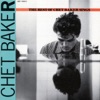
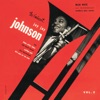
In a jazz context, Chet Baker is perhaps the definitive interpreter of “Time After Time,” and his initial recording of the tune from 1954 (The Best of Chet Baker Sings) is his best-loved version, featuring excellent examples of both his singing and his trumpet playing. J.J. Johnson’s elegant interpretation from later that year (The Eminent J.J. Johnson, Vol. 2) features prominent bass work from Charles Mingus and a great double-timed solo that offers a glimpse of the song’s utility as a swinging tune. Stan Getz’s 1957 recording (Award Winner) with Lou Levy on piano is a fully-swinging version and features Getz at his finest.
Noah Baerman - Jazz Pianist and Educator
|
Cahn’s lyrics are a personal reminder of how lucky it is to be in love with a special person, hoping that “the passing years will show, you’ve kept my love so young, so new.” Chris Tyle
Musical analysis of “Time After Time” | | Original Key | C major | | Form | A1 - B - A2 - C | | Tonality | Primarily major; A minor and E minor tonalities occur in “B.” | | Movement | Intervallic figures with passing tones, leaping upward with stepwise descent. | Comments (assumed background) | | Nice melodic construction beginning in the lower range and gradually climbing to a “big finish” on the tonic an octave higher. A mixture of harmonic progressions and devices are used here. “A” begins with the “ice cream changes” (“Blue Moon,” “Heart and Soul,” etc.) and then goes into a diatonically ascending I - ii - iii progression followed by the start of a vi - ii7 turnaround. Instead of resolving to V7 - I, however, the descending bass line changes the ii chord into a iiø7/I in the relative minor (Dm becoming Bm7(b5) resolving to Am). This descending bass line device is used twice more, eventually winding up on a Dm7 chord, facilitating an easy modulation back to the original key. “C” consists of a number of popular turnarounds that sound like an extended ending (which it seems to be). A second-inversion tonic chord is followed by a half diminished chord built on the flatted fifth, leading to a iv - iii7 sequence (see mm. 8 -10 of “Night and Day”). A vi - ii7 progression follows this, but the final resolution to I is creatively delayed by the insertion of another iv chord after the ii7 before the iii - vi - ii7 sequence that eventually ends with a final V7 - I cadence. | | K. J. McElrath - Musicologist for JazzStandards.com |
|
Not all jazz players are blessed with great instrumental and vocal abilities. Yet many musicians desire to sing the tunes they play. Trumpeter Chet Baker was able to pull it off with panache. His vocal style was highly individual, unlike anything in jazz prior to his emergence on the scene. Chet’s rendition of “Time After Time” comes from his second vocal session, and it’s a sensitive performance with a late-night feel.
Trombonist J. J. Johnson knocked the jazz world for a loop with his fabulous bebop playing on the generally less-than-agile trombone. Yet he also had a delicate and pretty sound on ballads, and his reading of “Time After Time” from 1954 attests to his exemplary musicianship
“Award winner” Stan Getz’s 1957 session found the tenor saxophonist playing “Time After Time” in a medium groove, making his version different from the norm.
Chris Tyle - Jazz Musician and Historian
 Stan Getz
Award Winner
Polygram Records 543320
Original recording 1957
|
|
|
|
|
Additional information for "Time After Time" may be found in:
|
|
|
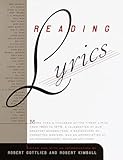 Robert Gottlieb, Robert Kimball
Reading Lyrics
Pantheon
Hardcover: 736 pages
(Includes the following types of information: song lyrics.)
|
|
|
|
|
|
|
|
Comment Policy
- Your comments are welcome, including why you like
this tune, any musical challenges it presents, or additional background information.
- Jazz musicians, fans, and students of all ages use this website as an educational resource.
As such, off-topic, off-color, unduly negative, and patently promotional comments will be removed.
- Once submitted, all comments become property of JazzStandards.com.
By posting, you give JazzStandards.com permission to republish or otherwise distribute your comments in any format or other medium.
JazzStandards.com reserves the right to edit or remove any comments at its sole discretion.
|
|
| Click on any CD for more details at Amazon.com |
 Frank Sinatra
Sings His Greatest Hits
Columbia/Legacy
Original recording 1946
|
|
Influential crooner Sinatra provides the song’s first signature performance here with the backing of Axel Stordahl’s orchestra.
|
 Sarah Vaughan
1946-1947
Classics
Original recording 1946
|
|
Pianist and bandleader Teddy Wilson, an important early collaborator with Billie Holiday, continues his stellar track record of nurturing important young vocalists on this ballad performance featuring Vaughan. Charlie Ventura’s tenor saxophone also features prominently.
|
 Ben Webster
Ben Webster and Associates
Polygram Records
Original recording 1959
|
|
On an album dominated by all-star collaborators, Webster himself takes center stage here with an emotional ballad reading of “Time After Time. The rhythm section of Jimmy Jones, Les Spann, Ray Brown and Papa Jo Jones provides elegant support.
|
 Sonny Stitt and Jack McDuff
Stitt Meets Brother Jack
Ojc
Original recording 1962
|
|
Sonny Stitt, heard here on tenor saxophone, offers up a soulful ballad performance that goes into a subtle but infectious swing feel for his solo. Organist Brother Jack McDuff provides a deep bottom to the groove.
|
 June Christy
The Intimate Miss Christy
Blue Note Records
Original recording 1963
|
|
Christy’s vocals on this nicely swinging performance are accompanied only by bass, guitar and the flute of Bud Shank, who engages in some tasty interplay with Christy.
|
|
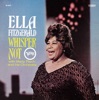
 Ella Fitzgerald
Whisper Not
2002 Verve 314589478
Original recording 1966
|
|
This may be the definitive vocal version of the song. Arranger Marty Paich allows Fitzgerald to use all the tricks in her bag from swingin’ abandon to touching sentimentality.
|
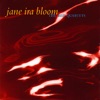
 Jane Ira Bloom
The Red Quartets
1999 Arabesque Recordings 144
Original recording 1999
|
|
Two powerhouses of contemporary jazz deliver a fantastic version of the song. Bloom’s wistful soprano saxophone practically floats over the refined piano of Fred Hersch.
|
Stan Getz
Award Winner
Polygram Records 543320
Original recording 1957
|
|
Saxophonist Getz delivers a warm, engaging take on the song. The mid-tempo rhythm and upbeat expression define what West Coast cool was all about.
|
 Benny Green
Greens
Blue Note Records
|
|
Pianist Green, in company with bassist Christian McBride and drummer Carl Allen, puts an appropriately bluesy spin on this classic in an arrangement that gives everyone solo space
|
 Buddy Morrow
Night Train
1995 Aerospace 1034
Compilation
|
|
Trombonist Morrow’s big band was highly popular in the ‘50s and early ‘60s. The band leans on the sweet side of the song in this arrangement.
|
|
|
|