|
|
|
| Lee Wiley was 15 years old when she recorded “Time on My Hands.” |
|
 |
|
- Chris Tyle
|
|
| |
Vincent Youmans’ melody was introduced by actor/vocalist Paul Gregory in the musical Smiles, which premiered November 18, 1930, and met its demise 62 performances later on January 10, 1931. Vocalist Smith Ballew’s recording was the first to hit the charts in October, 1931, followed a couple of months later by the Leo Reisman version with sultry vocalist Lee Wiley (who was 15 years old at the time).
- Smith Ballew (1931, vocal, #6)
- Leo Reisman and His Orchestra (1931, Lee Wiley, vocal, #6)
|
|
| |
|
| |
|
The musical Smiles was produced by Florenz Ziegfeld, the man who created the “Ziegfeld Girl” of the first two decades of the 20th century. The first actual performance of the show was in Boston on October 24, 1931. It wasn’t well liked by the critics there, but Ziegfeld decided to forge ahead and open the show in New York. It didn’t fare well there either, expiring after two months. Ziegfeld and Youmans’ were at odds regarding the music, and during the course of the run, several of Youmans’ songs were cut and replaced by numbers written by Walter Donaldson.
|
| |
| |
|
| |
|
|
| |
| |
|
| |
|
Youmans’ biographer Gerald Bordman, in Days to Be Happy, Years to Be Sad: The Life and Music of Vincent Youmans, conjectures that “Time on My Hands” was composed while Youmans was having dinner at the Hotel Bossert in Brooklyn. Lyricist Harold Adamson was a senior at Harvard when he met Youmans’ in the summer of 1930. Impressed by his abilities, Youmans’ hired him to write lyrics for the songs to be used in Smiles. Ziegfeld was not happy with Adamson, and some of the show’s numbers were rewritten with lyrics by Ring Lardner (not, however, “Time on My Hands”). Bordman doesn’t mention to what extent, if any, Mack Gordon contributed to the lyric writing, even though his name follows Adamson’s on the published music credits.
|
| |
| |
|
| |
|
The story of “Time on My Hands” takes a strange turn after the closing of the show. Normally a song that was destined to become a standard would initially be recorded during the show’s performance. Yet the first recording of “Time on My Hands” took place in London six weeks after the show closed. On February 19, 1931, the New Mayfair Dance Orchestra (led by composer Ray Noble) waxed it with vocalist Al Bowlly. Bowlly’s record took off in the U.K., and he recorded it three more times in 1931: with Roy Fox’s Orchestra in March, and twice in June with The Waldorphians and the Beauville Dance Band. (The song was a favorite of the Prince of Wales, and he requested dance bands to play it wherever he went.) Over in the U.S., vocalist Smith Ballew’s version wasn’t recorded until September, but undoubtedly the versions by Bowlly brought the tune to the attention of U.S. audiences, spurring on the recordings made in the fall of 1931.
|
|
|
|
| This section suggests definitive or otherwise significant recordings that will help jazz students get acquainted with
“Time on My Hands.” These recordings have been selected from the Jazz History and
CD Recommendations sections.
|
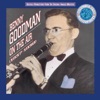
Among pianist Teddy Wilson’s numerous recordings of “Time on My Hands,” he has the distinction of having been involved in two of the song’s most important versions. Benny Goodman’s 1937 live performance (On the Air) features Wilson’s brilliant piano work prominently, and Wilson also co-stars with trumpet great Roy Eldridge among Billie Holiday’s band on her definitive 1940 recording (The Quintessential Billie Holiday, Vol 8). Among more modern versions, Stan Getz’s 1952 recording (1951-1952) is excellent and is also a fine example of the song being interpreted outside of a ballad context.
Noah Baerman - Jazz Pianist and Educator
|
Adamson’s lyrics tell of a moment when two lovers are oblivious to the passage of time, and all that matters is “someone you care for.” Chris Tyle
Musical analysis of “Time on My Hands” | | Original Key | Eb major | | Form | A1 - A2 - B - A3 | | Tonality | Major throughout | | Movement | A repeated note, embellished by upper and lower neighbor tones (similar to a “turn”) descending by step or ascending by leap | Comments (assumed background) | | The rich harmonic structure is what makes this relatively simple tune such a beauty. While the melodic line is somewhat repetitive, the chord progression moves around in unexpected ways. Under sustained notes at the end of phrase, inner voices within a single chord move by step, altering tonality without altering tonal direction and creating interest and forward momentum. Performers of polyphonic instruments such as the piano and guitar should consult Youman’s original published version and preserve these changes, regardless of what other substitutions may be used in the rest of the song. | | K. J. McElrath - Musicologist for JazzStandards.com |
|
As with many popular songs, the earliest recordings of this tune were fairly straight vocal renditions. A Benny Goodman Trio feature from a live radio broadcast of 1937 is an instrumental, played in a relaxed, inspired way, mostly spotlighting the outstanding playing of pianist Teddy Wilson. A 1939 session of the Quintette of the Hot Club of France, with Django Reinhardt on guitar and Stephane Grappelli on violin, is another laid-back rendition with some delicate playing by Django. Billie Holiday’s soulful vocal interpretation from 1940 is masterfully backed by stalwart pals Roy Eldridge (trumpet) and Lester Young (tenor sax) and the peripatetic Teddy Wilson.
Chris Tyle - Jazz Musician and Historian
|
Additional information for "Time on My Hands" may be found in:
|
|
|
 David Ewen
Great Men of American Popular Song
Prentice-Hall; Rev. and enl. ed edition
Unknown Binding: 404 pages
(2 paragraphs including the following types of information: anecdotal and history.)
|
|
|
|
|
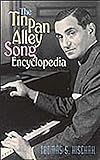 Thomas S. Hischak
The Tin Pan Alley Song Encyclopedia
Greenwood Press
Hardcover: 552 pages
(1 paragraph including the following types of information: film productions, history and performers.)
|
|
|
|
|
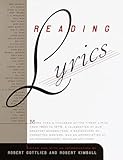 Robert Gottlieb, Robert Kimball
Reading Lyrics
Pantheon
Hardcover: 736 pages
(Includes the following types of information: song lyrics.)
|
|
|
|
|
|
|
|
Comment Policy
- Your comments are welcome, including why you like
this tune, any musical challenges it presents, or additional background information.
- Jazz musicians, fans, and students of all ages use this website as an educational resource.
As such, off-topic, off-color, unduly negative, and patently promotional comments will be removed.
- Once submitted, all comments become property of JazzStandards.com.
By posting, you give JazzStandards.com permission to republish or otherwise distribute your comments in any format or other medium.
JazzStandards.com reserves the right to edit or remove any comments at its sole discretion.
|
|
| Click on any CD for more details at Amazon.com |
 Art Tatum
The Complete Capitol Recordings
Blue Note Records
|
|
Tatum’s solo piano performance here somehow bridges the gap between lyricism and excitement, with his dexterous runs and rich harmonies decorating a gorgeous, gentle treatment of melody.
|
 Stan Getz
1951-1952
Melodie Jazz Classic
Original recording 1952
|
|
Instead of its typical ballad setting saxophonist, “Time On My Hands” is taken here as a medium swing tune by tenor saxophonist Getz, with nice work by guitarist Jimmy Raney and pianist Duke Jordan as well.
|
 Coleman Hawkins
Sirius
Ojc
Original recording 1966
|
|
This is the last and the most emotional of Hawkins’ multiple recordings of “Time On My Hands.” After a compelling statement of the melody in a duo with pianist Barry Harris, Hawkins plays alone for the remainder of the performance, something he largely pioneered.
|
 Earl Hines
An Evening with Earl Hines
Chiaroscuro Records
Original recording 1973
|
|
In a quartet featuring guitarist Tiny Grimes, Hines’ exceptionally creative piano playing is very much in the forefront here.
|
 Pepper Adams
Urban Dreams
Quicksilver
Original recording 1981
|
|
This relaxed, swinging performance features excellent solos by baritone saxophonist Adams, pianist Jimmy Rowles and bassist George Mraz, with fine support from drummer Billy Hart.
|
|
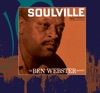
 Ben Webster
Soulville
2003 Verve 314521449
Original recording 1957
|
|
Saxophonist Webster presents a romantic reading in which his breathy, burnished notes float over an elegant carpet laid down by pianist Oscar Peterson.
|
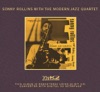
 Sonny Rollins/Modern Jazz Quartet
Sonny Rollins with the Modern Jazz Quartet
Original Jazz Classics 11
Original recording 1953
|
|
A young Rollins shows he has chops on this straight-ahead reading. His saxophone resonates with robust soul and velvety smoothness over a mid-tempo jaunt.
|
 Jimmy Scott
The Fabulous Songs of Jimmy Scott
2003 Savoy Jazz 17216
Original recording 1956
|
|
A welcome bonus to the CD, the song is performed with passion and pizzazz. Vocalist Scott’s distinctive voice soars over the string section, imbuing each word of the lyric with stirring immediacy.
|
 Ahmad Jamal
After Fajr
2005 Dreyfus
|
|
Time is in the hands of pianist Jamal in this case, and he takes liberties with it in a refreshing look at this standard. He’s joined by long-time bandmates bassist James Cammack and drummer Idris Muhammad. (“Fajr” refers to first Morning Prayer in Islamic religion.)
|
|
|
|