|
|
|
| “[The song] ...evoked enough of a feeling of togetherness in its wistful melody and lyrics to have almost instant appeal for the millions who were then separated from their loved ones because of the war.” |
|
 |
|
- Charles Schwartz
|
|
| |
The movie Something to Shout About, filmed in 1942 but released in 1943, introduced the Academy Award-nominated song “You’d Be So Nice to Come Home To.” It was sung by Don Ameche and Janet Blair in the backstage story which itself was nothing much to shout about.
The song was recorded by Frank Sinatra and made 16 appearances on the popular radio show Your Hit Parade. However, it was Dinah Shore with the Paul Weston Orchestra who took it to the charts where it remained for 18 weeks, topping at #3. The vocal group Six Hits and a Miss later had modest success with the song, charting for two weeks and reaching #11.
|
|
| |
|
| |
|
It was the only song from the film that caught on with the public. In his book Cole Porter: A Biography Charles Schwartz says that the song ...”evoked enough of a feeling of togetherness in its wistful melody and lyrics to have almost instant appeal for the millions who were then separated from their loved ones because of the war.”
|
| |
| |
|
| |
|
Henry Martin in his book Enjoying Jazz analyzes an Ella Fitzgerald performance of the song that he calls “a freewheeling improvisation of the melody with the original lyrics.... For a lyric to be applied so freely, it is necessary that it be fairly easy to sing. The smooth, colloquial lyric of ‘You’d Be So Nice to Come Home To’ enables Fitzgerald to show off her technique to excellent effect.”
The song’s appeal has lured even avant garde pianist Cecil Taylor to record it. Recent instrumental performances include renditions by pianist Bill Mays, guitarist Jack Wilkins, and flutist Ali Ryerson. Four contemporary vocalists perform the song at different tempos ranging from upbeat to slow ballad-- Janis Mann, Kenny Rankin, Giacomo Gates, and Andy Bey--but none of them include the verse--and with reason.
The verse, in fact, qualifies the love expressed in the song and totally changes the meaning: “It’s not that you’re fairer...It’s not that you’re rarer...No, my darling, this is the reason why you’ve got to be mine.” With this introduction the song’s romantic images become merely a wish, an idealization, intended as a seduction instead of a sincere expression of admiration: “You’d be so nice by the fire...under stars, chilled by the winter...under an August moon burning above....”
Cole: A Biographical Essay, by Robert Kimball and Brendan Gill, includes a second verse, apparently sung by the female love interest in response to the refrain. In this verse romance takes a real hit and the love expressed in the refrain is belittled:
I should be excited,
But, Lothario, why not own up
That you always chase
After ev’ry new face
In town?
Since both verses burst the bubble of romance and detract from the expressed desire, they are best unsung. Porter’s lyrics for the refrain are evocative, and they soothed a war time generation of couples longing to be reunited. Their magic is still effective generations later. And the move from the minor key opening to the major key ending adds to the song’s hopefulness. The verse aside, it’s a tune that jazz musicians still love to explore.
|
|
|
|
More information on this tune... |
|
- Sandra Burlingame
|
|
| This section suggests definitive or otherwise significant recordings that will help jazz students get acquainted with
“You'd Be So Nice to Come Home To.” These recordings have been selected from the Jazz History and
CD Recommendations sections.
|
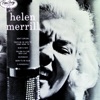
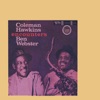
When looking for definitive vocal performances of “You’d Be So Nice to Come Home to,” there a couple that stand out which, interestingly, both feature guest artists on trumpet. Helen Merrill’s 1954 recording (Helen Merrill with Clifford Brown) is relaxed and swinging and features a remarkable solo by Clifford Brown, while Ella Fitzgerald’s recording from ten years later (At Juan-Les Pins) features a cameo from Roy Eldridge and is taken at a much brighter tempo. Among instrumental versions, the 1957 recording by Ben Webster and Coleman Hawkins (Coleman Hawkins Encounters Ben Webster) features both of the tenor saxophone elder statesmen along with pianist Oscar Peterson, making it an excellent example of the song as a small-group blowing vehicle.
Noah Baerman - Jazz Pianist and Educator
|
Musical analysis of “You’d Be so Nice to Come Home To” | | Original Key | A minor, ending on the relative major | | Form | A1 - B - A2 - C | | Tonality | Predominantly major throughout most of the song but subtly shifting to major during the last four measures | | Movement | Primarily step-wise in both directions; no intervals wider than a fourth | Comments (assumed background) | | The minor tonalities combine here to produce a unique and haunting progression. Few of the possible substitutions would be an improvement on Porter’s original, although there are some harmonies that lend themselves to the use of extensions. Sometimes, these extensions are found in the melodic line itself, though not noted in the original sheet music arrangement--for example, in measure 5 of “A” sections, where Porter’s notation indicates a C7 chord yet the melody note is an A (in this context, the 13th of the chord). | | K. J. McElrath - Musicologist for JazzStandards.com |
|
The influential pianist Bud Powell’s 1953 performance of Cole Porter’s tune is a languid, slow ballad rendition. That same year, vocalist Helen Merrill, accompanied by stellar trumpeter Clifford Brown, did the tune at a swinging medium tempo, which seems to have set the pace for the tune on subsequent renditions. 1957 was a banner year for Porter’s song, especially with saxophonists. Art Pepper, a superb alto saxophonist influenced both by Benny Carter and Charlie Parker, was riding high career-wise. On his Contemporary recording he’s backed by Miles Davis’ masterful rhythm section of Red Garland (piano), Paul Chambers (bass), and Philly Joe Jones (drums). Sonny Stitt, equally at home on the alto, baritone or tenor, did a formidable recording on the latter horn for Verve. On the same label, the summit meeting between tenor giants Ben Webster and Coleman Hawkins produced fabulous results, no doubt due to a rhythm section that included pianist Oscar Peterson’s trio.
Chris Tyle - Jazz Musician and Historian
|
Additional information for "You'd Be So Nice to Come Home To" may be found in:
|
|
|
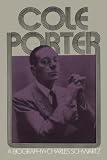 Charles Schwartz
Cole Porter: A Biography
Da Capo Press; 1st Pbk edition
Paperback: 365 pages
(1 paragraph including the following types of information: lyric analysis and song lyrics.)
|
|
|
|
|
 Robert Kimball, Brendan Gill
Cole: A Biographical Essay
Overlook Press
Hardcover: 283 pages
(Includes the following types of information: song lyrics.)
|
|
|
|
|
 Henry Martin
Enjoying Jazz
Schirmer Books
Paperback: 302 pages
(3 paragraphs including the following types of information: lyric analysis and performers.)
|
|
|
|
|
|
|
|
Comment Policy
- Your comments are welcome, including why you like
this tune, any musical challenges it presents, or additional background information.
- Jazz musicians, fans, and students of all ages use this website as an educational resource.
As such, off-topic, off-color, unduly negative, and patently promotional comments will be removed.
- Once submitted, all comments become property of JazzStandards.com.
By posting, you give JazzStandards.com permission to republish or otherwise distribute your comments in any format or other medium.
JazzStandards.com reserves the right to edit or remove any comments at its sole discretion.
|
|
| Click on any CD for more details at Amazon.com |
 Cecil Taylor
Jazz Advance
Blue Note Records
Original Recording 1956
|
|
If you are looking for a straightforward interpretation of “You’d Be So Nice to Come Home to,” this is perhaps not the place to start. If you are looking for a challenging, exploratory reinterpretation that is at times contemplative and at other times aggressive and spiky, this visionary solo piano performance may be for you.
|
 Paul Chambers
Bass on Top
Blue Note Records
Original Recording 1957
|
|
Bassist Chambers takes center stage here and makes the most of the opportunity, offering a fabulous interpretation of the melody and an equally fabulous solo. He moves on to his role in the rhythm section and provides his usual stellar accompaniment for the other soloists, pianist Hank Jones and guitarist Kenny Burrell.
|
 Sarah Vaughan
After Hours at the London House (Dig)
Verve
Original Recording 1958
|
|
This live recording features irresistible vocals from Vaughan over an equally irresistible groove thanks in large part to the drumming of longtime Vaughan associate Roy Haynes. There are also excellent solos by Thad Jones on trumpet and Richard Davis on bass.
|
 Lee Konitz
Motion (Dig)
Verve
Original Recording 1961
|
|
Saxophonist Konitz recorded this song often, and this lengthy, up-tempo, swinging trio performance with bassist Sonny Dallas and drummer Elvin Jones is one of his most sweeping explorations of it.
|
 Ella Fitzgerald
At Juan-Les Pins (Dig)
Umvd Labels
Original Recording 1964
|
|
This recording documents Fitzgerald in a live performance in France with Tommy Flanagan’s trio plus Roy Eldridge on trumpet. At a briskly swinging tempo, she offers a great interpretation of melody followed by a second chorus in which she thoroughly reinvents it.
|
 Bill Mays
Going Home
Palmetto Records
Original Recording 2002
|
|
A prolific though often behind-the-scenes musician, pianist Mays gives us a powerfully swinging, tight and clever performance with his trio featuring bassist Martin Wind and drummer Matt Wilson.
|
|
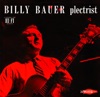
 Billy Bauer
Plectrist
2000 Verve 314517060
Original recording 1956
|
|
A rare turn as a leader finds Bauer proving he is a natural on this electrifying interpretation of the song. The guitarist sets a blistering pace, egged on by the rhythm of drummer Osie Johnson and bassist Milt Hinton.
|
 Andy Bey
Ballads Blues & Bey
1996 Evidence 22162
|
|
As a master vocalist Bey’s phrasing and timing are impeccable. Accompanying himself on the piano, Bey presents a Spartan, unembellished reading of the song, one to be enjoyed for its purity and elegance.
|
 Bobby Timmons
Sweet and Soulful Sounds
1997 Original Jazz Classics 928
Original recording 1962
|
|
Flashes of unadulterated brilliance coincide with a solid work ethic on this rendition. Pianist Timmons demonstrates an intrinsic understanding of the song, where it has been and where it can go.
|
 Barbara Carroll
Everything I Love
1995 DRG 91438
|
|
Pianist Carroll gently explores the rhythmic elements of this romantic ballad with her trio. It’s a class act all the way.
|
|
|
|