|
|
|
| The song was introduced by and written specifically for Ivie Anderson who performed it in the 1937 Marx Brothers’ film A Day at the Races. |
|
 |
|
- Sandra Burlingame
|
|
| |
Oddly enough, that most American of songs “All God’s Chillun Got Rhythm” was written by three men, none of whom were born in the United States. Lyricist Gus Kahn was born in Germany and came to Chicago as a child. He obviously had an ear for the vernacular and began writing for vaudeville, eventually collaborating on dozens of popular tunes, many of which became jazz standards such as “Makin’ Whoopee,” “Love Me or Leave Me,” “It Had to be You,” “I’ll See You in My Dreams,” and others.
Austrian-born Walter Jurmann and Polish-born Bronislaw Kaper were composers who had teamed up in Paris and enjoyed considerable success before being contracted for MGM by Louis B. Mayer. Jurmann wrote “Love Song of Tahiti” for the 1935 film Mutiny on the Bounty, the title song for the 1936 film San Francisco (which became the official song of “the city by the bay” in 1984), and two songs for Deanna Durbin’s debut in Three Smart Girls. Kaper won an Oscar for the film score of Lili in 1953 after contributing two enduring songs to the jazz repertoire: “On Green Dolphin Street” and “Invitation.”
|
| |
| |
|
| |
|
|
| |
| |
|
| |
|
There can be no doubt that the songwriting trio was familiar with the Negro spiritual, “All God’s Chillun Got Wings,” which promised rewards in heaven for the slaves who labored in the fields and for their children. Noble Sissle and Eubie Blake performed the spiritual as a part of their vaudeville act, and a film clip of their performance was included in a Broadway show in 1923, according to the authors of Spreadin’ Rhythm Around: Black Popular Songwriters, 1880-1930.
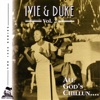
“All God’s Chillun Got Rhythm” was introduced by and written specifically for Ivie Anderson who performed it with the Crinoline Choir in the 1937 Marx Brothers’ film A Day at the Races. Anderson also recorded it with Her Boys from Dixie, and Judy Garland recorded it for Decca in 1937. The song charted twice that year: Duke Ellington’s version lasted for two weeks, rising to # 14, and the Artie Shaw Orchestra took it to #15 over a three-week period.
|
|
| |
|
| |
|
Kahn’s lyric espouses the beneficial effects of song and dance in dispelling one’s problems:
All God’s chillun got rhythm, all God’s chillun got swing
Maybe haven’t got money, maybe haven’t got shoes
All God’s chillun got rhythm for to push away their blues
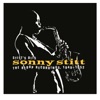
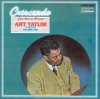
While the song is not performed as often these days, over the years its challenging chord progression has appealed to jazz musicians such as bandleaders Jimmy Dorsey and Lionel Hampton, Clifford Brown & Max Roach, pianist Bud Powell, saxophonist Stan Getz, vocalists June Christy, Jimmy Rushing, and Mel Torme who recorded it with George Shearing. In the ‘90s it was recorded by saxophonist Harry Allen, pianists Kenny Barron, Dick Hyman, and Barry Harris, and vocalist Tony Bennett.
|
|
|
|
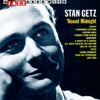
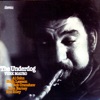
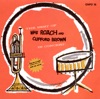
Exuberant Duke Ellington vocalist Ivie Anderson practically made this tune her property following her performance in the Marx Brothers film A Day at the Races. The Ellington orchestra recorded two versions on June 8, 1937, one vocal and one instrumental. The vocal version has a buoyant solo by Johnny Hodges (alto sax), and the instrumental includes solos by Rex Stewart (cornet), Tricky Sam Nanton (trombone) and Harry Carney (baritone sax). Trumpeter Clifford Brown and drummer Max Roach had a stellar quartet for the last two years of Brown’s life. Their live concert version of “All God’s Chillun...” has energetic tenor sax by Teddy Edwards, and Roach’s drumming lights a fire under Brown. Award Winner, tenor saxophonist Stan Getz’ 1957 performance, is a classic, and the superb rhythm section of Lou Levy (piano), Leroy Vinnegar (bass), and Stan Levey (drums), keeps things in over-drive on “All God’s Chillun....”
Chris Tyle - Jazz Musician and Historian
 Stan Getz
Award Winner
Polygram Records 543320
Original recording 1957
|
|
|
|
|
|
|
|
Comment Policy
- Your comments are welcome, including why you like
this tune, any musical challenges it presents, or additional background information.
- Jazz musicians, fans, and students of all ages use this website as an educational resource.
As such, off-topic, off-color, unduly negative, and patently promotional comments will be removed.
- Once submitted, all comments become property of JazzStandards.com.
By posting, you give JazzStandards.com permission to republish or otherwise distribute your comments in any format or other medium.
JazzStandards.com reserves the right to edit or remove any comments at its sole discretion.
|
|
|