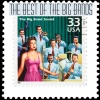
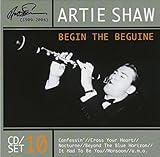
June Knight first sang “Begin the Beguine” and then danced to it with Charles Walters in the 1935 Cole Porter musical Jubilee. The song garnered little attention until Artie Shaw recorded Jerry Gray’s arrangement of the tune in 1938. Ironically, “Begin the Beguine” was recorded as the flip side of “Indian Love Call” which was intended as the hit song by the producer who objected to Shaw’s choice of the Porter composition. In fact Shaw’s version, which sold in the millions (the largest sale of any instrumental up to that time), was so well-liked that audience insistence that he play it may well have contributed to his decision to leave the music business.
|
|
His rendition charted twice--once on its original release and again as a reissue. A Billboard DJ poll voted Shaw’s version the number three all-time recording and the number five all-time song. Several other versions made the charts as well:
- Xavier Cugat and His Waldorf Astoria Orchestra (1935, Don Reid, vocals, two weeks, peaking at #13)
- Artie Shaw and His Orchestra (1938, total of 18 weeks, six of them at #1)
- Artie Shaw and His Orchestra (1942 reissue, two weeks, peaking at #20)
- Eddie Heywood and His Orchestra (1945, one week, peaking at #16)
- Frank Sinatra (1946, Axel Stordahl and His Orchestra, three weeks, peaking at #23)
|
|
The song was recorded by all the top swing bands in the ’40s and performed as a memorable solo by virtuoso pianist Art Tatum. Despite the fact that is a difficult number to sing, both the Andrews Sisters and Ella Fitzgerald recorded popular versions. Other top renditions were by singer/pianist Leslie Hutchinson (a protege of Porter) and British bandleader Joe Loss with Chick Henderson on vocal.
Jubilee also introduced the songs “Just One of Those Things,” “A Picture of Me Without You,” and “Why Shouldn’t I?” The musical ran for only 169 performances, and Porter is said to have been disappointed that “Just One of Those Things” received less attention than “Begin the Beguine.”
The book, written by Moss Hart, is about a royal family in a fictional European country who uses the threat of a revolution to abandon their throne and pursue lives they had only dreamed of. When the revolution turns out to be a hoax, they return to the throne but bring their new found friends with them. Interestingly, the future movie star, Montgomery Clift, had a small role as one of the princes in the original production.
“Begin the Beguine” not only has an unusual musical form but is unusually long for a popular song, 104 bars instead of the usual 32. (Irving Berlin is said to have referred to it as “that long song.”) In his book The American Musical Theatre Song Encyclopedia Thomas S. Hischak says, “The ballad has no verse and drives ahead without benefit of a distinct stanza or a clear-cut release that relieves the surging melody.”
The song was used as a dance number for Fred Astaire and Eleanor Powell in the film Broadway Melody of 1940. The six-minute tap duet closed the movie in grand style and became one of the most famous dance numbers on film. For the film Cole also wrote “I Concentrate on You” and “I’ve Got My Eyes on You” among others.
In his autobiography Musical Stages Richard Rodgers tells of a conversation with Cole Porter who claimed to have discovered the secret to writing hit songs. “I’ll write Jewish tunes,” said the young Porter. “I laughed at what I took to be a joke, but not only was Cole dead serious, he eventually did exactly that,” says Rodgers, who points to “Night and Day,” “Begin the Beguine,” “Love for Sale,” and others with their “unmistakably eastern Mediterranean, minor-key melodies.”
“Begin the Beguine” is also featured in the two film biographies of Cole: 1946’s Night and Day (performed by Latin singer Carlos Ramirez) and 2004’s De-Lovely (performed by Sheryl Crow who not only changes the melody but tosses out key changes and sings the entire song in a minor key). Deanna Durbin sang it in the 1943 film Hers to Hold, and in 1986 the New Amsterdam Company produced a well-received concert of Jubilee. In 2003 a documentary narrated by dancer Ann Miller examined the art of Fred Astaire and Eleanor Powell in a film entitled Begin the Beguine.
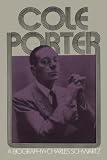
In Cole Porter: A Biography Charles Schwartz says that Porter gave two different versions of the origin of “Begin the Beguine.” But it is clear that the song was inspired by the rhythm of a West Indian dance called the “beguine” which Cole described as similar to the rumba but much faster. Peter Gammond in The Oxford Companion to Popular Music describes the dance: “It is in 2/4 time, rather like a slow polka with a dotted rhythm, generally supplied by claves, maracas, bongos and congas playing variations on the basic pattern. The dance is performed on one spot with undulating movements of the body, the partners not touching.”
In his book Can’t Help Singin’ Gerald Mast, paraphrasing lyrics from other Porter songs, says, “For Porter, the Latin surge of the song is another beat-beat-beat of a tom-tom; the pulsing of rhythmic sounds in the air again gets under the skin to enter the bloodstream as a pulse of emotion within. Porter evokes the sensation of the moment not by describing it in images but mirroring it in sounds.”
The lyrics recall a love lost but easily recalled when the beguine plays: “To live it again is past all endeavor, Except when that tune clutches my heart.” The memories are of a voluptuous nature: “music so tender,” “tropical splendor,” “an orchestra playing,” and “palms swaying,” “moments divine,” “rapture serene.”
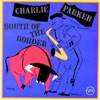
Jazz artists who have recorded the tune include Dizzy Gillespie, Charlie Parker, Coleman Hawkins, Erroll Garner, Terry Gibbs, Lee Morgan, and Art Pepper. More recently it has been recorded by the BBC Big Band, the group Pearl Django, pianist Adam Makowicz in his Tatum tribute, and clarinetist Eddie Daniels.
|