Andy Russell became the biggest singing star in the Spanish-speaking world in the ‘50s and ‘60s “due to the aesthetics of Johnny Mercer and the business acumen of Glenn Wallichs.” |
|
 |
|
- Gene Lees
|
|
| AKA | Kiss Me Much |
|
| Rank |
294 |
|
| Music |
Consuelo Velazquez
|
|
| Lyrics |
Sunny Skylar
|
|
| |
In 1941 Consuelo Velazquez wrote the music and lyrics for “Besame Mucho” while she was still a teenager in Mexico. She was inspired by the “nightingale” aria “Quejas, o la Maja y el Ruisenor” from the opera Goyescas by Enrique Granados. Although the title translates as “Kiss Me a Lot,” Consuelo said that she had never been kissed and that the song was imaginary. A musical prodigy, she went on to become a concert pianist, a singer and recording artist, and a writer of romantic songs.
“Besame Mucho” was first recorded in 1941 by Mexican artists, singer/actor Emilio Tuero and singer/actress Chela Campos, and it became in international hit. French singer/actor Tino Rossi recorded it in 1945. English lyrics were written by Sunny Skylar and the love song became a hit during World War II. Skylar retained the original title in the lyric since “kiss me a lot” or “kiss me much” leaves something to be desired, poetically:
Besame, besame mucho
Each time I cling to your kiss, I hear music divine
Besame, besame mucho
Hold me my darling and say that you’ll always be mine
“Besame Mucho” is the only Mexican song to every top the charts in America:
-
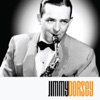
Jimmy Dorsey and His Orchestra (1944, with vocalists Bob Eberly and Kitty Kallen, #1 for 7 weeks out of a total of 26) -
Andy Russell (1944, 5 weeks, peaking at #10) -
Abe Lyman and His Orchestra (1944, 2 weeks, peaking at #21)
|
|
| |
|
| |
|
In Portrait of Johnny: The Life of John Herndon Mercer, biographer Gene Lees says, “Johnny [then head of Capitol Records] signed a young man born in Los Angeles of Mexican parentage, a drummer who worked for Stan Kenton and sang extremely well. His real name was Andres Rabago [or Rabajos]. He recorded for Capitol a Latin tune titled ‘Besame Mucho,’ and it sold half a million copies. By this time he was using the name Andy Russell.” Capitol was a forerunner in attention to foreign markets, and Russell became the biggest singing star in the Spanish-speaking world in the ‘50s and ‘60s “due,” says Lee, “to the aesthetics of Johnny Mercer and the business acumen of Glenn Wallichs.”
The song has appeared in several films, among them the 1979 film from Russia Moscow Doesn’t Believe in Tears and Moon Over Parador (1988) which starred Richard Dreyfus. As an American actor impersonating a South American dictator, Dreyfus transforms “Besame Mucho” with different lyrics into the national anthem which is sung in the film by Sammy Davis, Jr.
“Besame Mucho” also garnered a Grammy nomination in 2007 as Best Instrumental Arrangement for trombonist Steve Wiest’s version for the Maynard Ferguson big band. Vocalist Diane Schuur recorded a fiery version of the song with Ferguson’s band in 2002.
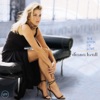
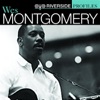
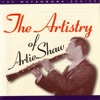
Even the Beatles sang “Besame Mucho,” and it retains its popularity among jazz musicians. It has been recorded by bandleader Artie Shaw; saxophonists Stan Getz, Art Pepper, and Paquito D’Rivera; guitarist Wes Montgomery; vocalists Nat “King” Cole and Carmen McRae; Brazil’s Joao Gilberto; pianists Michel Petrucciani and Dave Brubeck; and in 2002, vocalist/pianist Diana Krall.
|
|
|
|