|
|
|
| The song enjoyed a bit of a peak in 1950 when it appeared in the Doris Day/Gordon McCrae/Gene Nelson film Tea for Two. |
|
 |
|
- Sandra Burlingame
|
|
| |
Not only has “Crazy Rhythm” retained its popularity as a song but it has lent its name to jazz groups, organizations, nightclubs, and even a 1997 autobiography by Leonard Garment, one time jazz musician and White House staffer under Richard Nixon.
Joseph Meyer and Roger Wolfe Kahn wrote the music and Irving Caesar supplied the lyric for “Crazy Rhythm.” Meyer wrote the music for “If You Knew Susie” and “Clap Hands, Here Comes Charlie’ and co-wrote the music and lyric for “California Here I Come.” Kahn was a prodigy who is said to have played 18 instruments. When he was just 17 years old, he took over leadership of the 12-piece Arthur Lange Orchestra which his wealthy father purchased for him, and they performed as Roger Wolfe Kahn and His Biltmore Orchestra. Caesar contributed lyrics to several jazz standards, including “Tea for Two,” “Just a Gigolo,” and “I Want to Be Happy.”
|
| |
| |
|
| |
|
“Crazy Rhythm” appeared in the 1928 Broadway musical Here’s Howe which opened on May 1, 1928, and ran for only 71 performances. However, on April 12, prior to the show’s opening, Kahn’s orchestra recorded the tune with vocalist Franklyn Baur and it charted for four weeks, peaking at number ten. Violinist and bandleader Ben Bernie’s vocal version of the song also helped to popularize it.
|
|
| |
|
| |
|
The song’s upbeat tempo made it popular with dancers, and the catchy lyric comically bemoaned the effects of its hot rhythm:
What’s the use of prohibition?
You produce the same condition
Crazy rhythm, I’ve gone crazy too.
Despite the lighthearted feeling of the chorus, the verse, which was sung in the Broadway show, hinted at more serious matters. Because of the limitations of the 78 rpm record, Baur didn’t sing the verse, and subsequent vocalists do not include it either. At the time of the song’s debut, the so-called “Jazz Age” was still in full swing, but the Wall Street market crash of 1929 was just around the corner, and Caesar expressed a sense of foreboding in the verse:
I feel like the Emperor Nero when Rome was a very hot town.
Father Knickerbocker, forgive me, I play while your city burns down.
The popularity of “Crazy Rhythm” has remained steady over the years, having been recorded by the orchestras of Woody Herman, Harry James, Stan Kenton, Lionel Hampton, Benny Carter, and Benny Goodman. It enjoyed a bit of a peak in 1950 when it appeared in the Doris Day/Gordon McCrae/Gene Nelson film Tea for Two. It has been covered by vocalists Mark Murphy, Ella Fitzgerald, and Frank Sinatra and by instrumentalists such as altoist Bud Shank, guitarist Barney Kessel, trombonist Rob McConnell, bassist Oscar Pettiford, trumpeter Miles Davis, pianist Erroll Garner, violinist Stuff Smith, and drummer Chico Hamilton.
|
|
|
|
More information on this tune... |
|
- Sandra Burlingame
|
|
Superb for beginning syncopation. Clear counterpoint of steady beat to the off-the-beat melody. Great for timid singers with its very narrow range. Very easily harmonizable.
Marty Heresniak, Voice Teacher, Actor, Writer, Singer
Quoted from: Heresniak, Marty and Christopher Woitach, “Changing the Standards -- Alternative Teaching Materials.” Journal of Singing, vol. 58, no. 1, Sep./Oct. 2001.
|
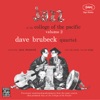
Two of America’s finest saxophonists, Benny Carter (alto) and Coleman Hawkins (tenor) spent several years in Europe before World War II, often performing and recording together. In the company of Belgian gypsy guitar whiz, Django Reinhardt, the two saxophonists were joined by two of France’s most formidable jazz saxophonists, Andre Ekyan (alto) and Alix Combelle (tenor), in a memorable session that resulted in an outstanding version of “Crazy Rhythm.” The Dave Brubeck Quartet, featuring alto saxophonist Paul Desmond, is mostly remembered for their version of Desmond’s “Take Five.” But the group recorded a plethora of standards. One of the group’s finest live recordings, from College of the Pacific in 1953, has a rousing version of a slightly reworked “Crazy Rhythm.” Desmond is magnificent and obviously inspired by drummer Joe Dodge, a new addition to the group.
Chris Tyle - Jazz Musician and Historian
|
Additional information for "Crazy Rhythm" may be found in:
|
|
|
 Robert Gottlieb, Robert Kimball
Reading Lyrics
Pantheon
Hardcover: 736 pages
(Includes the following types of information: song lyrics.)
|
|
|
|
|
|
|
|
Comment Policy
- Your comments are welcome, including why you like
this tune, any musical challenges it presents, or additional background information.
- Jazz musicians, fans, and students of all ages use this website as an educational resource.
As such, off-topic, off-color, unduly negative, and patently promotional comments will be removed.
- Once submitted, all comments become property of JazzStandards.com.
By posting, you give JazzStandards.com permission to republish or otherwise distribute your comments in any format or other medium.
JazzStandards.com reserves the right to edit or remove any comments at its sole discretion.
|
|
|