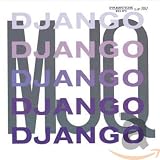
Pianist and musical director for the Modern Jazz Quartet, John Lewis, composed “Django” in 1954 as a tribute to the great gypsy guitarist Django Reinhardt. It was a signature piece for the Modern Jazz Quartet which, in addition to Lewis, featured Milt Jackson on vibes, Percy Heath on bass, and Connie Kay who replaced Kenny Clarke on drums. Although the landmark recording by the MJQ Django was released as an LP in 1956, it was actually recorded in three different sessions in 1953, 1954, and 1956. The 1953 session was released as two 10-inch LP’s. “Django” was recorded in the 1954 session.
|
|
“Django” is on National Public Radio’s list of the 100 most important American musical recordings of the 20th Century. In a 2005 PBS profile of the Modern Jazz Quartet (available on line at NPRJazz.org) A.B. Spellman of the National Endowment for the Arts explains its historical significance: “There were a lot of divergent points in jazz in 1954 when this was recorded. There was the Cool Jazz movement and the West Coast sound, which was formal, somewhat European, and very composed music without a lot of heavy emotion. On the East Coast you had the hard bop movement, which was this funky, hard-swinging music. And then you had the MJQ somewhere in between. And so when the MJQ came out with Django, you got a new look at jazz which caught on very, very fast in America. It was a very, very popular ensemble, and ‘Django’ was its biggest hit.”
Mike Zwerin, jazz critic and editor of Culturekiosque.com., interviewed Percy Heath on November 25, 2003. (The article is available on line.) Heath was in Paris to perform with The Heath Brothers, who included “Django” in their repertoire:
Zwerwin: ...“Django’s” combination of structure and Milt “Bags” Jackson’s straight-ahead vibraphone improvisations over a quiet, baroque groove redefined jazz music.
Heath: If we didn’t play “Django” in a concert, we risked getting stoned. I mean in the thrown-at sense.
Zwerin: Heath is still playing “Django.” Only now he gets to play the melody.
R.J. LeDuke interviewed Heath and published the article on the web’s All About Jazz in May, 2005, just a month after Heath’s death in April. Heath discusses “Django” which appears on his 2004 album The Love Song:
“I did play the melody on the bass, in the beginning, which, for the whole 42 years I never did with the Quartet. It’s a set bass part. The boogie woogie thing there, I had to quote that because it’s really a part of the composition. It’s really a different composition from most, structure-wise. It’s not an eight-eight-bridge-eight type construction. It’s different. Sometimes I quote --I don’t know if you’re familiar with a score John Lewis wrote for the film No Sun in Venice. It was filmed in Venice, and this gondola is going down the grand canal. A really regal barge going down. John wrote a piece called ‘Cortege,’ which, actually, is almost ‘Django’ again. It has the same feeling and some of the same notes. When I do ‘Django’ live, I may stick a little ‘Cortege’ in the introduction, before I go into the melody.”
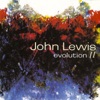
In his review of the Jazz at Lincoln Center retrospective concert featuring Lewis in January, 2001 (“Evolution: The Music of John Lewis”), jazz journalist and author Gary Giddins compares Lewis’ live performance of “Django” to his performances on his CD’s, Evolution I and Evolution II: “On the Evolution CD’s he offers two versions so dissimilar a casual listener might not realize they were developed from the same piece. He played the version from the first CD at the concert and articulated it in such a way that, until I went back to the disc, I thought it was yet another recomposition. The chief conceit is a repeated four-note bass clef arpeggio capped with ringing single notes in the treble that state the melody. By underscoring the arpeggio at the concert, he heightened the arrangement’s drama.”
In his book Enjoying Jazz Henry Martin describes “Django” as “...slightly peculiar in that the changes used for the improvisations are not specifically those of the tune. Instead, they are derived from the tune and developed more fully for use in the solo sections. The sections in the improvisatory choruses are of irregular length but the changes are so artfully structured that they sound quite natural.”
Lewis arranged and played on an album with the Jazztet in 1961 which included “Django.” In 1976 he recorded the album Django with vocalist Helen Merrill which has been out-of-print in the U.S. but was reissued on CD by a Japanese label in 2003. In this rare vocal version of the song Merrill vocalizes the melody on the first chorus against a backdrop of piano, bass (Richard Davis), flute (Hubert Laws), and drums (Connie Kay) and then improvises on the melody, concluding with another straight vocal rendering with the musicians improvising behind her.
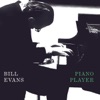
In addition to recordings of the tune by Lewis, Heath and the MJQ, several pianists have recorded it, among them Bill Evans, Stanley Cowell, Cedar Walton, Alan Broadbent, Adam Makowicz, and Ellis Marsalis. Catalonian pianist Tete Montoliu waxed a memorable version on his Songs for Love album, and Marc Copland included it in his 2005 CD Time Within Time. Trumpeter Wynton Marsalis, bassist Ray Brown, guitarist Phil Upchurch, flutist Herbie Mann, and vibist Peter Appleyard have all recorded “Django.”
|