Jazz Standards.com : Jazz Standards : Songs : History : Biographies

Home

Overview

Songs

Biographies

History

Search

Bookstore

About

Ev'ry Time We Say Goodbye (1944)

Origin and Chart Information
“One example of how closely Cole correlated words and music in this song can be seen by his switch from primarily major to minor harmony to correspond with the phrase ‘from major to minor’ in the lyrics for the refrain.”

- Charles Schwartz

AKAEvery Time We Say Goodbye
Rank 220
Words and Music Cole Porter

The consummate showman Billy Rose produced the Broadway revue The Seven Lively Arts which featured songs by Cole Porter, ballet music by Igor Stravinsky, scenery designed by Salvador Dali, and a cast which included jazz clarinetist Benny Goodman, who also conducted the pit orchestra. The show opened in December, 1944, at the Zeigfeld Theater, which had been purchased by Rose who had its foyer decorated by Dali with illustrations of the seven lively arts: architecture, painting, sculpture, dance, drama, music and literature.


More on Cole Porter at JazzBiographies.com


More on Nan Wynn at JazzBiographies.com
 

The show, which starred Beatrice Lillie, was an overblown extravaganza which ran for only 183 performances. It not only featured comic Bert Lahr and ballerina Alicia Markova but included jazz greats Teddy Wilson and Red Norvo in the pit orchestra. Nan Wynn introduced “Ev’ry Time We Say Goodbye” in a sketch with Jere McMahon. The song was recorded by opera singer Dorothy Kirsten and by Fred Waring and His Pennsylvanians, but it was the Benny Goodman Quintet with vocalist Peggy Mann who took it to number 12 on the charts in 1945.


Chart information used by permission from
Joel Whitburn's Pop Memories 1890-1954
 

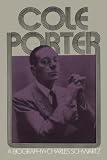
“Ev’ry Time We Say Goodbye” was the only song to survive the disastrous show. In Cole Porter: A Biography Charles Schwartz describes the song’s attributes: “Its simple, elegaic, repeated-note melody--a Porter characteristic--and cogent harmony complement a superior text. One example of how closely Cole correlated words and music in this song can be seen by his switch from primarily major to minor harmony to correspond with the phrase ‘from major to minor’ in the lyrics for the refrain.”

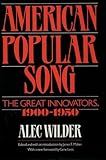
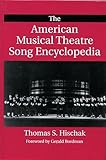
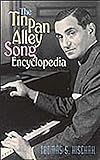
Preceding a detailed description of the song, Alec Wilder, in his book American Popular Song: The Great Innovators, 1900-1950, says, “...There are no specific Porter characteristics in either music or lyric. Both are marvelous but untypical of his writing.” Supporting that view is Thomas S. Hischak in The American Musical Theatre Song Encyclopedia. “‘Ev’ry Time We Say Goodbye’ may be an atypical Cole Porter ballad in its melody and lyric, but it is still one of his finest efforts. The unusual shifts in key give the song’s melody a haunting quality, and the sentiment of the lyric is straightforward and deeply heartfelt.”

In his book Popular Song: Soundtrack of the Century Alan Lewens says, “‘Ev’ry Time We Say Goodbye’ is quite simply a great love song.... Porter utilizes the hypnotic effect of a continuous, repetitive note through the song, making the triumphant sweep near the end all the more dramatic.... One thing that sets it apart from some of his other songs is the way that each artist is able to adapt it to suit their particular strengths.... Being neither lyrically clever, nor musically complex, it is almost a blank sheet from which each singer can emote. Whoever the performer, Porter’s genius always shines through....”

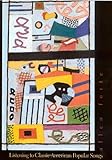
As Allen Forte points out in his book Listening to Classic American Popular Songs, it was a combination of Porter’s clever lyrics and “the affective setting of the words” that captured an audience of war-weary listeners bruised by partings. Forte discusses Porter’s inner rhymes, rhyme “chains” (“ever,” “clever,” “never”) and near-rhymes. “[He] creates an intricate and interesting verbal fretwork that amplifies the idea of the song: the parting of lovers, with all of its emotional overtones.”

Forte continues to explore Porter’s musical setting for the lyrics, noting that “since the vocalist sings the title phrase on one note throughout the first three bars, the only motion results from the repeated change in harmony. Indeed, the repeated note (eight times!) at the very beginning of the melody is the hallmark of this song....” Porter’s famous line “from major to minor” is accompanied by a chord change from Ab to Abm.

There’s no love song finer,
But how strange
The change
From major to minor
Ev’ry time we say goodbye.

The lyrics are some of Porter’s most sublime and they are perfectly matched to melody and harmony. Consider these memorable lines appropriately set to a descending melody that intensifies the sorrow:

Why the gods above me
Who must be in the know
Think so little of me
They allow you to go.

Natalie Cole performed the song in De-Lovely, the 2004 film biography in which Kevin Kline plays Cole. Jazz musicians have been drawn to the tune by its interesting harmonic progressions. Some of the many contemporary musicians who have recorded “Ev’ry Time We Say Goodbye” include trumpeters Ingrid Jensen and Marcus Printup; trombonist Rob McConnell; saxophonists Harry Allen and Phil Woods; guitarist John Pisano; pianists Fred Hersch, Dave Peck, Mulgrew Miller, and Cedar Walton; and vocalists Andy Bey, Karrin Allyson, Kurt Elling, Ann Hampton Callaway, and Jimmy Scott.

- Sandra Burlingame

Musician's Comments

Are you a published Vocalist or Instrumentalist?

Add a comment and we'll credit you with a link to your site. (more...)

Also on This Page...

Musician's Comments

Jazz History Notes
Also by the Same Writers...
Reading & Research

CD Recommendations for This Tune
Click on a CD for more details at Amazon.com
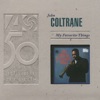
John Coltrane

My Favorite Things
1990 Atlantic/WEA 1361
Original recording 1961
Coltrane picks up the soprano sax for a gentle, straight-ahead reading of the tune with pianist McCoy Tyner, bassist Steve Davis, and drummer Elvin Jones adding to its elegance. This CD is a great introduction to Coltrane for those unfamiliar with his work.

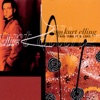
Kurt Elling

This Time It’s Love
1998 Blue Note 93543
Original recording 1998
Elling delivers as straight a reading as he is able to, closing out the album with the Porter song. Subtle and sophisticated the vocalist still manages to infuse a compelling dissonance into some of the phrases.

June Christy/Stan Kenton

Duet
1993 Blue Note 89285
Original recording 1955
Accompanied by Kenton’s sparse piano on this cut and stripped of the comforting presence of the large orchestra, Christy’s voice takes on a shade of vulnerability that works pure magic for the song. This is a memorable performance of this particular tune.

Sonny Rollins

The Sound of Sonny
1991 Original Jazz Classics 29
Original recording 1957
The rhythm section radically accelerates the pace of the ballad while saxophonist Rollins fits as much as he can into this whirlwind reading.
Jazz History

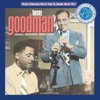
Benny Goodman’s recording from November, 1944, is by his quintet and vocalist Peggy Mann. In addition to Benny’s superb clarinet, vibraphonist Red Norvo and pianist Teddy Wilson shine and play some wry background to Goodman’s lead. Wilson would record the tune with his own group, featuring splendid vocalist Maxine Sullivan, just a month later.

Tenor saxophonist Sonny Rollins’ 1957 session highlights his performance of the tune as a medium tempo swinger, a definite contrast to the ballad approach utilized by John Coltrane in his 1960 outing on soprano saxophone. (The tune would be a staple in the Coltrane repertoire and be recorded by him on several more occasions.)

A tenor saxophonist in a different stylistic bag from Rollins and Coltrane, the marvelous Lester Young-influenced Richie Kamuca, is spotlighted on a live recording from 1961 with drummer Shelly Manne’s West Coast combo.

Chris Tyle - Jazz Musician and Historian


Benny Goodman

Small Groups 1941-1945
Sony 44437

Teddy Wilson

1942-1945
Classics 908

Sonny Rollins

The Essential Sonny Rollins on Riverside
Fantasy 60020

Shelly Manne

At the Manne-hole, Vol. 2
Original Jazz Classics 715
Written by the Same Composer or Team...
This section shows the jazz standards written by the same writing team. Click on a name to see all of a writer's jazz standards.

Cole Porter

YearRankTitle
19308What Is This Thing Called Love?
193030Love for Sale
193233Night and Day
193574Just One of Those Things
1944119I Love You
1936122Easy to Love
1934139I Get a Kick Out of You
1936160I’ve Got You Under My Skin
1942188You’d Be so Nice to Come Home To
1937209In the Still of the Night
1944220Ev’ry Time We Say Goodbye
1935247Begin the Beguine
1953279It’s All Right with Me
1939290I Concentrate on You
1954356All of You
1950390From This Moment On
1938410Get Out of Town
1948443So in Love (Am I)
1934509All Through the Night
1953553I Love Paris
1938584My Heart Belongs to Daddy
1929734You Do Something to Me
1934754Anything Goes
1941773Ev’rything I Love
1928797Let’s Do It (Let’s Fall in Love)
1937909At Long Last Love
1941910Dream Dancing
1937939Rosalie
1934940You’re the Top
Reading and Research
Additional information on “Ev’ry Time We Say Goodbye” may be found in:

6 pages including the following types of information: history, lyric analysis, music analysis and song lyrics. (Book includes CD).

2 pages including the following types of information: music analysis.

5 pages including the following types of information: history and music analysis.

1 paragraph including the following types of information: summary, lyric analysis and music analysis.

1 paragraph including the following types of information: performers and style discussion.

1 page including the following types of information: history, performers, style discussion and song writer discussion.

2 paragraphs including the following types of information: history and song lyrics.

Includes the following types of information: song lyrics.

Includes the following types of information: song lyrics.

Copyright 2005-2008 - JazzStandards.com - All Rights Reserved      Permission & contact information

Home | Overview | Songs | Biographies | History | Search | Bookstore | About