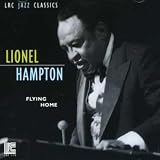
In Hamp: An Autobiography by Lionel Hampton with James Haskins, the vibraphonist and bandleader recounts the origin of his composition “Flying Home.” “I had some memorable times with Benny [Goodman]. One of the best was when I composed ‘Flying Home,’ which later became my theme song. It was around 1939. We were in Los Angeles, and we had to fly to Atlantic City. It was the first time I’d ever been on a plane. We had always traveled by train or bus. I wasn’t the only one who wasn’t used to flying. Benny had to explain to the whole band that the only way we could make the gig was to fly. We had to leave Los Angeles that morning to get there that evening and do a concert at the Steel Pier.
“So we got on the plane, and I started amusing myself. I started singing, and Benny said, ‘What is that you’re humming?’
“I said, I don’t know. We can call it ‘Flying Home,’ I guess.
“We were on the West coast, coming to the East coast, see. So we got to jammin’ it that night. And we played it with the quartet. Later on, we made a recording of it. After I went out on my own, my band always played that song.”
|
|
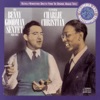
The first recording of “Flying Home” was made in October 1939 by the Benny Goodman Sextet which represented one of the early examples of electronics in jazz with Charlie Christian on electric guitar and Hamp on motorized vibraphone. The sextet was fleshed out by Fletcher Henderson on piano, Artie Bernstein on bass, Nick Fatool on drums, and Goodman on clarinet.
In his autobiography Hamp recalls the 1939 session. “I remember that recording session and that disc, because ‘Rose Room’ was backed by ‘Flying Home,’ the piece I wrote. After I left Benny, it became my signature song, but Benny helped make it popular.”
In his book Weather Bird: Jazz at the Dawn of Its Second Century Gary Giddins makes a case for Hampton’s influence on rock and roll: “Along with Lucky Millinder he practically invented orchestrated rhythm and blues. Both men arrived at Decca in 1941...and restructured swing to accommodate voluble rhythms, raucous blues, and shameless showmanship. Millinder, however, had nothing like Hampton’s breadth or appeal. Nor did he have ‘Flying Home’: The moment Illinois Jacquet began his tenor saxophone solo with an extended quote from the 1847 opera Martha, jazz and pop were headed for a new kind of conciliation. The age of the honking tenor had arrived....”
In his book The Swing Era: The Development of Jazz, 1930-1945 Gunther Schuller also points to “Flying Home” as a precursor of rock and roll. “By 1942 decibel levels in jazz--parallel to the mounting pitch of war frenzy--had risen considerably. With the high-tension ‘Flying Home,’ ...now arranged by Hampton’s pianist Milt Buckner, the band had its first big hit, finding the public’s fevered pulse with some high-flying trumpet pyrotechnics (by Ernie Royal) and a frantic tenor solo by Illinois Jacquet, which became the model for hundreds of later honking rhythm-and-blues and rock-and-roll tenor players.”
Hamp recalls a cutting contest in 1942 with the Count Basie band. “He [Basie] said in his autobiography that the contest ended in a draw, because he got the edge for musicianship and I got the edge for showmanship.
“As I remember it, we won. It was touch and go until we went into ‘Flying Home.’ Illinois and I both played sustained solos, and yeah, we did go for fifteen minutes, and the audience went crazy. When we finished, they gave us a standing ovation....”
The tune charted twice, in two different versions by the Lionel Hampton Orchestra. The first version, which rose to number 25 in 1940 featured Ziggy Elman on trumpet. The second and most renowned version, with Dexter Gordon on tenor sax, featured an outstanding saxophone solo by Illinois Jacquet and charted in 1942, rising to number 23.
|
|
One of the most famous versions of “Flying Home,” which helped to establish her reputation as a jazz singer, was by Ella Fitzgerald. In his book Visions of Jazz: The First Century Gary Giddins says “[Ella Fitzgerald’s] 1945 ‘Flying Home’ was an all-scat performance that established her among jazz modernists. She wasn’t born of bop, like Sarah Vaughan, but she was thoroughly accepted into the fold.”
After 1946 when Hampton began to include bop influences in his repertoire he constantly refigured “Flying Home,” often under different titles such as “Wee Albert.” In the fall of 1964 Hamp cashed his thousandth royalty check for “Flying Home.”
|
|
In 1956 Chris Connor recorded a rare vocal version of the song featuring Sid Robin’s lyric which tells the story of a penitent lover hoping to reunite with the one she has wronged. The hope expressed is that they can start anew and fulfill the dreams they’d had.
One rainy day
I went away
But now I’m flying on home
Yes, I’m flying home to stay
Why was I so mean to you?
How could I have made you blue?
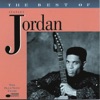
In 1996 Marian McPartland featured Hampton and “Flying Home” on her radio program Piano Jazz. Many orchestras such as Duke Ellington’s recorded the tune as well as vibraphonists Terry Gibbs, Red Norvo, and Gary Burton (2001). The song has been recorded by pianists Oscar Peterson and Art Tatum, Latin band leader Tito Puente, saxophonists Joshua Redman and Harry Allen (2004), guitarists Stanley Jordan and Howard Alden (2001), trombonist Rob McConnell, and organist Jimmy McGriff.
|