Jazz Standards.com : Jazz Standards : Songs : History : Biographies

Home

Overview

Songs

Biographies

History

Search

Bookstore

About

Giant Steps (1959)

Origin and Chart Information
“The song is a fairly sketchy melody but the changes are ingenious. It is more of a progression than a song and is interesting in that sense.”

- Jay Thomas, Musician

Rank 254
Written by John Coltrane

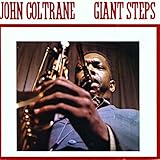
“Giant Steps,” saxophonist John Coltrane’s influential composition, became the title cut of his first recording as a leader. Most of the Giant Steps album was recorded for the Atlantic label in May 1959 with Tommy Flanagan on piano, Paul Chambers on bass, and Art Taylor on drums; however, it wasn’t released until early 1960.


More on John Coltrane at JazzBiographies.com
 

Coltrane had recorded an earlier version of “Giant Steps” in April 1959 with Cedar Walton on piano, Paul Chambers on bass, and Lex Humphries on drums. However, he was not pleased with the results and the session was shelved and not released until after his death.

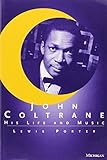
The preservation of the early session is important to understanding the development of the tune which is analyzed in depth in books by Lewis Porter, Alyn Shipton, and Carl Woideck. According to Porter in John Coltrane: His Life and Music, “‘Giant Steps’ was, after all, more than a tune that used third relations--it was a thorough study, an etude, on those relationships.” In Enjoying Jazz Shipton says, “‘Giant Steps’ ...was the antithesis of simplicity. Despite being no more than a compact sixteen measures in length, it is an extraordinarily dense and complete composition in terms of the interlocking of its melodic and harmonic content.” And in The John Coltrane Companion: Five Decades of Commentary Woideck says, “Its sixteen-measure chord progression begins with eight measures of root movement in thirds and closes with eight measures of ii-V-I progressions. It has since become a test piece for jazz musicians and is required fare in jazz education programs.”

According to Porter, “By several accounts, Coltrane had been working on ‘Giant Steps’ progressions well before the recording dates.” Davis had dismissed Coltrane from his group in 1957 because of his drug and alcohol abuse. Coltrane returned home to Philadelphia where he kicked his drug habits and underwent a spiritual awakening before rejoining Davis in 1958. Coltrane pianist McCoy Tyner has said that it was during his time in Philadelphia that Coltrane composed “Giant Steps.”

In March and April of 1959, just weeks before the Giant Steps session, Coltrane recorded another highly influential album with Miles Davis’ group: Kind of Blue. According to Porter these two albums, representing two very different approaches, became among the most famous jazz albums ever made. Davis took a modal approach to improvisation on his album, eliminating chord progressions, whereas Coltrane was developing new chordal concepts based on his interest in third-related chord movement. Gary Giddins puts it succinctly in his book Weather Bird: Jazz at the Dawn of Its Second Century: “Davis winnowed bop’s harmonies to encourage original improvisations, and Coltrane maximized them for the same reason.”

In his book Shipton quotes Coltrane’s son Ravi, also a saxophonist, as saying that Coltrane used the “Giant Steps” progression in many of his later recordings. “So Giant Steps can be seen as the beacon that shone forward over Coltrane’s most influential work of the 1960s and the freer playing that followed. Continuing to use ideas from his solos on the sequence, he worked to simplify the structure, though not the texture, of his accompaniment. Even when he eventually discarded the harmonic clarity of McCoy Tyner and the metrical precision of Elvin Jones for his final quartet with Alice Coltrane on piano and Rashied Ali on drums, he continued to explore aspects of the Giant Steps sequence in his playing.”

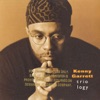
Coltrane’s pianists McCoy Tyner and Tommy Flanagan recorded “Giant Steps” several times. Vocalist Meredith d’Ambrosio recorded it with her own lyric in 1985. It’s been recorded by the big bands of Buddy Rich, Lionel Hampton, Woody Herman, and Maria Schneider; saxophonists Kenny Garrett, Rahsaan Roland Kirk, and Jon Gordon; harmonica player Toots Thielemans; pianist Dave Burrell; and bassist Ray Brown. Since 2000 it has been featured by guitarists Pat Metheny and Vic Juris, pianists Jon-Michel Pilc, Don Friedman, Taylor Eigsti, and Michel Camilo, trumpeter Claudio Roditi, and saxophonist Paquito D’Rivera.

- Sandra Burlingame

Musician's Comments

“Giant Steps” is a great standard jazz composition. Coltrane, it is said, got the idea for the chord progression from some turnarounds that Kenny Dorham used to use. It is also rumored that the bridge to “Have You Met Miss Jones” was also an inspiration because of the movement thru keys by major thirds. There is a very pure mathematical symmetry to the changes of “Giant Steps.” In fact it is all about the changes. The song is a fairly sketchy melody but the changes are ingenious. It is more of a progression than a song and is interesting in that sense.

We can use those same changes to play different stuff over static kinds of songs, as Trane did on “Summertime” and “My Favorite Things.” Trane is playing all these amazing things and the rhythm section is just playing vamps and essentially the regular changes. Trane is busy using the devices he learned with “Giant Steps” to constantly leave the harmony and re-enter. The ear goes “Whoa, what’s that again?” And then before you know it the ear says, “Happy feets is goin’ home!”

Later on when Trane recorded “Chasin’ the Trane” and “A Love Supreme” he is still playing “Giant Steps.” He was using those kinds of chord movements that exist as an independent strong harmonic unit outside/inside of the changes. I can hear it in peoples’ playing if they have mastered the tune. Remember, to master a song is not to play the melody but to be able to move those key centers around!

Jay Thomas plays saxophones, trumpet, flugelhorn, and flute
www.jaythomasjazz.com


Are you a published Vocalist or Instrumentalist?

Add a comment and we'll credit you with a link to your site. (more...)

Also on This Page...

Musician's Comments

Jazz History Notes
Also by the Same Writers...
Reading & Research

CD Recommendations for This Tune
Click on a CD for more details at Amazon.com
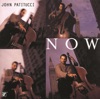
John Pattitucci

Now
1998 Concord Jazz 4806
Original recording 1998
This album contains an innovative version of the song with Pattitucci’s fleet-fingered bass taking the Coltrane lead in heavy conversation with drummer Bill Stewart.

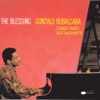
Gonzalo Rubalcaba

The Blessing
1991 Blue Note 97197
Original recording 1991
In a fascinating study in the art of improvisation, pianist Rubalcaba reharmonizes the song and builds on repeated phrases to invent a new composition. Bassist Charlie Haden and drummer Jack DeJohnette don’t miss a step.

David Murray Octet

Octet Plays Trane
2000 Justin Time 131
Original recording 2000
This dissonant, frenetic free-for-all contains some stunning phrasing and coordination. Saxophonist Murray’s arrangement and subsequent blowing embody the spirit of Coltrane without resorting to mimicry.

Meredith D’Ambrosio

It’s Your Dance
1995 Sunnyside 1011
Original recording 1985
In a rare vocal version of the Coltrane classic, D’Ambrosio lends her warm voice to her own lyrics. She’s in the extremely fine company of pianist Harold Danko and guitarist Kevin Eubanks.

Tommy Flanagan

Giant Steps
1994 Enja 4022
Original recording 1982
Flanagan was the pianist on Coltrane’s original recording of the song. This hard-to-find CD is expensive but worth mentioning for its historical perspective and for the fine performance in trio with bassist George Mraz and drummer Al Foster.
Jazz History

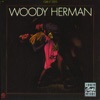
Woody Herman--clarinetist, vocalist, saxophonist and bandleader--kept a vibrant big band together for 51 years, an achievement equaled only by Duke Ellington. Herman filled his ranks with young talent (many half his age or less), keeping his music fresh and up-to-date. The band’s 1973 album entitled Giant Steps was the first big band excursion on the number, arranged by trumpeter Bill Stapleton. The exciting album won a Grammy Award that year.

Pianist Dick Wellstood was inspired by the Harlem stride-school of pianists like Fats Waller and James P. Johnson, yet he embraced a wide range of jazz styles. In 1975 he added “Giants Steps” to his repertoire in a version part Erroll Garner and part Donald Lambert (a virtuoso Baltimore pianist seldom recorded). A man with great wit, he would introduce the tune as “a rag by John Coltrane.”

Chris Tyle - Jazz Musician and Historian


Woody Herman

Giant Steps. Original Jazz Classics 344


Dick Wellstood

This is the One...Dig!
Solo Art 119
Written by the Same Composer or Team...
This section shows the jazz standards written by the same writing team. Click on a name to see all of a writer's jazz standards.

John Coltrane

YearRankTitle
1959254Giant Steps
1960263Naima
1957576Moment’s Notice
1961771Impressions
1960903Equinox
Reading and Research
Additional information on “Giant Steps” may be found in:

3 paragraphs including the following types of information: music analysis and jazz solo transcription.

3 paragraphs including the following types of information: music analysis. (Page 750).

Copyright 2005-2008 - JazzStandards.com - All Rights Reserved      Permission & contact information

Home | Overview | Songs | Biographies | History | Search | Bookstore | About