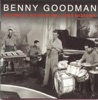
“I Cried for You,” co-written by Gus Arnheim, Abe Lyman, and Arthur Freed, was introduced in 1923 by Abe Lyman and His Orchestra. The song had staying power, making the Billboard charts several times over two decades:
- Benny Krueger and His Orchestra (1923, ten weeks, two weeks at #2)
- Columbians (1923, one week at #14)
- Bunny Berigan and His Orchestra (1938, Kathleen Lane, vocal, #13)
- Bing Crosby (1938 with the John Scott Trotter Orchestra, #13)
- Glen Gray and the Casa Loma Orchestra (1939, #6)
- Harry James and His Orchestra (1942, two weeks, #19)
|
|
The song has appeared in several films: Alladin from Manhattan (1936), The Women (1939), and Idiot’s Delight (1939). Although the song did not appear in the stage show Babes in Arms, it was sung in the 1939 film by Judy Garland. Helen Forrest sang it in Bathing Beauty with Harry James and His Music Makers (1944), Frank Sinatrasang it in The Joker Is Wild (1957), and Diana Ross warbled it in Lady Sings the Blues (1972). According to David Ewen in All the Years of American Popular Music, the song was also associated with vaudeville star Blossom Seeley. Betty Hutton played Seeley in the 1952 film Somebody Loves Me, a biography of the vaudevillian and her partner Benny Fields, played by Ralph Meeker.
|
|
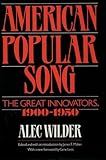
Alec Wilder in American Popular Song: The Great Innovators, 1900-1950 includes “I Cried for You” among the outstanding individual songs from 1920 to 1950. “The opening phrase of this song is not only highly unusual in its two large steps of a fifth and an octave, it is instantly beguiling. It is so good that I would have forgiven a few cliches....But the entire melody holds up.”
|
|
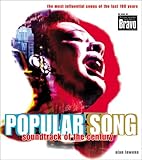
In his book Popular Song: Soundtrack of the Century Alan Lewens says, “‘I Cried for You’ is obviously a singer’s song, with a whole octave dive at the end of the second bar that allows the singer to show off a dramatic technique, but it has few notes, which makes life complicated for the lyric writer. However, Arthur Freed, a major player both as songwriter and producer in the era of the great Hollywood musicals, hit paydirt with this one. It is a song about survival and the lonely recuperation from a broken heart.
“There is something about the lyrics of ‘I Cried for You’ that harks back to the tradition of vaudeville rather than forward to the great American songbook, which was still very much in its infancy when the song was written.”
Freed went on to become a major producer of Hollywood musicals, and Lyman and Arnheim became bandleaders, although in the early twenties, according to Lewens, “they were joint leaders of the same outfit, The Syncopated Five. Lyman was the drummer, Arnheim the pianist.”
The lyric is sung by a spurned lover who, although happy with a new partner, hopes the former lover will suffer regret:
I cried for you
Now it’s your turn
To cry over me
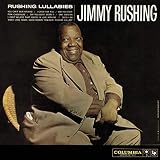
In Visions of Jazz: The First Century, Gary Giddins praises Jimmy Rushing’s vocal treatment of the song on his Rushing Lullabies recording with Ray Bryant on piano. “...On ‘I Cried for You’ he stomps the out-chorus with the line, ‘that’s one thing you learnin,’ sacrificing grammatical niceties (which he elsewhere exemplifies) because ‘you learnin’ produces three neatly stressed beats.”
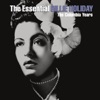
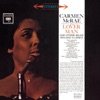
Billie Holiday is often credited with reviving interest in the song which she recorded in a 1935 session with Teddy Wilson. Sarah Vaughan also recorded a memorable version in 1949. “I Cried for You” was regularly performed throughout the following decades by artists such as Louis Armstrong, Artie Shaw, Erroll Garner, Johnny Hodges, and vocalists Ella Fitzgerald, Bing Crosby, Carmen McRae, Ray Charles, and Helen Humes with the Basie Orchestra. It appears less frequently in the repertoire of contemporary jazz artists; however, guitarist John Pizzarelli recorded it in 1993, saxophonist Harry Allen in 2001, as well as vocalists Jimmy Scott (1995), Etta Jones (2001), and Stephanie Nakasian (2006).
|