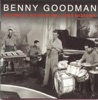
“I Know That You Know,” composed by Vincent Youmans with a lyric by Anne Caldwell (also known as Anne Caldwell O’Dea), was introduced by Beatrice Lillie in the 1926 Broadway musical Oh, Please! The Canadian-born Lillie was a well-known comic actress who appeared on both American and London stages. Although the show ran for only 75 performances, the song rose to number five on the charts in 1927, performed by Nat Shilkret and the Victor Orchestra. The Benny Goodman Orchestra revived it in 1936 and took it to number 14 on the charts.
|
|
| |
|
| |
|
In American Popular Song: The Great Innovators, 1900-1950, Alec Wilder says, “It’s a rousing rhythm song, using throughout verse and chorus a device by no means exclusively Youman’s, but one he was fascinated by and handled very skillfully. In alla breve time it is the accented fourth beat tied to at least a half note in the following measure.” It is this rhythm and heavily accented fourth beat that make it a “theater song” rather than a “pop song.” It is more often played than sung because of the wide intervals between notes. However, Nat “King” Cole sang it on his After Midnight Sessions (recorded in 1956) and traded piano licks with violinist Stuff Smith.
|
| |
| |
|
| |
|
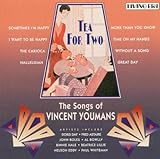
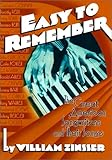
William Zinnser in Easy to Remember: The Great American Songwriters and Their Songs says that the success of the song is twofold: “What gives Youmans’ songs their tremendous energy is their small range [in this case an octave and a third]. Unlike Jerome Kern and other composers whose melodies rise and fall over a long trajectory, Youmans generally uses only a few adjacent notes. Even in the bridge he feels no compulsion to seek variety.” For examples Zinnser cites “Tea for Two, “I Want to Be Happy,” “Sometimes I’m Happy, “Great Day,” and “I Know That You Know.”
In the songs of someone like Hoagy Carmichael, Zinnser continues, “There’s no big-city tension. By contrast, the tunes of urban songwriters take much of their insistence from repeated notes....Vincent Youmans was a prince of the repeated note (‘I Know That You Know’).”
|
| |
| |

|
More on Anne Caldwell
|
|
| |
|
Caldwell was a librettist, lyricist, singer, and actress who collaborated on many Broadway shows between 1919 and 1928. Her simple lyric promises lasting love:
I know that you know
That I’ll go where you go
I choose you
Won’t lose you
I wish you knew how much
I long to hold you in my arms
Doris Day sang “I Know That You Know” in the 1950 film Tea for Two; the song was interpolated into the 1955 film version of the 1927 Broadway show Hit the Deck where it was performed by Jane Powell and Vic Damone; and Woody Allen used Gene Krupa’s version of the song in his 1989 film Crimes and Misdemeanors.
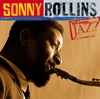
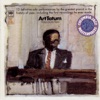
“I Know That You Know” has been recorded by the orchestras of Lionel Hampton, Glenn Miller, and Stan Kenton; pianists Erroll Garner, Art Tatum, and Oscar Peterson; trumpeter Dizzy Gillespie; and saxophonists Lester Young and Sonny Rollins. Since the early ‘90s it has been covered by the vocal duo of Jackie & Roy, saxophonists Harry Allen and Jesse Davis, guitarist John Pizzarelli, and vocalist Jackie Ryan.
|
|