Jazz Standards.com : Jazz Standards : Songs : History : Biographies

Home

Overview

Songs

Biographies

History

Search

Bookstore

About

Indian Summer (1919)

Origin and Chart Information
“The melody sings marvelously throughout without a single cliche or let down.”

- Alec Wilder

Rank 267
Music Victor Herbert
Lyrics Al Dubin

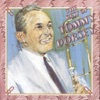
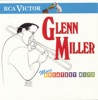
Composer Victor Herbert wrote what is now “Indian Summer” in 1919 as a piano piece which he titled “An American Idyll.” In 1939 Al Dubin created a lyric for the piece. Tommy Dorsey’s orchestra recorded it with vocalist Frank Sinatra the following year, and the song was on the Hit Parade for 14 weeks and rose to number one. The version by Glenn Miller and His Orchestra with vocalist Ray Eberle also charted in 1940 for ten weeks, rising to number eight.


Chart information used by permission from
Joel Whitburn's Pop Memories 1890-1954
 

In her book Lullaby of Broadway: Life and Times of Al Dubin, One of America’s Great Lyricists, his daughter, Patricia Dubin McGuire, tells the story behind “Indian Summer.” “The melody had been around for quite some time and Victor Herbert’s daughter had invited songwriters to put lyrics to the unusual and beautiful tune. Many songwriters competed, among them Stanley Adams, former ASCAP president. But Al’s lyric was selected and he was temporarily gratified by the honor. The song remained one of his favorite lyrics.”


More on Al Dubin at JazzBiographies.com


More on Victor Herbert at JazzBiographies.com
 

Two pieces of the sheet music are offered for sale on line: one with a picture of orchestra leader Everett Hoagland purports to be dated 1934, and the other, with a picture of bandleader Don Reid, purports to be from 1939 although the Big Bands database reports that Reid did not form his own orchestra until 1944.

In American Popular Song: The Great Innovators, 1900-1950 Alec Wilder, who admits to not being a fan of Victor Herbert, says that “Indian Summer” is “...unlike anything of his I’ve ever heard, and bears no European mark on it. It’s a thirty-two measure song with the form of A-B-A-C. The melody sings marvelously throughout without a single cliche or let down.”

Dubin’s lyric takes its title from that time in late autumn when warm, sunny weather recalls summer. It’s a nostalgic time, bringing up memories of summer romance, in this case one that is over:

Summer, you old Indian Summer,

You’re the tear that comes after Junetime’s laughter.

You see so many dreams that don’t come true,

Dreams we fashioned when Summertime was new.

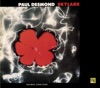
“Indian Summer” was picked up early by clarinetist Sidney Bechet, the Gene Krupa Orchestra, and by singer/actress Ginny Simms with Kay Kyser’s band. It has been recorded by vocal groups such as the Four Freshmen, Hi-Los, and Singers Unlimited; by saxophonists from Coleman Hawkins to Paul Desmond to Ken Peplowski (1998) and Teddy Edwards (2003); by singers from Ella Fitzgerald to Sarah Vaughan to Greta Matassa (2007); by pianists from Erroll Garner to Bill Mays (2001); and by almost every jazz guitarist you can name, most recently Vic Juris, John Pizzarelli, John Pisano, and Ron Eschete.

- Sandra Burlingame

Musician's Comments

Are you a published Vocalist or Instrumentalist?

Add a comment and we'll credit you with a link to your site. (more...)

Also on This Page...

Musician's Comments

By the Same Writers...
Reading & Research

Jazz History Notes

The first African American jazz musician to be recognized by the world of classical music was clarinetist/soprano saxophonist Sidney Bechet. The year that “Indian Summer” was published (1919) Bechet was on tour in Europe when Swiss conductor Ernst Ansermet declared Bechet “an extraordinary clarinet virtuoso” and an “artist of genius.” In 1940 Bechet recorded one of the first jazz versions of the tune, his soulful soprano sax playing making it a classic.

Taking the tune a bit further in a jazz sense, tenor saxophonist Coleman Hawkins’ version with the Esquire Magazine All-Stars from 1945 is typical of Hawk’s lyrical, exploratory ballad style.

Tenor saxophonist Stan Getz’s recording from 1949 is primo early Getz, his light sound a definite contrast to Bechet and Hawkins’ huskier tones. Stan further distances himself by playing the tune at a medium tempo which, nevertheless, works brilliantly.

Chris Tyle - Jazz Musician and Historian


Sidney Bechet
The Legendary Sidney Bechet
RCA 6590

Coleman Hawkins
Esquire's All-American Hot Jazz Sessions
Bluebird 6757-2-RB

Stan Getz
Yesterdays: Stan Getz Plays the Standards
ASV/Living Era 5515

Written by the Same Composer or Team...
This section shows the jazz standards written by the same writing team.

Al Dubin and Victor Herbert

Year Rank Title
1919 267 Indian Summer

Reading and Research
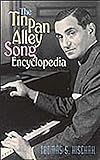
Additional information for "Indian Summer" may be found in:

Thomas S. Hischak
The Tin Pan Alley Song Encyclopedia
Greenwood Press
Hardcover: 552 pages
1 paragraph including the following types of information: history and performers.

Alec Wilder
American Popular Song: The Great Innovators, 1900-1950
Oxford University Press; Reprint edition
Hardcover: 576 pages
Two paragraphs of song analysis.

Copyright 2005-2008 - JazzStandards.com - All Rights Reserved      Permission & contact information

Home | Overview | Songs | Biographies | History | Search | Bookstore | About