| The lyric is about the heartbreak and the gossip that follow the end of a relationship after the couple has sent out wedding invitations. |
|
 |
|
- Sandra Burlingame
|
|
|
“It’s the Talk of the Town” was one of two hits written by the team of composer Jerry Livingston and lyricists Marty Symes and Al J. Neiburg in 1933. The other was “Under a Blanket of Blue,” also popularized by Glen Gray’s orchestra.
Neiburg wrote the lyric for “I’m Confessin’ That I Love You” in 1930 and collaborated with Livingston on “A Little Bit Later On.” In addition to his two hits with Livingston and Neiburg Symes collaborated with Isham Jones on 1936’s successful “There Is No Greater Love.”
|
| |
|
| |
|
Livingston’s output, which is quite varied, includes “When It’s Darkness on the Delta” (1932), “Mairzy Doats and Dozy Doats” (1943), and “Blue and Sentimental” (1947). During the ‘50s and ‘60s he wrote mainly for films, receiving three Academy Award nominations.
Bing Crosby made a successful recording of “It’s the Talk of the Town” in 1933. Although his version didn’t chart, others did:
-
Glen Gray and His Casa Loma Orchestra (1933, 11 weeks, peaking at #6) -
-
Glen Gray and His Casa Loma Orchestra (1942, #22, new version with vocalist Kenny Sargent) |
| |
|
| |
|
The melody is a simple one, moving up the scale with repeated notes, and dropping rather dramatically to the title phrase. While songwriter and author Alec Wilder is not that fond of the melody, he does find effective the augmented chord created by the melody falling on the minor third of the scale, supported by a dominant chord.
The lyric is about the heartbreak and the gossip that follow the end of a relationship after the couple has sent out wedding invitations. The song ends with a plea to reconcile:
Let’s make up, sweetheart, we can’t stay apart;
Don’t let foolish pride keep you from my side.
How can love like ours be ended?
It’s the talk of the town.
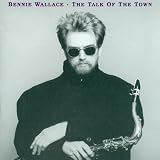
“It’s the Talk of the Town” has been recorded by saxophonists Charlie Parker and Stan Getz; the big bands of Harry James and Benny Goodman; vocalists June Christy, Helen Humes, and Dakota Staton; pianists Erroll Garner and Oscar Peterson; and harmonica player Toots Thielemans. Pianist Dave Brubeck recorded it in 1994, guitarist Russell Malone in 1991, and saxophonist Bennie Wallace used it as the title of his 1993 CD. Vocalists Giacomo Gates and Jimmy Scott both recorded it in 1995 and Rebecca Kilgore, in 2001.
|
- Sandra Burlingame
|
|
|