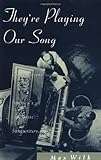
In Max Wilk’s book They’re Playing Our Song Betty Comden tells the story behind “Just in Time.” “[Adolph Greene and I] were talking to Jule, and said, ‘Wouldn’t it be nice to have something in the show like an old Youmans tune, where there’s two notes, but the bass keeps changing and moving under the notes, making different harmonies and moving a melody.’ Very simple. Jule went to the piano and started playing a simple thing--da, dee dah. He asked if that was what we meant, and we said absolutely!” Styne developed the tune and sang it as “Da dee dah” at parties where it was a big hit.
|
|
Michael Feinstein in his book Nice Work If You Can Get It: My Life in Rhythm and Rhyme says, “Jule Styne said one of Youmans’ devices was to take a small musical phrase and repeat it with slight variations. In fact, Styne acknowledged that he got the inspiration for ‘Just in Time,’ which has that same kind of repeated melodic figure, from Youmans.”
|
|
In Wilk’s book Comden describes how the song made it to Broadway. “And it might never have been in the show except that as the book we were writing developed we came to a place where the leading male character feels that his life has been saved by the arrival of this curious girl Judy Holliday.... Suddenly it came to one of us--don’t ask me which one--the right words for that situation and that character. And they fitted the melody Jule had been playing at parties--Da-dee-da--‘Just in time, I found you just in time!’”
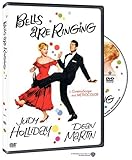
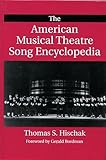
The show in question was Bells Are Ringing which opened on Broadway in 1956 and ran for a record breaking 926 performances. It starred recent Oscar winner Judy Holliday (Born Yesterday) and Sydney Chaplin. According to Thomas S. Hischak in The American Musical Theatre Song Encyclopedia, “Just in Time” was introduced by Chaplin who “sang it in a lighthearted song and dance style in Central Park to entertain passersby. Styne’s melody is perhaps the simplest he ever wrote, being basically confined to only two notes until the release, but it became one of his most famous songs.” In addition, the show featured another hit song, “The Party’s Over,” sung by Holliday.
Holliday won the Tony for best actress in a musical and Chaplin, the Tony for best featured actor in a musical. Comden and Greene were nominated for a Best Musical Oscar and choreographers Jerome Robbins and Bob Fosse were nominated for Best Choreography.
Holliday played a telephone operator (Ella) at an answering service. Adopting different identities, she gets involved in the lives of her clients and falls for one of them, a playwright (Jeff, played by Chaplin) suffering from writer’s block. Using a phony name, Ella meets Jeff and helps him with his play. They fall in love, but Ella feels inferior to Jeff’s upscale life and disappears. Ultimately he finds her and the story has a happy ending.
The show opened in London’s West End in 1957 and was made into a movie in 1960 in which Holliday reprised her role as Ella, this time with Dean Martin as her love interest. In the film’s outdoor setting they sing and dance romantically to “Just in Time.” A crowd has gathered, and their applause generates a second performance in which Holliday and Martin ham it up with a vaudeville-style dance accompanied by snappy dialogue. Comden and Green won the Writers Guild of America award for Best American Musical and shared a Grammy nomination with Styne for Best Soundtrack Album. The film was also nominated for Best Music, Scoring of a Musical (Andre Previn). The 2001 revival of the show won both a Tony and a Drama Desk Award for Best Revival of a Musical although it ran for only 68 performances.
An interesting aside is that Holliday’s blind date in the early part of the film is played by baritone saxophonist Gerry Mulligan with whom she became involved. They recorded an album together in 1961, Holliday with Mulligan, for which she co-wrote some of the tunes.
The Comden/Greene lyric cleverly describes Jeff’s dilemma before meeting Ella: “The losing dice were tossed, My bridges all were crossed.”
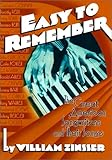
Ella has changed everything for Jeff, saving his career and fulfilling his life, and he sings to her: “You found me just in time, And changed my lonely life, That lovely day.” In his book Easy to Remember: The Great American Songwriters and Their Songs, William Zinsser says, “Comden and Green’s blunt lyric to Styne’s pulsing melody is the perfect marriage of words and music.”
Tony Bennett had a hit with “Just in Time,” and the song has been recorded by vocalist Nina Simone, trombonist Bill Watrous, and saxophonist Lester Young. Drummer Shelly Manne recorded a jazz version of the Broadway score, and Marty Paich arranged the song for big band. Tenor saxophonist Joshua Redman recorded Sonny Rollins’ arrangement in his 1993 debut CD. Pianist Oliver Jones used the song as the title cut of his 1998 CD, pianist Roger Kellaway recorded it in 2005 for his Bobby Darin tribute, and pianist Christian Jacob featured the song in his 2004 Styne tribute. Vocalist Steve Tyrell recorded it in 2003, and the vocal group Take 6 is featured on the song in the 2007 DVD tribute to Ella Fitzgerald.
|