Writer Moss Hart was working on a play about psychoanalysis which he called I Am Listening when he was approached by composer Kurt Weill who asked him to work on a project called The Funnies. Instead Hart proposed that Weill work with him on transforming his play into a musical, and they decided on Ira Gershwin as the lyricist for their “play with music” which was now to be titled Lady in the Dark.
|
|
Lady in the Dark premiered at New York’s Alvin Theatre on January 23, 1941, to critical acclaim and ran for 467 performances. Gertrude Lawrence introduced “My Ship,” a song which was not only well integrated into the plot but essential to it.
Lawrence starred as Liza, a successful but unhappy magazine editor. She is undergoing analysis and must not only recall a song which she knew in childhood but remember what happened when she last sang it. The scenes move from her office to the office of the psychoanalyst where her recollections are presented in dream sequences.
Ira Gershwin emphasizes the importance of “My Ship” in Lyrics on Several Occasions. “Although the lyric itself was a mental block to her until well into the second act, the haunting tune--orchestrated by Kurt to sound sweet and simple at times, mysterious and menacing at other--heightened the suspense of many moments in the play.”
According to David Ewen in the Complete Book of the American Musical Theater, “Hart recognized that his play would require dream sequences, and with an equally sure instinct he felt that music was indispensable in pointing up such sequences and intensifying their moods.... A consummate writing technique was required to keep the play moving fluidly from the reality of Liza’s actual business and love life, to the confused world of her subconscious; from her everyday problems and frustrations to the nebulous world of her dreams and the misty memories of her past. Hart possessed that skill. But he also profited from one of the most remarkable virtuoso performances of our contemporary musical stage, that of Gertrude Lawrence.” As a measure of her stardom Lawrence was portrayed by Julie Andrews in Star! a 1968 film of her life.
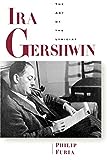
The collaboration of Hart, Weill and Gershwin was made in heaven. As Philip Furia says in his book Ira Gershwin: The Art of the Lyricist the score, according to Gershwin, combined ...“light opera, musical comedy, and choral pieces--something which had never been done in this country before.” And Furia points out that “the composer was even willing to let Ira’s words come first for much of the score, and that freedom gave Ira license for poetic flights greater than he had ever taken.”
Lawrence dazzled Broadway audiences but was nearly upstaged by Danny Kaye (in his first Broadway role) as gay fashion photographer Russell Paxton. Kaye sang a song which became one of his trademarks, “Tschaikowsky and Other Russians,” in which he rapidly recited the names of 49 Russian composers. At the preview, he received a standing ovation, and the authors worried that their star, about to sing “The Saga of Jenny,” would be overshadowed. But Lawrence rose to the challenge, extemporizing a “bump and grind” that delighted the audience.
“My Ship” was key to the plot, for as Furia says, the arrival of the ship represented Liza’s new found self-awareness, and it is her singing of the song that brings the ship in. And since this was a song from Liza’s past, Weill sought to give the melody a turn-of-the-century feeling. Surprisingly, when Hollywood filmed Lady in the Dark in 1943 with Ginger Rogers and Ray Milland, the song, which is mentioned frequently in the movie, appears only as an instrumental without its very important lyric, much to the dismay of Gershwin and the confusion of audiences and critics.
In The Poets of Tin Pan Alley: A History of America’s Great Lyricists, also by Furia, the author says, “The lyric...exudes a sentimentality, unrelieved by wit or insouciance, that Ira seldom fell into with his brother. Its uninventive catalog of images...culminates in a cloyingly repeated plea for the ship to bring ‘My own true love to me.’ So tangled does Gershwin get in the extended image he weaves that he commits unheard-of poetic inversions....” Furia implies that Hollywood’s dissatisfaction with the lyrics is why only the melody was retained in the film.
Even so, Furia finds much to like about the song in his biography of Gershwin. “The song has no verse,” says Furia, “only a straightforward chorus that opens with a perfectly singable phrase of billowing sibilant and liquid consonants and open vowels that soar to the highest notes of the melody: ‘My ship has sails that are made of silk.’
“For ‘memorability’ Ira created faceted repetitions, barely heard, such as the il of ‘silk’ that recurs in:
My ship’s aglow
With a million pearls
And rubies fill
Each bin.
“Even fainter, but still subtly memorable, is the rhyme between ‘million’ and ‘bin.’”
Gershwin tells an amusing story of an aural ambiguity, somehow missed by both composer and lyricist but brought to their attention during rehearsals by Lawrence when she sang the original lines:
I can wait for years
Till it appears,
One fine day in spring.
One day she stopped and asked Gershwin, “Why four years, why not five or six?” Gershwin says, “She was quite right,” and he changed the line to “the years.” “Somehow neither Kurt nor I had noticed that the preposition ‘for’ received the same musical value as ‘wait’ and ‘years’,” he says.
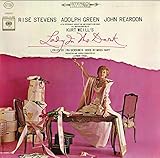
Lady in the Dark was presented in a 1954 TV production starring Ann Southern and Carleton Carpenter. In 1963 Rise Stevens made a studio recording of the stage show which includes some of Danny Kaye’s 1941 recordings. The show opened at London’s Royal National Theater in 1997 and ran from March to August. Although the production resulted in a cast recording, the play, a difficult one to stage, was panned by critics.
“My Ship” continues to be popular with jazz musicians. Recent recordings include those by drummer Cindy Blackman and vocalists Janis Siegel and Sheila Jordan (1999); vocalist Dee Dee Bridgewater (2000); pianist Herbie Hancock’s quintet featuring saxophonist Michael Brecker and trumpeter Roy Hargrove (2001); vocalists Mark Murphy (2004) and Greta Matassa and Flora Purim (2001); pianist Travis Shook in his 2005 tribute to Weill; and the Gary Urwin Jazz Orchestra featuring trombonist Bill Watrous and saxophonist Pete Christlieb (2006). Pianist Gerald Wiggins, who first recorded the song in 1990, reprised it at his 80th birthday celebration recorded at the Jazz Bakery in 2002.
|