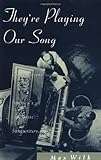
In Max Wilk’s book They’re Playing Our Song lyricist Yip Harburg tells the story behind “Old Devil Moon.” Friend and composer Harold Arlen came to Harburg’s house one night and Yip played him the score that he’d written with Burton Lane for Finnian’s Rainbow. Arlen pointed out one song that he thought was weak. Yip said, “So I had Burt play him a tune he’d been fooling around with--it was to be ‘Old Devil Moon,’ though it had another lyric; we’d written it for a movie, but never used it.” Arlen praised the song, so Harburg tossed out the first lyric. “I started looking for an idea, something that had to do with witchcraft, something eerie, with overtones of voodoo. Eventually it became ‘Old Devil Moon.’ Strangely constructed. It doesn’t have a verse, and it isn’t the ordinary thirty-two-bar song at all, but it became very popular. That’s what made it a great song--it was original.”
|
|
Michael Feinstein, in his book Nice Work If You Can Get It: My Life in Rhythm and Rhyme, says, “Some popular songs have evolved from lyrics that were thrown out and replaced by other lyrics. For example, Burton Lane’s ‘Old Devil Moon,’ with lyrics by Yip Harburg, was originally written for Lena Horne with the title ‘This Is Where I Came In’.”
The song charted twice in 1947: Margaret Whiting’s version stayed on the Billboard chart for six weeks, peaking at #11, and the Gene Krupa Orchestra rendition with vocalist Carolyn Grey spent a week on the chart, peaking at #21.
|
|
Finian’s Rainbow, with a book by Harburg and Fred Saidy and choreography by Michael Kidd, opened on January 10, 1947, at the 46th Street Theater and ran for 725 performances. Its whimsical story, laced with social and political satire, is about a father and daughter who arrive in the American south from Ireland with a crock of gold stolen from the leprechauns, one of whom, Og played by David Wayne, is pursuing them. They believe that if the crock is planted near Fort Knox the gold will multiply. The show’s subplot concerns a racist senator who is magically turned black. Og eventually restores his white color and cures him of bigotry by “sprinkling him with brotherhood.” Ellen Logan starred as the daughter Sharon, Albert Sharpe as her father Finian, and Donald Richards as Woody, Sharon’s love interest. Logan and Richards introduced “Old Devil Moon” in the show.
According to Thomas S. Hischak in The American Musical Theatre Song Encyclopedia, Woody and Sharon sing a song about the bewitching power of the moon and about their love for each other. “Lane’s jazzy music is almost avant-garde in its melodic and harmonic jumps and its spiraling release that seems to explode with passion. It is also an extremely difficult song to sing correctly. Harburg’s lyric sparkles, using rolling alliteration and assonance at times and vigorous eruptive words in other instances.”
The show won Tonys for Best Conductor and Musical Director as well as Best Choreography, and Wayne won both a Tony and a Theater World Award for his performance. In addition to “Old Devil Moon” the show introduced “Look to the Rainbow,” “If This Isn’t Love,” “When I’m Not Near the Girl I Love,” and “How Are Things in Glocca Morra?” which was a big hit at the time but has not enjoyed the same popularity among jazz musicians over the years as “Old Devil Moon.”
The show enjoyed several revivals, three by the New York City Center Light Opera Company in 1955, 1960, and 1967. The Irish Repertory Theatre staged an off-Broadway production in 2004.
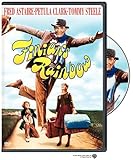
In 1968 Warner Brothers made the show into a film with Fred Astaire, Petula Clark, Don Francks, and Tommy Steele as Og. Clark and Francks sing a very romantic version of “Old Devil Moon” and reprise it later in the film after which it is danced by Barbara Hancock as Susan. The movie received Oscar nominations for Best Score of a Musical Picture and Best Sound.
In his book American Popular Song Alec Wilder says that the opening measures of “Old Devil Moon” would have been surprising for 1947 when modal writing was less common. “To move from a whole note f to a repeated e flat in the second measure had to come as a great surprise.” He calls the song an example of “splendid writing” with a number of interesting elements. “One is the very adroit control of repeated notes, which, though a characteristic of the song, are never used to the point of monotony. Another is the dangerous but in this case successful use of the mixolydian mode, in which the seventh interval is a half tone below its usual position.”
Harburg’s catchy lyric for “Old Devil Moon” includes references such as “magic carpet ride” and “bewitching eyes,” and the intensity of the romance is captured in these lines:
Stars in the night
Blazing their light
Can’t hold a candle
To your razzle-dazzle.
Philip Furia in The Poets of Tin Pan Alley points to Harburg’s casually vernacular style and his juxtaposition of the familiar and the exotic (“that old devil moon”) as contributing factors to the success of the song. “He weaves together heat and light imagery and subtly plays true rhymes against off-rhymes--‘glance/romance/handle/candle’ and ‘blazing/razzle/dazzle.’” Furia extols the marriage of words and music in the song. “Harburg’s use of driving repetitions [‘wanna cry, wanna croon, wanna laugh like a loon’] to express the delightful torments of romantic possession matches Lane’s insistent--but never monotonous--musical repetitions.”
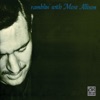
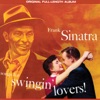
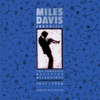
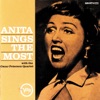
“Old Devil Moon” has been sung by Frank Sinatra, Sarah Vaughan, Ella Fitzgerald, Anita O’Day, Lena Horne, and Betty Carter and Carmen McRae in duet. It’s also been recorded by saxophonist Sonny Rollins, vibist Milt Jackson, trumpeter Miles Davis, and pianist Ahmad Jamal. It was included in a spate of recordings in the late 1990s by trumpeter Terell Stafford, pianists Jacky Terrasson, Joanne Brackeen, David Hazeltine, and vocalist Ann Hampton Callaway. Vocalists Rebecca Kilgore and Tierney Sutton recorded it in 2000 and 2001.
|