Jazz Standards.com : Jazz Standards : Songs : History : Biographies

Home

Overview

Songs

Biographies

History

Search

Bookstore

About

Rosetta (1933)

Origin and Chart Information
Western swing bandleader Bob Wills contributed to the popularity of “Rosetta,” which he first recorded in 1938 and which became the theme song of his Texas Playboys.

- Sandra Burlingame

Rank 203
Words and Music Earl Hines
Henri Woode

Pianist/composer/bandleader Earl “Fatha” Hines first recorded “Rosetta” with his orchestra on February 13, 1933, then again on September 24, 1934. The lyric was written by his band’s arranger Henri Woode.


More on Earl Hines at JazzBiographies.com


More on Henri Woode at JazzBiographies.com
 

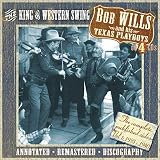
Western swing bandleader Bob Wills contributed to the popularity of “Rosetta,” which he first recorded in 1938 and which became the theme song of his Texas Playboys as well as the name of his daughter, born in 1940. Wills regularly appeared live on Tulsa, Oklahoma’s radio station KVOO from 1934-1942, and his brother Johnnie Lee kept the program going when Bob left to serve in WWII.

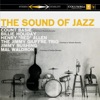
The song was featured in the 1976 Broadway musical Bubbling Brown Sugar which ran for 766 performances. The Henry “Red” Allen All-Stars’ performance of “Rosetta” on the landmark TV program The Sound of Jazz in 1958 can now be seen on the DVD Jazz Masters: Vintage Collection 1958-61.

Hines led Chicago’s top band which at various times featured soon-to-be greats Dizzy Gillespie, Charlie Parker, Billy Eckstine, and Sarah Vaughan. He was also the composer of “You Can Depend on Me,” “Deep Forest,” “My Monday Date,” “Stormy Monday” (not to be confused with the T-Bone Walker composition), and “Jelly Jelly,” the latter two hits for the Hines band with vocalist Eckstine. But Hines, who had aspired to a concert career, was best known as a piano virtuoso, and his recordings with Louis Armstrong in the late 1920’s are considered classic. He is the first of the modern pianists and his influence extends from Nat “King” Cole and Art Tatum onward. He broke with the stride players and developed his own dazzling style which Armstrong praised as trumpet-like.

Some have speculated that Charlie Parker’s “Yardbird Suite” (1940) was based on Hines’ “Rosetta,” but Brian Priestley in Chasin’ the Bird: The Life and Legacy of Charlie Parker refutes that notion in the notes to his book. “...When recorded in 1946, its second bar is played over IVm-bVII7 but, if ‘Rosetta’ was the chord-sequence, the melody would contain a raised 9th and flatted 9th.”

Nat “King” Cole, on piano, recorded a memorable version of “Rosetta” at the first Jazz at the Philharmonic concert in 1944, and more recently pianists Harold Danko and John Hicks included the song on their tributes to Earl Hines. Although vocalists Mildred Bailey, Anita O’Day, and country singer Willie Nelson have waxed the song, it is not often sung. But it’s been recorded by bassist Milt Hinton, violinist Stuff Smith, reed player Yusef Lateef, and bandleader Georgie Auld. It is a tune that appeals to guitarists, having been recorded by Django Reinhardt, Herb Ellis, Joe Pass, Charlie Byrd, and, more recently, by Dan Faehnle (2003), the dual guitars of Bucky Pizzarelli and Howard Alden (2004), and John Pisano (2007).

- Sandra Burlingame

Music and Lyrics Analysis

As the simple lyric attests, “Rosetta” is a love song:

Rosetta, my Rosetta,
In my heart, dear, there’s no one but you.
You made my whole life a dream,
and I pray you’ll make it come true

Musician's Comments

Are you a published Vocalist or Instrumentalist?

Add a comment and we'll credit you with a link to your site. (more...)

Also on This Page...

Music & Lyrics Analysis
Musician's Comments

Jazz History Notes
Also by the Same Writers...
Reading & Research

Jazz History

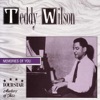
An early influence on pianist Teddy Wilson was Earl Hines, undoubtedly one of the reasons Wilson was hired by Hines’ former boss Louis Armstrong in 1933. On Teddy’s first solo session from 1934, he pays homage to his mentor on a stellar “Rosetta.”

Hines’ 1933 tune was a favorite of New Orleans-born trumpeter Henry “Red” Allen. He first recorded it in 1937, and as the years progressed his versions became more interesting. His performance on the CBS-TV special The Sound of Jazz from 1957 is a gem, with fine work from cohort Coleman Hawkins on tenor sax, clarinetist Pee Wee Russell and cornetist Rex Stewart.

Composer Hines’ piano solo from 1939 illustrates his unique style which was compared to Louis Armstrong’s improvisations and subsequently referred to as “trumpet-style” piano.

Chris Tyle - Jazz Musician and Historian


Teddy Wilson

Best of Teddy Wilson and His Orchestra
Collector’s Choice 126

Henry “Red” Allen

His Best Recordings 1929-1941
Best of Jazz 14031

Henry “Red” Allen

The Sound of Jazz
Sony 66082

Henry “Red”Allen/

Jazz Masters-Video Collection
Wea International (DVD of the Sound of Jazz TV special)

Earl Hines

The Early Years 1923-1942
Jazz Legends 1019
Written by the Same Composer or Team...
This section shows the jazz standards written by the same writing team. Click on a name to see all of a writer's jazz standards.

Earl Hines and William Henri Woode

YearRankTitle
1933203Rosetta
Reading and Research
Additional information on “Rosetta” may be found in:

1 paragraph including the following types of information: history and performers.

Includes the following types of information: song lyrics.

Copyright 2005-2008 - JazzStandards.com - All Rights Reserved      Permission & contact information

Home | Overview | Songs | Biographies | History | Search | Bookstore | About