|
|
|
| “...A shattering ballad...” |
|
 |
|
- Alec Wilder
|
|
| |
Composer Richard Rodgers and lyricist Lorenz Hart wrote two songs with the same title. The first “Spring Is Here” was the title of a 1929 Broadway show (filmed the following year), and the song was an upbeat tune, soon forgotten, and not the ballad that became a jazz standard. However, the show did produce the hit “With a Song in My Heart.”
|
| |
| |
|
| |
|
|
| |
| |
|
| |
|
The songwriters’ second “Spring Is Here,” and the one that is performed by jazz artists, appeared in the 1938 Broadway musical I Married an Angel. But the history of the show goes back to 1933 when Rodgers and Hart collaborated with writer Moss Hart on a film version of I Married an Angel to star Jeanette MacDonald. However, MGM shelved the project pronouncing the content to risque. Five years later MGM released those film rights to the songwriters provided the studio retain the option of filming the stage production.
Rodgers and Hart decided not to use the scenario created by Moss Hart for the film but to return to the 1932 play Angyalt Vettem Felesegul (I Married an Angel) by Hungarian writer Janos Vaszary which had been a hit in Budapest. It told the story of a Count, a banker/playboy in Budapest, who marries an angel. According to Rodgers, “The theme of the play was that it’s possible for someone to be too good. Our angel nearly ruins her husband’s life by her truthful but undiplomatic remarks. It is only when, under the expert tutelage of Vivienne Segal [who plays the sister of the Count], she becomes devilish instead of angelic that the marriage is saved.”
The show, directed by Joshua Logan, starred Dennis King as the count, Segal as his sister the countess, and ballerina Vera Zorina as the angel. King and Segal introduced “Spring Is Here” in the show which ran for 338 performances. Two ballet numbers, choreographed by the great George Balanchine, were well integrated into the plot as were the dances in the songwriters’ previous show, On Your Toes.
According to David Ewen in his book The Complete Book of American Musical Theater critic Brooks Atkinson called the show “one of the best musical comedies of many seasons, an imaginative improvisation with a fully orchestrated score and an extraordinarily beautiful production. Musical comedy has met its masters.”
“Spring Is Here” charted twice in 1938: Leo Reisman and His Orchestra with vocalist Felix Knight took it to number 14, and vocalist Buddy Clark’s version reached number 19. The title song made Your Hit Parade during the Broadway run.
|
|
| |
|
| |
|
Finally a film version of I Married an Angel was made in 1942, starring Jeanette MacDonald (predictably) and Nelson Eddy who sang “Spring Is Here.” But censorship of the suggestive content which concerned an angel who loses not only her wings but her virginity took most of the life out of the story. The movie, the last for MacDonald and Eddy, was a flop. Even the score was changed to include additional songs, not written by Rodgers and Hart, to please fans of the singing duo.
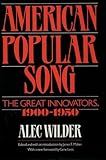
Alec Wilder in his book American Popular Song: The Great Innovators, 1900-1950 describes “Spring Is Here” as a “shattering ballad” and continues to say, “The lyric is Hart at his best, including the closing line: ‘Spring is here, I hear.’ Considering the loneliness of the character, this line wryly sums up his point of view.”
William Zinsser in Easy to Remember: The Great American Songwriters and Their Songs says, “...The phrase ‘maybe it’s because nobody loves me’ is a cry of pain set to ten consecutive rising notes, followed by an abrupt drop to the wistful ‘spring is here,’ followed by the final drop--almost a whisper--to the ironic ‘I hear.’ I think of these late Rodgers and Hart ballads as women’s songs. No other American songwriters have given women cabaret artists such a sensitive literature.”
Some of the great jazz vocalists to record “Spring Is Here” include Ella Fitzgerald, Sweden’s Monica Zetterlund, Tony Bennett, and Chris Connor in a definitive version in which she wrests every bit of sorrow from heart-wrenching lyric. Pianists Bill Evans and Kenny Drew Sr. and Jr. covered it as well as contemporary artists such as saxophonist Michael Brecker, bassists Charlie Haden and George Mraz, pianist Stephen Scott, and vibists Bobby Hutcherson and Joe Locke.
|
|
|
|
More information on this tune... |
|
See the Reading and Research page for this tune for additional references. |
|
- Sandra Burlingame
|
|
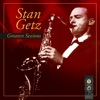
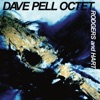
Bob Brookmeyer, a valve trombonist and vibraphonist, was closely connected to the so-called West Coast “cool school” of jazz playing. The pairing of him with tenor saxophonist Stan Getz for a 1953 Verve session worked out well even though a front line of tenor sax and valve trombone seemed a bit radical at the time. They turn in an elegantly swinging version of the Rodgers and Hart tune. Another tenor saxophonist, Dave Pell, organized a number of tribute albums in the 1950s and ‘60s. His tribute to Rodgers and Hart is in the “cool” camp, and the version of “Spring Is Here” from the album is superb, with workmanlike solos by Ronnie Lang (baritone sax), Donn Trenner (piano), Pell (bass clarinet), and Don Fagerquist (trumpet). Yet again another “cool school” recording by masterful drummer Shelly Manne and his Men utilizes the arranging talents of tenor saxophonist Bill Holman, who turns in a fine solo as does alto saxophonist Joe Maini.
Chris Tyle - Jazz Musician and Historian
|
Additional information for "Spring Is Here" may be found in:
|
|
|
 Robert Gottlieb, Robert Kimball
Reading Lyrics
Pantheon
Hardcover: 736 pages
(Includes the following types of information: song lyrics.)
|
|
|
|
|
|
|
|
Comment Policy
- Your comments are welcome, including why you like
this tune, any musical challenges it presents, or additional background information.
- Jazz musicians, fans, and students of all ages use this website as an educational resource.
As such, off-topic, off-color, unduly negative, and patently promotional comments will be removed.
- Once submitted, all comments become property of JazzStandards.com.
By posting, you give JazzStandards.com permission to republish or otherwise distribute your comments in any format or other medium.
JazzStandards.com reserves the right to edit or remove any comments at its sole discretion.
|
|
| Click on any CD for more details at Amazon.com |
 Tierney Sutton
Unsung Heroes
2000 Telarc 83477
|
|
A delightful reading capitalizes on Sutton’s crystal clear vocals and eloquent delivery. The result is a sweet, melancholy version that focuses lovingly on the lyrics.
|
 Shirley Scott Trio
Like Cozy
2001 Prestige Records 24258
Original recording 1960
|
|
Scott sits at the piano for this straight-forward trio recording. The rhythm section slows things down to a lazy sweep allowing Scott’s full, rich expression to dominate.
|
 Charlie Haden/Kenny Barron
Night and the City
1996 Verve 314539961
Original recording 1998
|
|
Bassist Haden and pianist Barron tap into the darker recesses of the song, their playing sparse, economical, and perfect. Atmospheric, original and outstanding.
|
 Tino Derado
Luminescence
Sunny Side
|
|
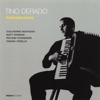
Pianist/accordionist Derado is of German descent, completed his jazz studies in Boston and New York, and is influenced by Argentinian Astor Piazzolla and the Brazilian composers. His music is of the world and even other worldly. His reharmonization of “Spring Is Here” is tucked among some beautiful original compositions.
|
|
|
|