|
|
|
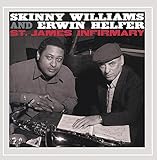
| “St. James Infirmary” charted several times over the years, but early versions were banned by network radio. |
|
 |
|
- Sandra Burlingame
|
|
| AKA | Saint James Infirmary |
|
| AKA | St. James Infirmary Blues |
|
| Rank |
239 |
|
| Words and Music |
Traditional
Joe Primrose
|
|
| |
“St. James Infirmary” or “St. James Infirmary Blues” has a long history, and blogger Rob Walker, by his own admission, became obsessed with the history of the song and has done extensive research on it.
The song can be traced back to 19th century England and a folksong called “The Unfortunate Rake” which spawned several versions based on the same story line but with variations in the lyric. Basically the lyric is about a soldier or sailor who has just come from the infirmary where he has viewed the corpse of his lady friend. Walker speculates that St. James Hospital which treated lepers in London was the basis for the infirmary in the title.
She was stretched out on a long white table, so cold, and fine, and fair.
Let her go, let her go, God bless her, wherever she may be
She can search this world over, never find another man like me.
The verse moves directly to the narrator’s wishes for his own funeral because he expects to die soon from venereal disease, according to early versions of the song. Louis Armstrong, who was the first to record the song on December 12, 1928, in Chicago, sang these lines:
When I die, I want you to dress me in straight-laced shoes
Box-back coat and a Stetson hat
Put a twenty- dollar gold piece on my watch chain,
So the boys will know that I died standin’ pat.
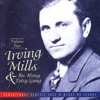
“St. James Infirmary” was copyrighted in 1929 by one Joe Primrose whom Walker confirms was a pseudonym for music publisher Irving Mills, an associate of Duke Ellington. The melody is the Armstrong version, although there are other melody lines (one of which is “Streets of Laredo”) which Walker discovered on a disc entitled The Unfortunate Rake: A Study In The Evolution of A Ballad, containing 20 songs and extensive notes by Kenneth S. Goldstein. The “Streets of Laredo” melody appears as “St. James Hospital” on a disc by musicologist Alan Lomax.
|
| |
| |
|
| |
|
Walker also uncovered a recording of the song under the title “Gamblers’ Blues” by Fess Williams and his Royal Flush Orchestra, made February 25, 1927, in New York City and another by the Harlem Hot Chocolates, recorded in March 1930, with a singer identified as Sunny Smith. “This was actually Duke Ellington’s band, with Mills, under another pseudonym, on vocals.”
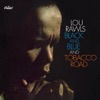
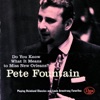
“St. James Infirmary” charted several times over the years, but early versions were banned by network radio:
|
|
| |
|
| |
|
In Weather Bird: Jazz at the Dawn of Its Second Century, Gary Giddins calls Armstrong’s vocal version of the song “an essential performance, because here for the first time we hear what Armstrong could do with a good song, perfectly gauging the high notes and propelling the chorus with rhythmic emotion....”
The number and variety of jazz recordings, in addition to multiple versions by Dixieland bands and blues and pop singers, may be surprising. “St. James Infirmary” has been covered by the orchestras of Count Basie, Benny Goodman, and Stan Kenton; vocalists Billie Holiday and Bing Crosby; organist Jimmy Smith, clarinetist Sidney Bechet, violinist Stuff Smith, saxophonist Ben Webster, trombonist/vocalist Jack Teagarden, guitarist Marc Ribot, and drummers Les McCann and Han Bennink; pianists Mary Lou Williams, Red Garland, Hank Jones, and Steve Allen. Reed man Bob Mintzer recorded it with a quartet in 2002; the Marsalis family featured it in 2003 with Harry Connick Jr. on their CD and DVD; vocalists Nancy King and Diana Krall recorded it in 2002 and 2006.
|
|
|
|
More information on this tune... |
|
|
 Thomas S. Hischak
The Tin Pan Alley Song Encyclopedia
Greenwood Press
Hardcover: 552 pages
(In his encyclopedia of song Hischak relates the history of the song and its performers.)
|
|
|
|
- Sandra Burlingame
|
|
Although trumpeter Louis Armstrong had the premier recording of “St. James Infirmary,” it was one of Armstrong’s colleagues, trombonist Jack Teagarden, who is most associated with the number. Jack’s first recording was in 1930 for promoter/producer Irving Mills (better known as Duke Ellington’s manager). For the session Mills basically hired the entire personnel of drummer Ben Pollack’s Orchestra, whom Teagarden worked with for three years. One of Jack’s specialties was to remove the bell section of the trombone and play the slide section into a water glass, producing an eerie, bluesy sound. Although the elder Teagarden usually did the vocal honors, on this session he handed it to younger brother, trumpeter Charlie. A 1947 concert at New York’s Town Hall became, unbeknownst to the participants at the time, the premier of Louis Armstrong’s All-Stars. (Armstrong organized the group as his permanent ensemble shortly afterward.) “St. James...” was Teagarden’s feature, complete with marvelous trombone playing, vocal, and a reprise of his 1930 performance with water glass and slide.
Chris Tyle - Jazz Musician and Historian
|
Additional information for "St. James Infirmary" may be found in:
|
|
|
 Robert Gottlieb, Robert Kimball
Reading Lyrics
Pantheon
Hardcover: 736 pages
(Includes the following types of information: song lyrics.)
|
|
|
|
|
|
|
|
Comment Policy
- Your comments are welcome, including why you like
this tune, any musical challenges it presents, or additional background information.
- Jazz musicians, fans, and students of all ages use this website as an educational resource.
As such, off-topic, off-color, unduly negative, and patently promotional comments will be removed.
- Once submitted, all comments become property of JazzStandards.com.
By posting, you give JazzStandards.com permission to republish or otherwise distribute your comments in any format or other medium.
JazzStandards.com reserves the right to edit or remove any comments at its sole discretion.
|
|
|