“Tiger Rag” is closely linked to the jazz that came out of New Orleans, the result of the melding of Creole and African American cultures. The Creoles represented people of European ancestry born in the New World, Haitian immigrants, and racially mixed individuals. They had lived under the Spanish and French in the Louisiana Territory, and many of them were educated in the European tradition and were Conservatory-trained musicians. On the other hand, the American blacks were freed slaves, many of whom had little or no education and could not read music. They mostly improvised their music based on the blues, work songs, and gospel while the Creoles brought knowledge of European music and formal techniques to the musical melting pot.
In an article by Len Weinstock on the red hot jazz website, he cites recordings of Jelly Roll Morton (a Creole who claimed to have invented jazz in 1902) that describe the influence of European dance forms on “Tiger Rag.” Musicologist Alan Lomax interviewed Morton who claimed that he wrote the tune which he based on a French quadrille.
While compositional credit for the tune is fuzzy, it is generally credited to the members of the Original Dixieland Jass Band who first recorded and copyrighted it in 1917: Nick La Rocca, Eddie Edwards, Henry Ragas, Tony Sbarbaro, and Larry Shields with lyrics by Harry Da Costa.
However, several New Orleans musicians claimed that the song had been around under various titles for many years before the ODJB recorded it. The wickipedia website also lists copyrights of similar melodies by other musicians: “Weary Blues” by Ray Lopez and “Number Two Blues” by Johnny De Droit. Achille Baquet has also been credited as the composer.
The first recording by the ODJB did not reach a wide audience, but their second version, recorded on March 25, 1918, was a huge hit and spent two weeks in the number one slot on the charts. From then on “Tiger Rag” was a staple of the Dixieland repertoire. Conventional wisdom has it that the ODJB, a group of white musicians, was the first to record jazz because black groups refused for fear that others would steal their ideas. That is disputed by Gene Lees in his book Cats of Any Color: Jazz, Black and White: “Black entertainers were being recorded before, during, and after the ODJB.”
The song has charted several times over the years:
-
Ted Lewis and His Band (1923, #8) -
Ted Lewis and His Band with Sophie Tucker (1927, #10) -
The Mills Brothers (1931, #1 for four weeks. This was their first hit and brought them to prominence) -
-
Alvino Rey and His Orchestra (1941, Four King Sisters on vocals)
|
|
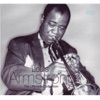
Louis Armstrong recorded “Tiger Rag” in 1930 with his orchestra, but he had used a strain of “Tiger Rag” as the basis for “Hotter Than That” which he recorded with the Hot Five and Hot Seven in 1927. In his book Visions of Jazz: The First Century, Gary Giddins quotes Edward, the Duke of Windsor as saying, “I’d rather hear Louis Armstrong play ‘Tiger Rag’ than wander into Westminster Abbey and find the lost chord.”
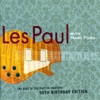
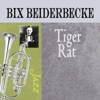
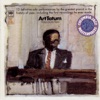
“Tiger Rag” was immediately picked up by dance bands and marching bands and was recorded hundreds of times over the next 10-15 years. Bix Biederbecke recorded it with the Wolverines, Ethel Waters sang it, and the New Orleans Rhythm Kings with Leon Roppolo on clarinet had a hit with it in the ‘20s. The Washboard Rhythm Kings enjoyed success with their 1931 version; Art Tatum famously recorded it in 1932; and several big bands, including those of Duke Ellington, Benny Goodman, Glenn Miller, and both Dorsey’s, featured the tune in the early ‘30s until the swing era took over and songs like “Tiger Rag” became old-fashioned. Multi-tracking guitarist Les Paul and his vocalist/wife Mary Ford revived the tune with their recording in 1952 which rose to number two on the charts. In 2002 “Tiger Rag” was added to the Library of Congress’s National Recording Registry.
The simplistic, repetitive, and aggressive refrain--“Hold that tiger, Where’s that tiger?”--has made the tune a popular fight song for college teams that have a tiger as mascot, such as Clemson University. The Tiger Rag is also the sports publication of Louisiana State University.
“Tiger Rag” has been given a comedic touch by the Spike Jones band and performed by the easy listening orchestra of Andre Kostelanetz, Bob Wills’ country swing band, and even pianist Liberace. It’s been recorded by Charlie Parker and Django Reinhardt, but today it is mostly a novelty number, seldom performed by jazz musicians although trumpeter Nicholas Payton included it in his 2001 tribute to Louis Armstrong.
|