|
|
|
| “...a great model of theater song writing. Again it’s a case of every note counting and not one false move along the way.” |
|
 |
|
- Alec Wilder
|
|
| |
The Broadway revue Ziegfeld Follies of 1934 was the first new production after the death of producer Florenz Ziegfeld in 1932. With the permission of Ziegfeld’s widow Billie Burke, the Shubert organization bought the right to the Ziegfeld name for the 1934 and 1936 Follies. The show opened on January 4, 1934, at the Winter Garden Theater and ran for 182 performances. “What Is There to Say?” by composer Vernon Duke and lyricist Yip Harburg was introduced in the show by Jane Froman and Everett Marshall playing bride and groom.
|
| |
| |
|
| |
|
|
| |
| |
|
| |
|
In Who Put the Rainbow in the Wizard of Oz?: Yip Harburg, Lyricist, written by Harburg’s son Ernie with Harold Meyerson, the uncomfortable situation surrounding the 1934 Follies is discussed. In 1933 Duke and Harburg were summoned by Lee Shubert to “assemble” the score for the new revue which featured five different composers with lyrics by Harburg. But Shubert cut songs, added some by other songwriting teams, and star Fanny Brice’s contract stipulated that her songs were to be written by her husband, Billy De Rose. The strain contributed to the breakup of the Duke/Harburg relationship, but they nonetheless enjoyed two hits from the revue: “What Is There to Say?” and “I Like the Likes of You.”
Emil Coleman and His Riviera Orchestra, the hotel band at the Waldorf Astoria, took the song to the charts in 1934 where it peaked at #12 over a two week period. A cast recording of the show, the oldest known, is available on CD. While the recording quality is understandably sub par, it is valuable as an historical document.
|
|
| |
|
| |
|
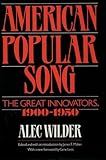
Alec Wilder in American Popular Song calls “What Is There to Say” “a great model of theater song writing. Again it’s a case of every note counting and not one false move along the way.
“The chief characteristic of the song is the four sets of triplets in the second phrase. Here again is an instance of adroit contrast. Were the repeated first phrase not as simple as it is, the triplet phrase might not be as effective and desirable as it is. ...And the release is another demonstration of subtle taste and choice.”
Duke’s easygoing melody is well fitted with Harburg’s lyric which expresses amazement at the good fortune of having a dream of love come true. In the verse the singer wonders if this is merely an “optical illusion” saying, “If my speech is willy nilly, It’s because I cannot gild the lily.” Harburg’s clever use of internal rhyme is at its best with “I knew in a moment contentment and home meant just you....” As Wilder points out, “E.Y. Harburg’s unusual rhyme of ‘deadlock’ and ‘wedlock’ is almost always mentioned whenever the song is.”
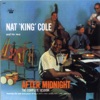
Gerry Mulligan’s What Is There to Say? was one of the top jazz albums in 1958, the same year that pianist Bill Evans recorded the song. Vocalist Chris Connor recorded a memorable version of the song, Ella Fitzgerald included it in her favorite songbook, and Mel Torme counted it among his 16 most requested songs. Nat “King” Cole featured it in his jazz inflected After Midnight session, and Johnny Richards arranged it for big band. Guitarist Joe Pass titled an album after “What Is There to Say?” as did trumpeter Warren Vache. Since 2000 the song has been recorded by pianists Eddie Higgins, Dick Hyman, and Pete Malinverni, guitarist John Pizzarelli, and violinist Johnny Frigo.
|
|
|
|
More information on this tune... |
|
- Sandra Burlingame
|
|
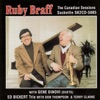
The brilliant yet short-lived trumpeter Bunny Berigan was the star on a 1935 session led by tenor saxophonist Bud Freeman. The small ensemble does a fine, swinging job with Vernon Duke’s tune, and Freeman and Berigan contribute shining solos. (Freeman also makes a rare appearance on clarinet, sounding much like Pee Wee Russell.) Ella Fitzgerald had, by the 1950s, become one of the grand divas of jazz. A 1954 session teamed her with pianist Ellis Larkins, and the two perform an absolutely supreme “What Is There to Say.” A year later Larkins was paired with Ruby Braff, an anachronistic cornetist who eschewed bebop for swing/mainstream and had a busy recording career in the mid-to-late 1950s. The two created a wonderfully musical partnership, and their rendition of Duke’s composition is a mellow, finely crafted performance.
Chris Tyle - Jazz Musician and Historian
|
Additional information for "What Is There to Say" may be found in:
|
|
|
 Robert Gottlieb, Robert Kimball
Reading Lyrics
Pantheon
Hardcover: 736 pages
(Includes the following types of information: song lyrics.)
|
|
|
|
|
|
|
|
Comment Policy
- Your comments are welcome, including why you like
this tune, any musical challenges it presents, or additional background information.
- Jazz musicians, fans, and students of all ages use this website as an educational resource.
As such, off-topic, off-color, unduly negative, and patently promotional comments will be removed.
- Once submitted, all comments become property of JazzStandards.com.
By posting, you give JazzStandards.com permission to republish or otherwise distribute your comments in any format or other medium.
JazzStandards.com reserves the right to edit or remove any comments at its sole discretion.
|
|
|