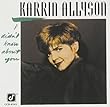
 If sell-out crowds, rave reviews, and Grammy nominations are any indication, Karrin Allyson is one of today’s top jazz vocalists. Born in Kansas and raised in Nebraska, where she began her college studies as a classical piano major, she developed her craft in Minneapolis before moving to Kansas City. There, singing took precedence over piano playing and she recorded her first album, I Didn’t Know About You, in 1993. In 2000 Allyson relocated to New York City where her Midwestern charm continues to shine through. If sell-out crowds, rave reviews, and Grammy nominations are any indication, Karrin Allyson is one of today’s top jazz vocalists. Born in Kansas and raised in Nebraska, where she began her college studies as a classical piano major, she developed her craft in Minneapolis before moving to Kansas City. There, singing took precedence over piano playing and she recorded her first album, I Didn’t Know About You, in 1993. In 2000 Allyson relocated to New York City where her Midwestern charm continues to shine through.
Allyson’s rapport with fellow band mates on stage is palpable. She is a knowledgeable musician with all the qualities of a great jazz singer-perfect pitch, fine articulation, great rhythmic and improvisational skills, and an appealing alto voice with a husky edge to it. Less tangible qualities-a spirit of adventure and sense of humor--enrich her artistry, and lack of artifice endears her to audiences and critics.
She keeps personal appearances exciting by constantly offering new material. 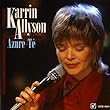 Her wide ranging repertoire includes ballads from the great American songbook as well as bop classics, both of which are featured in her 1995 album Azure-Te and in 1996’s Collage. In 1999’s From Paris to Rio Allyson focused on the music of Her wide ranging repertoire includes ballads from the great American songbook as well as bop classics, both of which are featured in her 1995 album Azure-Te and in 1996’s Collage. In 1999’s From Paris to Rio Allyson focused on the music of 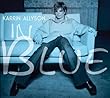 France and Brazil, singing some of the tunes in either impeccable French or Portuguese. On Wild for You she turned her attention to pop songs with which she’d grown up, and In Blue is dedicated to blues-based songs from a surprising variety of sources. France and Brazil, singing some of the tunes in either impeccable French or Portuguese. On Wild for You she turned her attention to pop songs with which she’d grown up, and In Blue is dedicated to blues-based songs from a surprising variety of sources.
She received Grammy nominations for Ballads: Remembering John Coltrane in 2001 and Footprints in 2006. Footprints is of particular interest to JazzStandards.com because Allyson introduced several jazz instrumentals with new lyrics. She wrote the lyric for Duke Jordan’s upbeat “Jordu” and calls the song “Life Is a Groove.” She sings it with guest artist Nancy King whom she refers to as “the greatest jazz singer on the planet.” (King was also a 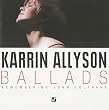 Grammy nominee in 2006.) The lyrical message is that jazz offers a medium through which one can lose the cares of ordinary life. As the lyric says, “As long as we can play in harmony, life is a groove.” That’s a message the whole world needs to hear. Grammy nominee in 2006.) The lyrical message is that jazz offers a medium through which one can lose the cares of ordinary life. As the lyric says, “As long as we can play in harmony, life is a groove.” That’s a message the whole world needs to hear.
Of the thirteen cuts, three other songs appear in our website listings: Dizzy Gillespie’s “Con Alma,” John Coltrane’s “Equinox,” and Wayne Shorter’s “Footprints,” all with lyrics by Chris Caswell. The musician and former music director for Paul Williams and Melissa Manchester shows himself to be a sensitive lyricist whose words mirror the various moods of the compositions.
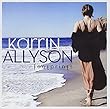 Gillespie’s tune is retitled “Something Worth Waiting For,” and its lyric reflects the vicissitudes of falling in love at last: “Sometimes the old routine can shadow a world unseen ‘til love calls.” Coltrane’s moody ballad becomes “A Long Way to Go.” The lyric describes the seemingly endless time required to survive the pain of lost love: “Tomorrow comes too slow, When love is a no-show, Long way to go, To get over losing you.” Perhaps the most ambitious lyric is “Follow the Footprints,” the new title for Shorter’s composition. As Caswell says in the liner notes, “It’s this tumbling, kind of existential melody and very strange. But then I thought, ‘People always think of following footsteps forward, but you could follow them backward, to memories, reconnecting.’ It became this whole thing about losing somebody and how you get back with the person spiritually.” Even though the lyric can raise goose bumps on anyone who has lost a loved one, it is essentially soothing: “Our love’s a story that documents our journey, Memories are landmarks that comfort and assure me you’ll be with me always, Follow the footprints we left, and I’ll find you there.” Gillespie’s tune is retitled “Something Worth Waiting For,” and its lyric reflects the vicissitudes of falling in love at last: “Sometimes the old routine can shadow a world unseen ‘til love calls.” Coltrane’s moody ballad becomes “A Long Way to Go.” The lyric describes the seemingly endless time required to survive the pain of lost love: “Tomorrow comes too slow, When love is a no-show, Long way to go, To get over losing you.” Perhaps the most ambitious lyric is “Follow the Footprints,” the new title for Shorter’s composition. As Caswell says in the liner notes, “It’s this tumbling, kind of existential melody and very strange. But then I thought, ‘People always think of following footsteps forward, but you could follow them backward, to memories, reconnecting.’ It became this whole thing about losing somebody and how you get back with the person spiritually.” Even though the lyric can raise goose bumps on anyone who has lost a loved one, it is essentially soothing: “Our love’s a story that documents our journey, Memories are landmarks that comfort and assure me you’ll be with me always, Follow the footprints we left, and I’ll find you there.”
Another guest vocalist on the album is vocalese master Jon Hendricks, who contributed a new lyric to Horace Silver’s jaunty “Strollin’” on which he duets with Allyson and whistles a solo as well. As a finale, all three singers join in madcap, uptempo fun, singing and scatting his tune “Everybody’s Boppin’,” which was a staple of the unsurpassed vocal group Lambert, Hendricks & Ross.
Allyson maintains a busy touring schedule. The fall and winter months of 2007 and 2008 are typical-from the Catalina Bar and Grill in LA, Jazz Alley in Seattle, and a performance with the Yakima Symphony to the University of Vermont and Dizzy’s Club Coca Cola in New York. In between coasts there are many stops in cities like Denver, St. Louis, and Fayetteville, and then it’s on to the Tel Aviv Opera House with Nancy King.
Allyson recorded a new CD in July, 2007, her eleventh for California’s Concord label. It will be released in February, 2008. In a telephone interview in September Karrin spoke about the new project.
KA: It’s a Brazilian themed album-brand spanking new. We just came up with a title yesterday. We think it’s going to be called Imagina: Songs of Brasil. “Imagina” is the title of a song that we’re doing by [Antonio Carlos] Jobim.
SB: Who are the musicians on the album?
KA: We have wonderful players on it. Steve Nelson, the vibraphonist--we just started to work together over the last six months and we’ve done five or so gigs together, maybe more. Rod Fleeman is on guitar and Todd Strait on drums. I met both Rod and Todd during my “tenure” in Kansas City, and they have been my band mates and dear friends for over 17 years, doing performances all over the country and the world, as well as recordings. They are both so very versatile-which is one reason I can do such versatile material-just like Danny Embrey, Bob Bowman, and Paul Smith, also long-time KC band mates who are staying closer to home these days. Gil Goldstein plays piano and accordion, and I play some piano on it too. This is the third CD Gil has recorded with me, and he played accordion on all of them. I’ve always loved accordion and especially when it’s in such good hands. And David Finck on bass is a wonderful player based in New York.
SB: Who are some of the other composers and lyricists represented on the album?
KA: Rosa Passos is a beautiful singer from Brazil who wrote a wonderful song that we’re doing. Paul Williams wrote the English lyric for it. And Edu Lobo-he’s another great Brazilian composer. Vinicius de Moraes is the poet who collaborated extensively with Jobim. We have a song that is completely his. Two Jobim tunes, “A Felicidade” and “Vivo Sonhando,” have English lyrics by [jazz vocalist] Susannah McCorkle. She died before Jobim’s wife granted her permission to record them. We got permission, and we’re proud to have a couple of her songs on the CD. Chris Caswell, who worked with me on the Footprints album, wrote English lyrics for two Jobim tunes, and we have an English lyric by Gene Lees as well.
SB: Where did you learn Portuguese so well?
KA: (Laughs) Well, I’m still learning. I’ve had coaches, and I’ve learned through the music. I hope that it sounds semi-acceptable to Brazilians! I’ve been to Brazil several times, and I had an amazing coach for this album, a dear friend of mine, Lucia Guimar?es, a journalist from Rio. She’s my Portuguese coach, but more than that, all things Brazilian. She helped me find interesting repertoire, helped me with the whole vibe of it all.
SB: How do you find living in New York?
KA: I love it. We do as many gigs here as you can as a leader. We play the Blue Note annually and we just finished a week at Birdland. Nancy [King] will be joining us for part of the week at Dizzy’s Club Coca Cola in Lincoln Center, and in October Nancy and I will be performing together following my master class at the Old Church in Portland, Oregon.
SB: That’s a great jazz venue-an historic building with lots of charm and great acoustics. We look forward to seeing you there.
To find out if Allyson is coming to a city near you, go to her website,
www.karrinallyson.com.
|
|
|
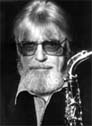 “Bud Shank is too much. I told him I had his contract ready, but I can’t get him to leave California. He was the greatest part of Kenton’s Neophonic concert the other night, and he was even greater with us the last two days. He even shook Johnny Hodges . . . Bud Shank is something else!” -- Duke Ellington “Bud Shank is too much. I told him I had his contract ready, but I can’t get him to leave California. He was the greatest part of Kenton’s Neophonic concert the other night, and he was even greater with us the last two days. He even shook Johnny Hodges . . . Bud Shank is something else!” -- Duke Ellington
Why some compositions become jazz standards is best answered by the musicians who perform them. Alto Saxophonist Bud Shank is a 50-year member of the international jazz scene and is also a Jazz Workshop Director.
JS: How and why do you pick a tune to play?
BS: My favorite standards come from the Great American Song Form period: Cole Porter, Harold Arlen, Richard Rodgers, Arthur Schwartz, and their contemporaries. I am not alone. Most musicians of my generation obviously feel the same way. For example, some of the great bebop lines were written over the chord structures of these songs.
Many of our radical “outside” brethren say this is delving too far into the past and playing music by composers who are long gone and no longer relevant. However, I don’t think that improvisational musicians have fully explored the possibilities of this material. Until that happens, there is no need to play new material just for the sake of doing so. Even the originals that I write are structured in a similar chordal and melodic fashion.
JS: How do you decide what tunes to record?
BS: The tunes I record other than my originals are selected by: Do I like the tune? Have I recorded it before? Clearly I don’t like every single song that was written in the Song Form period. Melody and chord structure are equally important to me. Some songs lend themselves more naturally to improvisation. The structures frequently used by these composers are AABA, ABAB1, and extensions of these formulae. We as jazz composers now attempt as much as possible to violate these formulae in the hopes of finding new structures on which to improvise.
JS: Are there composers that you especially like?
BS: Contemporary composers of song I really like are Michel LeGrand, John Mandel, and working-musician George Cables, among others.
JS:Does the size or texture of the group you play with influence tune selection?
BS: I often work in different configurations such as duo (sax plus either piano or bass), quartet (my personal favorite), quintet, and sextet, and the charts for any of these may or may not spill over into other sizes of groups. When I am playing in a sextet or quintet, I would tend to use more of my original music or prepared arrangements of standards. I don’t do jam sessions, which we have had enough of!
JS:As an instrumentalist, do the lyrics play any role in your selection or in the way that you treat a song?
BS: Although my wife writes lyrics for much of my music, my groups are strictly instrumental. Therefore, the lyric is not relevant in the selection of songs to include in my repertoire.
 On the Trail features ten western-themed tracks, brilliantly performed by the Bud Shank Sextet (Shank, alto saxophone; Joe LaBarbera, drums; Bob Magnusson, bass; Bill Mays, piano; Jay Thomas, saxophones; Conte Candoli, trumpet; and special guest vocalist Danny Hull. On the Trail includes the jazz standards, “Relaxin’ at Camarillo,” “On the Trail,” “Avalon,” and “Laura.” On the Trail features ten western-themed tracks, brilliantly performed by the Bud Shank Sextet (Shank, alto saxophone; Joe LaBarbera, drums; Bob Magnusson, bass; Bill Mays, piano; Jay Thomas, saxophones; Conte Candoli, trumpet; and special guest vocalist Danny Hull. On the Trail includes the jazz standards, “Relaxin’ at Camarillo,” “On the Trail,” “Avalon,” and “Laura.”
You may visit Bud Shank’s website at
budshankalto.com.
|
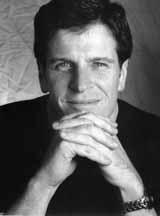 A full professor at Seattle’s Cornish College of the Arts, teaching jazz theory, piano, and ear training, Randy Halberstadt has taken the time to answer some questions to help us understand why musicians choose particular compositions. The musicians’ choices determine which compositions become jazz standards. A full professor at Seattle’s Cornish College of the Arts, teaching jazz theory, piano, and ear training, Randy Halberstadt has taken the time to answer some questions to help us understand why musicians choose particular compositions. The musicians’ choices determine which compositions become jazz standards.
JS: Why do you pick a tune just to play? RH: Well, there’s certainly some indefinable magic that attracts me to certain tunes--the “I don’t know, it just moves me” factor. It may have a certain harmonic or melodic twist that reminds me of a tune from my childhood. Or maybe it’s from a movie that I loved. (For example, for a while I was playing the haunting theme from Schindler’s List.) It could be the timbre of the original recording, just the tone qualities of the instruments used, that reached me.
The tune’s groove may be so infectious that almost any melody or harmony would work over that rhythmic base. You just want to get up and dance or drum your fingers. “Killer Joe” comes to mind.
I think a lot of the remaining reasons for picking a tune to play can be lumped under the general banner of tension and release. For example, a melody is often more interesting and attractive if there is a large interval in it. That interval causes tension which requires release by a change in the direction of the line. Good examples would be “Invitation” (the second note to the third note), “I Love You” (again, 2 to 3, “love you”), and “Days of Wine and Roses” (1-2).
Then there’s just the tension and release in the harmony itself, independent of the melody: i.e., the chord progression itself can be especially compelling. I think “Embraceable You” is a good example. It visits a lot of harmonic neighborhoods, setting up each one with a harmonic tension and then resolving into it. “All The Things You Are” is another good example, because it starts in Ab, then modulates to C, Eb, G, E, and finally back to Ab. Sometimes the pull that the harmony exerts on the melody is what makes a tune work. If a melody note descends or ascends when the chord underneath pulls it that way, that makes for a more organic, natural melody. “Stella by Starlight” does this.
Another form of tension and release can be set up by alternating two contrasting sections. Cedar Walton often writes tunes which alternate a harmonically complex section with a simple vamp. “Bolivia” and “Clockwise” are both good examples of this technique. Yet another important form of tension and release is between the utter simplicity of the tune’s structure and the complexities that the musician is able to introduce. The simpler the tune is--and also, the more familiar--the more freedoms a musician can legitimately take without fear of losing the audience. “Autumn Leaves” is attractive just for that reason. There are so many possible harmonic, rhythmic, melodic, and textural departures. That’s also one reason why jazz musicians keep coming back to the 12-bar blues.
Another reason I’d choose to perform a tune is simply that it feels good under my fingers. It may include chord progressions for which I have particularly good voicings or a melody that I can frame in a particularly attractive way. Sometimes that really depends on the key. In a different key I might not be able to use my best “tricks.”
JS: Do all the same reasons apply when you are choosing a tune to record?
RH: Yes, all of the above reasons still apply, but in addition many musicians would include market-driven considerations: for example, does this tune have commercial appeal? Or is it consistent with the theme that I want to present on this particular recording? It could be as obvious as Fred Hersch choosing to do an all Cole Porter CD, or it could be more general (e.g., does this tune present an important side of my musicianship?)
JS: Why would you choose to include a tune in a textbook?
RH: Well, that’s easy: because it’s a simple, distilled example of whatever point I’m trying to make. Yes, it’s nice if it’s also a tune that might appeal to the reader on many levels, but it’s almost more useful if the only interesting aspect of the tune is the example of my salient point so that the reader isn’t distracted by the other aspects.
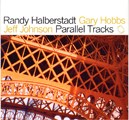 Randy Halberstadt’s Parallel Tracks CD, with Jeff Johnson on bass and Gary Hobbs on drums is available on Amazon.com. It includes the jazz standards, “In the Wee Small Hours of the Morning,” “Invitation,” “The Touch of Your Lips,” “Well You Needn’t,” and Everything I Love.”
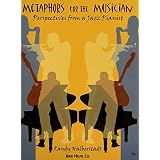 Randy Halberstadt is also the author of Metaphors for the Musician - Perspectives from a Jazz Pianist, published by the Sher Music Company. Randy Halberstadt is also the author of Metaphors for the Musician - Perspectives from a Jazz Pianist, published by the Sher Music Company.
“...a treasure trove of detailed, hard-core technical information, practice routines, advice, diagrams, music samples, and entertaining stories.... Part of its charm is that it’s not the typical “how-to” instruction manual, but rather a non-dogmatic collection of pearls, gathered over the years.” -Paul de Barros, Seattle Times
You may visit Randy Halberstadt’s website at
www.randyhalberstadt.com.
|
|



