|
|
|
| “Finally Ella recorded it for Norman Granz. She’s done it four times since. I’m thrilled because she’s always included it in her shows.” |
|
 |
|
- Matt Dennis
|
|
| |
According to composer Matt Dennis, Herb Jeffries was the first to record “Angel Eyes,” but the song’s popularity faltered when Jeffries’ recording company folded. Nat “King” Cole then recorded the song as the B-side to his 1953 hit, “Return to Paradise.” Dennis, however, credits Ella Fitzgerald as the vocalist who popularized “Angel Eyes” saying, “Finally Ella recorded it for Norman Granz. She’s done it four times since. I’m thrilled because she’s always included it in her shows.”
|
| |
| |
|
| |
|
A Herb Jeffries recording of “Angel Eyes” is included on his Say It Isn’t So CD (1957).
|
| |
| |
|
| |
|
“Angel Eyes” can be found on a number of Ella Fitzgerald CDs. Her earliest recording of the song is with Sy Oliver and His Orchestra from June 26, 1952, and is included on 75th Birthday Celebration (1993) and The Last Decca Years 1949-1954 (1999). A July 24, 1957, recording is on First Lady of Song (1993) and Ultimate Ella (1997). The song also appears in a live concert from April 25, 1958, Ella in Rome (1988), and circa 1960, The Intimate Ella (1990). The latter CD contains duets with pianist Paul Smith, which were originally released as Songs from Let No Man Write My Epitaph, although not all of the tracks are in the film. Fitzgerald often cited “Angel Eyes” as one of her favorite songs, and Chris Connor claims that Ella personally told her that it was her all-time favorite. Carol Sloane, on the other hand, claims Fitzgerald’s favorite was “I Want Something to Live For.” Fitzgerald delivers equally heartfelt performances of both these songs on the DVD American Masters: Ella Fitzgerald Something to Live For (1999). A New York Times article notes, “Because both songs are sad, they hint at feelings that Fitzgerald kept mostly to herself, since she infused everything she performed with a sense of joy and almost heavenly confidence.”
One early performer of “Angel Eyes” that Matt Dennis did not mention was himself. The first film to include his rendition was Jennifer (1953). The Bradshaw sheet music associated with the film has Nat “King” Cole on the cover, but notes inside say, “As sung by Matt Dennis in the picture Jennifer starring Ida Lupino & Howard Duff.”
Today Frank Sinatra is more closely associated with “Angel Eyes” than any of the aforementioned performers. He recorded the song a number of times, most notably on the album he has referred to as his favorite, Frank Sinatra Sings for Only the Lonely (1958). His rendition is interesting in that he begins not at the chorus, but the refrain, “Hey drink up all you people...” In 1971, Sinatra gave his first in a series of farewell concerts, choosing “Angel Eyes” for his last song and “Excuse me while I disappear” for his last line.
“Angel Eyes” is often called “intimate,” “personal,” “lonely,” “weepy,” “bluesy,” “a torch song,” or “a saloon song,” the latter being a category that also contains “One for My Baby (and One More for the Road),” and “In the Wee Small Hours of the Morning.” - JW
Earl Brent’s lyrics describe a patron in a bar or lounge, lamenting the absence of “Angel Eyes, that old devil sent.” Brent’s choice for the hook and title, “Angel Eyes,” has been used as a popular song title many times before and since the Dennis/Brent ballad, including a 1910 hit by Elida Morris and Billy Murray and a 1989 hit by the Jeff Healey Band.
|
| |
| |
|
| |
|
The term “Angel Eyes” is not only the name of many popular songs it is also the title of a 2001 Warner Brothers film starring Jennifer Lopez; numerous books, including those by Jane Adams (2002), Loren D. Estleman (1992), and Thea Devine (1991); an artbook of Akimi Yoshida’s illustrations (1994); and the nickname of Lee Van Cleef’s sadistic villain in the 1966 Clint Eastwood spaghetti western, The Good, the Bad, and the Ugly. Last but not least, Angel Eyes is the name of a therapy cream for your eyes, “Nothing can replace your natural beauty, but Angel Eyes can make you more beautiful through the healing power of Oxygen.”
|
|
|
|
More information on this tune... |
|
- Jeremy Wilson
|
|
| This section suggests definitive or otherwise significant recordings that will help jazz students get acquainted with
“Angel Eyes.” These recordings have been selected from the Jazz History and
CD Recommendations sections.
|
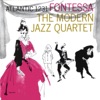
Ella Fitzgerald’s 1952 performance of “Angel Eyes” ( The Last Decca Years 1949-1954) marked the beginning of a meaningful long-term relationship between Fitzgerald and this song. Among the many great instrumental versions, the 1956 performance by the Modern Jazz Quartet ( Fontessa) stands out for the way it captures the tune’s balance between lyricism and blues feeling.
Noah Baerman - Jazz Pianist and Educator
|
|
Musical analysis of
“Angel Eyes”
|
| Original
Key |
D minor;
false key change to Bb major and A major
during “B” section |
| Form |
A – A – B
- A |
| Tonality |
“A” is minor
throughout; “B” section is predominantly
major |
| Movement |
“A” ascends
primarily by leaps, descends by steps and
smaller skips: “B” is vice-versa |
|
Comments
(assumed
background)
|
|
Another dark, brooding noir-like
tune in the vein of “Harlem
Nocturne” and “You
Don’t Know What Love Is.” Harmonic progression
of section “A” is somewhat reminiscent of
Grieg’s “In The Hall Of The
Mountain King,” as is the melodic
contour. The “B” section uses the
standard ii7 – V7 – I turnaround in two
different keys (with a iii – VI7
embellishment the first time), the
second one being a half-step lower).
Next, the harmonic progression drops a
tri-tone. There is a repeated ii7 – V7
sequence, the repetition being a
half-step higher than its predcessor.
This constitutes the modulation back to
the tonic key of section “A”. |
|
K. J. McElrath - Musicologist for JazzStandards.com |
|
Extraordinary Canadian
pianist Oscar Peterson scored a major coup in the
1950’s with promoter Norman Granz. Not only did
he tour with Granz’s concert group “Jazz at the Philharmonic,”
he also had the “house” band for Granz’s record label
Verve, making hundreds of jazz recordings in a wide
variety of sessions.
Peterson recorded “Angel Eyes” in 1954, first
with his trio (Ray Brown, bass and Herb Ellis, guitar)
and then in another session with alto saxophonist
Benny Carter, ex-Woody
Herman trombonist Bill Harris, and drummer Buddy
Rich. Carter’s playing typifies his post-swing era
approach, a style similar in concept to
Duke Ellington’s great soulful altoist
Johnny Hodges.
Chris Tyle - Jazz Musician and Historian
|
Additional information for "Angel Eyes" may be found in:
|
|
|
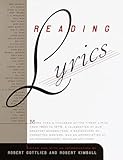 Robert Gottlieb, Robert Kimball
Reading Lyrics
Pantheon
Hardcover: 736 pages
(Includes the following types of information: song lyrics.)
|
|
|
|
|
“Angel Eyes” was included in these films:
- Jennifer (1953, Matt Dennis)
- Leaving Las Vegas (1995, Sting)
|
|
|
|
Comment Policy
- Your comments are welcome, including why you like
this tune, any musical challenges it presents, or additional background information.
- Jazz musicians, fans, and students of all ages use this website as an educational resource.
As such, off-topic, off-color, unduly negative, and patently promotional comments will be removed.
- Once submitted, all comments become property of JazzStandards.com.
By posting, you give JazzStandards.com permission to republish or otherwise distribute your comments in any format or other medium.
JazzStandards.com reserves the right to edit or remove any comments at its sole discretion.
|
|
| Click on any CD for more details at Amazon.com |
 Ella Fitzgerald
The Last Decca Years 1949-1954
1999 Verve 668
Original recording 1952
|
|
Fitzgerald documented her special relationship with this tune often, beginning with this haunting collaboration with Sy Oliver’s orchestra.
|
 Tommy Flanagan
Lady Be Good...For Ella
1994 Polygram 521617
|
|
Flanagan had several significant stints as Ella Fitzgerald’s accompanist, a task that was perfect for his swinging elegance even though it took his own name somewhat out of the limelight for a number of years. This recording is a summary of sorts, allowing him to revisit and celebrate that relationship. His take on “Angel Eyes” is quietly stunning.
|
|
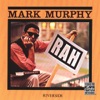
 Mark Murphy
Rah!
1994, Original Jazz Classics 141
Original recording, 1961
|
|
Vocalist Murphy is the epitome of sophistication on this wonderful, blues-laced version of "Angel Eyes."' Conductor Ernie Wilkins punctuates Murphy's heartfelt lament with some dramatic trumpets.
|
 Gene Ammons
Angel Eyes
1998, Original Jazz Classics 980
Original recording, 1960
|
|
Tenor saxophonist Ammons gives a hip, smoky-bar feeling to the title track. His sparse but forceful play is all the more eloquent over the gentle groove of Johnny "Hammond" Smith's organ.
|
 Modern Jazz Quartet
Fontessa
1990 Atlantic 1231
Original recording 1956
|
|
The combination of elegance and blues grit inherent to this tune perfectly mirrors the divergent strengths of the MJQ. Not surprisingly, they do a fabulous job interpreting “Angel Eyes.”
|
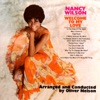
 Nancy Wilson
Welcome to My Love
1994, Blue Note 28980
Original recording, 1968
|
|
Vocalist Wilson beautifully delivers this torchy rendition of the song. The Oliver Nelson arrangement perfectly suits her raw eloquence with its sweeping strings and edgy horns.
|
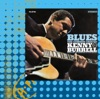
 Kenny Burrell
Blues: The Common Ground
2001, Universal
Original recording, 1968, Verve
|
|
Guitarist Burrell is lyrical perfection on this big band version of the song. His playing is concise and engaging, and he is elegantly supported by a rhythm section that includes bassist Ron Carter and pianist Herbie Hancock.
|
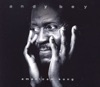
 Andy Bey
American Song
2004, Savoy Jazz
|
|
Bey was voted Vocalist of the Year by the Jazz Journalists Association in 2003. He starts with the seldom heard verse and tells the story intimately in his warm baritone.
|
|
|
|