|
|
|
| “Few compositions are as genuinely melancholy as ‘You Don’t What Love Is.’” |
|
 |
|
- JW
|
|
| |
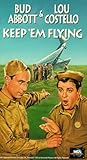
Remarkably, “You Don’t Know What Love Is” and “I’ll Remember April,” two of the top jazz standards, were both written for Bud Abbott and Lou Costello films by Gene De Paul and Don Raye and published in 1941. Actress Carol Bruce sang “You Don’t Know What Love Is” for the 1941 Universal film, Keep ‘Em Flying, which also starred Dick Foran and Martha Raye. “I’ll Remember April” was introduced by Dick Foran in Ride ‘Em Cowboy (1942).
“You Don’t Know What Love Is” was dropped from Keep ‘Em Flying before it was released but performed by Bruce a short time later in the 1942 film Behind the Eight Ball.
|
| |
| |
|
| |
|
After success on radio and Broadway, Abbott and Costello took their brand of slapstick comedy to film, beginning with One Night in the Tropics (1940) and ending over thirty films later with Dance with Me Henry (1956). Don Raye teamed with Hugh Prince for the score of the comedy duo’s second film, Buck Privates (1941), in which the Andrews Sisters introduced the upcoming hit, “Boogie Woogie Bugle Boy.” The film was a box office success, grossing over ten million dollars.
Anxious to repeat the formula, top-name vocalists were worked into successive plots; the Andrews Sisters returned for Abbott and Costello’s third and fourth films, In the Navy (1941) and Hold that Ghost (1941), and Ella Fitzgerald was given a bit part as a maid, singing “A Tisket, A Tasket” in their sixth film, Ride ‘Em Cowboy (1942).
Universal would also repeat their success with lyricist Raye, pairing him with composer Gene De Paul for In the Navy and Keep ‘Em Flying in 1941 and Ride ‘Em Cowboy in 1942.
|
| |
| |
|
| |
|
|
| |
| |
|
| |
|
A broad farce, Keep ‘Em Flying casts the boys as carnival workers who follow a stunt pilot into the Army Air Corps. Carol Bruce portrays a USO singer and Martha Raye plays identical twins. Songs in the score include, “Let’s Keep ‘Em Flying,” “Pig Foot Pete,” and “The Boy With the Wistful Eyes.”
Few compositions are as genuinely melancholy as “You Don’t What Love Is.” As such, it is difficult to find the title mentioned without an accompanying characterization including, “strange,” “intense,” “gloomy,” “smoky,” “late night,” “sad,” “passionate,” and, of course, “haunting.” Don Raye’s piercing lyrics accentuate the heartbreaking feeling staged by De Paul. You don’t know what love is, he claims, until you’ve learned the meaning of the blues. As one critic puts it, “the lyrics draw out the exquisite pain!”
The song was never a major hit, but was recorded occasionally in the ‘40s, and then brought into the jazz canon in the 1950’s when it was recorded by Miles Davis and others.
|
|
|
|
More information on this tune... |
|
|
 Thomas S. Hischak
The Tin Pan Alley Song Encyclopedia
Greenwood Press
Hardcover: 552 pages
(The author analyzes the music and lyric, discusses the song’s history, names performers of the song and films in which it appears.)
|
|
|
|
See the Reading and Research page for this tune for additional references. |
|
- Jeremy Wilson
|
|
| This section suggests definitive or otherwise significant recordings that will help jazz students get acquainted with
“You Don't Know What Love Is.” These recordings have been selected from the Jazz History and
CD Recommendations sections.
|
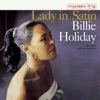
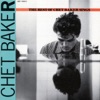
Sonny Rollins has long been admired for his ballad playing, and his performance of “You Don’t Know What Love Is” from the Saxophone Colossus album ( Saxophone Colossus) is perhaps his crowning moment in this style, not to mention the definitive instrumental performance of the tune. As for vocal renditions, there are two particularly noteworthy performances that use very different means to arrive at similar moods. Chet Baker’s 1955 version ( The Best of Chet Baker Sings) is sparse in accompaniment and subtle in vocal delivery, while Billie Holiday, in her 1958 performance ( Lady in Satin), cuts through the thick layers of orchestration with the heartbreaking vulnerability of her singing.
Noah Baerman - Jazz Pianist and Educator
|
|
Musical analysis of
“You Don’t Know What Love Is”
|
| Original
Key |
G minor |
| Form |
A1 – A2 –
B – A2 |
| Tonality |
Primarily
minor |
| Movement |
Leaps (6th
– 7th) and skips (3rd), followed by scale
runs up and down in both directions |
|
Comments
(assumed
background)
|
|
This is the perfect title music for a film-noir,
similar in character to “Harlem
Nocturne.” The chord progression starts
out i – Ger+6 – V7 (Gm – Eb7 – D7, in which
the second chord is really decorative rather
than functional). Melody notes falling on
color tones or chord extensions such as
the 9th, b9, #5, b5, 13, etc. are common.
These notes create harmonic tension and
give the song a tortured ambiance as befits
the lyrics. (NOTE on “Ger+6” or “German
augmented sixth” chord: this is the theorist’s
label for a bVI7 chord that normally resolves
toV7, i.e. C – Ab7 – G7. In popular music
of the 1920-1950’s era, the chord is used
more decoratively and rarely resolves to
the V7.) |
|
K. J. McElrath - Musicologist for JazzStandards.com |
|
Recordings from 1941 of this tune are all from
big bands with male vocalists: Dick Haymes with
Harry James, Art Lund with
Benny Goodman, and Billy Eckstine with Earl
Hines.
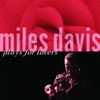
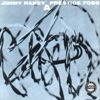
Ten years would pass until guitarist Jimmy Raney
would record a classic, non-vocal version. Then
the tune would become the property of several great
trumpet players. Two versions are from 1952: Miles
Davis recorded an instrumental rendition while Chet
Baker (who has been referred to as a Davis sound-alike
on the trumpet) would do a soulful, vocal version
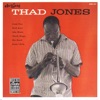
Trumpeter Thad Jones, a member of Count Basie’s
band in 1954, would get a chance to lead his own
quartet with an instrumental version of the tune,
while in 1956 his brother, pianist Hank Jones, would
record it on his own session.
Chris Tyle - Jazz Musician and Historian
|
Additional information for "You Don't Know What Love Is" may be found in:
|
|
|
Thomas S. Hischak
The Tin Pan Alley Song Encyclopedia
Greenwood Press
Hardcover: 552 pages
(1 paragraph including the following types of information: film productions, history, lyric analysis, music analysis and performers.)
|
|
|
|
|
 Robert Gottlieb, Robert Kimball
Reading Lyrics
Pantheon
Hardcover: 736 pages
(Includes the following types of information: song lyrics.)
|
|
|
|
|
“You Don't Know What Love Is” was included in these films:
- Keep ‘Em Flying (1941, Carol
Bruce, dropped before release)
- Behind the Eight Ball aka Off the
Beaten Track (1942, Carol Bruce with Sonny Durham
and His Orchestra)
- Love at Large (1990)
- This World, Then the Fireworks
(1997, Chet Baker)
- Anywhere But Here (1999)
- The Talented Mr. Ripley (1999,
1-Jude Law dubbed by Alan Barnes, 2-John Martyn,
The Guy Barker International Quintet)
|
| This section shows the jazz standards written by the same writing team. |
|
|
|
|
Comment Policy
- Your comments are welcome, including why you like
this tune, any musical challenges it presents, or additional background information.
- Jazz musicians, fans, and students of all ages use this website as an educational resource.
As such, off-topic, off-color, unduly negative, and patently promotional comments will be removed.
- Once submitted, all comments become property of JazzStandards.com.
By posting, you give JazzStandards.com permission to republish or otherwise distribute your comments in any format or other medium.
JazzStandards.com reserves the right to edit or remove any comments at its sole discretion.
|
|
| Click on any CD for more details at Amazon.com |
 Billie Holiday
Lady in Satin
Sony
Original recording 1958
|
|
In spite of the syrupy Ray Ellis string arrangement, Billie Holiday gives a landmark late-career performance here. With her voice nearly gone, she movingly brings out all of the sadness and irony in the song.
|
|
 Sonny Rollins
Saxophone Colossus
1991, Orig. Jazz Classics 291
Original recording, 1956
|
|
Saxophonist Rollins does the slow burn on this fantastic instrumental version of the song. His rich horn fills all the corners with its forlorn sound.
|
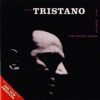
 Lennie Tristano
Lennie Tristano/The New Lennie Tristano
1994, Rhino 71595
Original recording, 1955, Atlantic
|
|
Tristano has served as guru to many musicians. This CD combines two accessible LP's featuring him solo and in two trio settings, with altoist Lee Konitz occasionally making it four. "You Don't Know What Love Is"' is a thought provoking piano solo.
|
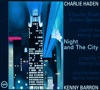
 Charlie Haden/Kenny Barron
Night and the City
1996 Verve 314539961
Original recording 1998
|
|
Bassist Haden and pianist Barron explore "You Don't Know What Love Is"' with remarkable soul and tenderness in this performance recorded live in New York.
|
 Jay Clayton/Fred Hersch
Beautiful Love
1995 Sunnyside 1066
|
|
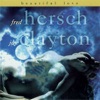
Vocalist Clayton moves in both jazz and new music circles, and here she colors her first CD of all standards with the distinctive palette she has developed over years of creating her own music. The duo setting with pianist Hersch highlights the talents of both.
|
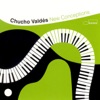
 Jesus ‘Chucho' Valdes
New Conceptions
2003 Blue Note
|
|
Pianist Valdes swings the song with plenty of flourishes and a Latin rhythm. While the mood is lightened considerably, the piano playing is deadly serious.
|
 Leon Parker
Above and Below
1994, Sony 66144
|
|
Drummer Parker uses one cymbal and one drum, lending primitive overtones to the song in this haunting, meditative rendition. Ugonna Okegwo anchors on bass while David Sanchez’s soprano sax floats gently on top.
|
|
|
|