|
|
|
| “[‘Star Eyes’ is] a piece that Brooks was born to play.” |
|
 |
|
- Lawrence Kart
|
|
| |
Helen O’Connell and Bob Eberly, with Jimmy Dorsey and His Orchestra, introduced “Star Eyes” in the 1943, MGM musical, I Dood It. Before they could make a recording of “Star Eyes” O’Connell left the band to get married and was replaced by Kitty Kallen. So it was Eberly and Kitty Kallen who sang on the Dorsey Orchestra’s recording of “Star Eyes,” which was on the pop charts for 16 weeks in 1943, peaking at number three.
|
| |
| |
|
| |
|
|
| |
| |
|
| |
|
|
|
| |
|
| |
|
I Dood It (aka By Hook or by Crook in Great Britain) starred Red Skelton and Eleanor Powell and was a remake of Buster Keaton’s Spite Marriage (1929). In Vincente Minnelli’s opinion, it was the worst movie he ever directed. Part of the problem was that he was hired after production had already begun, and the producer would not let him discard any of the previous work. Also included in the cast were Lena Horne and Hazel Scott, appearing as themselves. The high points of I Dood It were the performances of “Jericho,” “Taking a Chance on Love,” “One O’Clock Jump,” and “Star Eyes.”
|
| |
| |
|
| |
|
|
| |
| |
|
| |
|
|
|
|
|
| This section suggests definitive or otherwise significant recordings that will help jazz students get acquainted with
“Star Eyes.” These recordings have been selected from the Jazz History and
CD Recommendations sections.
|
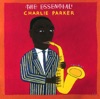
Charlie Parker famously recorded “Star Eyes” for Verve in 1951 ( The Essential Charlie Parker), and his brilliant performance of the tune is unrivaled both musically and historically. For vocal versions, Anita O’Day’s 1958 recording ( Anita O’Day Sings the Winners) is a good starting point.
Noah Baerman - Jazz Pianist and Educator
|
Usually performed at a relaxed tempo, “Star Eyes”
is often characterized as “dreamlike” or as a “dreamy
ballad.” Jazz musicians appreciate its irregular
chord progression. Don Raye’s lyrics have complimentary
appeal as an expression of love and the hope that
it will be returned. Not sophisticated or urbane,
the lyrics are reasonably modern for 1943, avoiding
the archaic and overly sweet operetta style found
in romantic songs of the previous decades. Interestingly,
the last section of the song includes the lines,
Makes no difference where
you are,
Your eyes still hold my wishing star
which are obviously derived from
When you wish upon a star,
Makes no difference who you are
sung by Jiminy Cricket and written by
Ned Washington for the Academy Award-winning
song, “When
You Wish Upon a Star.”
Cliff Edwards voiced the part of the animated
cricket in the 1940 film,
Pinocchio. -JW
|
Musical analysis of
“Star Eyes”
|
| Original
Key |
F major;
brief forays into Eb major, Bb major, and
Ab major as well |
| Form |
A – A – B
– A with four measure tag |
| Tonality |
Major throughout |
| Movement |
“A” section
uses primarily ascending steps. “B” jumps
around a bit for four measures before descending
stepwise into the last “A”section. |
|
Comments
(assumed
background)
|
|
Originally a ballad, this tune lends itself
to a wide variety of treatments. The “A”
section starts out I – ii7 – V7 – I. The
I then turns into a minor ii7 for the chord
a step below it, returning to the tonic
via a tri-tone leap up and circle-of-fifths
variation using a iiø7 – V7 sequence that
forms a nice descending, common-tone, chromatic
line. The flatted fifth of the iø7 becomes
the flatted ninth of the dominant chord
that follows, naturally descending a half
step to become the fifth of the next “tonic-of-the-moment.”
This fifth degree than descends another
half step as the tonic of the moment becomes
the iiø7 of the chord a step below it.
This type of voice leading (similar to
the harmonic progression used in “How
High the Moon”) is repeated in the “B”
section as well. The tag, however, ends
the song with a simple, chromatic, descending
progression (essentially, the old Dixieland
favorite of a I – VI7 – II7 - I turnaround).
|
|
K. J. McElrath - Musicologist for JazzStandards.com |
|
It’s undoubtedly due to Charlie Parker that “Star
Eyes” became a jazz standard. Three recordings illustrate
the influence Parker had on other saxophonists,
but their playing also reflects his influence, tenor
saxophonist Lester Young.
Alto saxophonist/arranger Lennie Niehaus’ recording
from 1955 is interesting not only musically but
instrumentally, with a group including a small string
section, tenor and baritone sax, and rhythm.
Lee Konitz, whose primary instrument was alto,
plays tenor on his recording from 1956, perhaps
to avoid comparison to Parker.
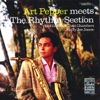
Altoist Art Pepper, on arguably one his best
recordings (made in 1958 in Los Angeles), is accompanied
by Miles Davis’ rhythm section of Red Garland (piano),
Paul Chambers (bass) and Philly Joe Jones. Supposedly
Pepper hadn’t played his horn in six months, but
if that was the case his playing doesn’t reflect
it.
Chris Tyle - Jazz Musician and Historian
|
Additional information for "Star Eyes" may be found in:
|
|
|
“Star Eyes” was included in these films:
|
| This section shows the jazz standards written by the same writing team. |
|
|
|
|
Comment Policy
- Your comments are welcome, including why you like
this tune, any musical challenges it presents, or additional background information.
- Jazz musicians, fans, and students of all ages use this website as an educational resource.
As such, off-topic, off-color, unduly negative, and patently promotional comments will be removed.
- Once submitted, all comments become property of JazzStandards.com.
By posting, you give JazzStandards.com permission to republish or otherwise distribute your comments in any format or other medium.
JazzStandards.com reserves the right to edit or remove any comments at its sole discretion.
|
|
| Click on any CD for more details at Amazon.com |
 Dexter Gordon
The Jumpin' Blues
1996 Original Jazz Classics 899
Original recording 1970
|
|
Dexter Gordon made a trip from Europe (his home at the time) back to the U.S. for this recording with a delightfully swinging “Star Eyes.” These sessions are particularly significant as they were the last major recordings by pianist Wynton Kelly, who would pass away a few months later.
|
 Roy Haynes
Homecoming
1994 Evidence 22092
Original recording 1992
|
|
At an age when many people retire, Roy Haynes began a new phase of his career. The 67-year-old Haynes is heard here at the beginning of a late-career emergence as a bandleader and recording artist. He and his young quartet (saxophonist Craig Handy, pianist Dave Kikoski and bassist Ed Howard) absolutely burn on this version of “Star Eyes.”
|
 Anita O'Day
Sings the Winners
Polygram Records
Original Recording 1957
|
|
O’Day swings playfully on this performance. She is faithful to the melody while still displaying her characteristic flexibility.
|
 Barry Harris
At the Jazz Workshop
1991 OJC 208
Original recording 1960
|
|
Pianist Harris, one of the primary keepers of the bebop flame, offers a predictably wonderful rendition of this tune. He is joined here by the stalwart rhythm team of bassist Sam Jones and drummer Louis Hayes.
|
|
 Cal Tjader
La Onda Va Bien
1990, Concord 4113
Original recording, 1979
|
|
Vibraphonist Tjader launched the new Concord Picante label dedicated to Latin Jazz with this superb CD featuring Latin percussionist Pancho Sanchez in the sextet. “Star Eyes” swings seductively, and “Speak Low” is also marvelous.
|
|
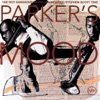
 Roy Hargrove/Christian McBride/Stephen Scott
Parker's Mood
1995 Polygram Records 27907
Original recording 1995
|
|
These once young lions, trumpeter Hargrove, pianist Stephen Scott, and bassist Christian McBride, have matured into virtuoso players. But they still show a lot of the playful cubs in their vibrant approach to the music.
|
|
 Charlie Parker
Essential
Polygram Records 517173
Compilation
|
|
This CD features the alto saxophonist in a variety of formats and provides a great place to become acquainted with Parker. Excellent version of "Star Eyes."'
|
 Lorez Alexandria
Star Eyes
1996, Muse 5488
|
|
Vocalist Alexandria is a subtle interpreter, commanding the sort of attention that makes her recordings more delicious on each listening. This is a fine version of "Star Eyes"' with top-notch personnel.
|
|
|
|