|
|
|
| “A reconstructed full-score recording of St. Louis Woman has become available as a result of the Manhattan City Center Theater Encores! Series.” |
|
 |
|
- JW
|
|
| |
“Come Rain or Come Shine” was introduced by Ruby Hill and Harold Nicholas in the Broadway musical St. Louis Woman. Set in St. Louis in 1898, the story revolved around Della Green (Hill), a woman who wants out of her relationship with bar owner Biglow Brown (Rex Ingram) when she falls for Li’l Augie, (Nicholas), a jockey on a winning streak. The show opened on March 30, 1946, at the Martin Beck Theatre to lackluster reviews and attendance and closed after only 113 performances.
|
| |
| |
|
| |
|
|
| |
| |
|
| |
|
St. Louis Woman was beset with problems before it even opened. Songwriter Harold Arlen and lyricist Yip Harburg had just scored two successes with Metro Goldwyn Mayer’s Wizard of Oz, for which they won an Academy Award for Best Song, and the long-running Broadway musical, Bloomer Girl (1944). Profiting from stakes in both productions, MGM was eager to back Arlen’s St. Louis Woman, an all-black show based on Arna Bontemps’ first published novel, God Sends Sunday (1931). MGM was further willing to provide Lena Horne as the leading lady, and Johnny Mercer signed on to write the lyrics. Lightning did not strike again. Author and critic Steven Suskin, in Playbill Online, comments,
Trouble arose before they even got out of the gate. The NAACP denounced the show for “offering roles that detract from the dignity of our race.” Horne withdrew, announcing that St. Louis Woman sets the Negro back one hundred years.”
Additional setbacks followed, including the death of the co-librettist and the dismissals of various cast and crewmembers.
In spite of its problems, St. Louis Woman did have the Arlen/Mercer score going for it. Pearl Bailey, in her extraordinary Broadway debut, sang the show-stopping “Legalize My Name” and “It’s A Woman’s Prerogative,” winning the Donaldson Award as the best newcomer of the year. Also included in the score were, “Any Place I Hang My Hat Is Home,” “Ridin’ on the Moon,” “And I Had Myself a True Love,” and of course, the jazz standard, “Come Rain or Come Shine.”
“Come Rain or Come Shine” became a modest hit during the show’s run, making the pop charts with a Margaret Whiting (Paul Weston and His Orchestra) recording rising to number seventeen, and, shortly after, a Helen Forrest and Dick Haymes recording rising to number twenty-three.
|
|
| |
|
| |
|
|
| |
| |
|
| |
|
|
| |
| |
|
| |
|
In Max Wilk’s They’re Playing Our Song: Conversations With America’s Classic Songwriters, Johnny Mercer is quoted as saying that finding the right mood for a song is the luckiest thing that can happen to a lyric-writer. Mercer goes on to characterize “Come Rain or Come Shine” as “a really simple way of saying ‘I love you’ ...the way a guy in a saloon would feel it.”
On the S. A. (Samuel Arlen) Music website for Harold Arlen, the lyrics are discussed further.
Harold played the tune for Johnny, the lyricist liked it and even came up with a fitting opening line, “I’m gonna love you, like nobody’s loved you,” after which he paused for a moment. Into the brief silence Arlen jokingly injected, “Come hell or high water...,” to which Mercer reacted by saying, “Of course, why didn’t I think of that - ‘Come rain or come shine.’”.
For those interested in hearing the full score of St. Louis Woman, there is a relatively recent recording available. In 1998 the City Center Theater in Manhattan revived St. Louis Woman, starring Vanessa Williams, as part of their Encores! Series. The score had to be reconstructed from second source material, as every bit of original orchestrated material had been lost. The cast recording is available on the Decca Broadway label, St. Louis Woman (1998 Encores!/City Center Cast).
|
|
|
|
More information on this tune... |
|
|
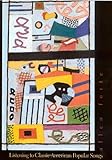 Allen Forte
Listening to Classic American Popular Songs
Yale University Press; Book & CD edition
Hardcover: 219 pages
(Forte devotes seven pages to the song, including its history and analyses of both the music and lyric. The lyrics are included in the book which also has a companion CD.)
|
|
|
|
- Jeremy Wilson
|
|
| This section suggests definitive or otherwise significant recordings that will help jazz students get acquainted with
“Come Rain or Come Shine.” These recordings have been selected from the Jazz History and
CD Recommendations sections.
|
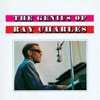
The 1959 recording of “Come Rain or Come Shine” by Ray Charles ( The Genius of Ray Charles) is widely beloved and is a great example of the song as a vehicle for ballad singing. The tune is often played with a swing feeling as well, and the standout performance among many in this style is Art Blakey’s from 1958 ( Moanin'). This performance features dramatic solos from each of Blakey’s sidemen from this incarnation of Jazz Messengers, Bobby Timmons, Lee Morgan, Benny Golson and Jymie Merritt.
Noah Baerman - Jazz Pianist and Educator
|
While many of the great song composers used repeated
notes as a device to build tension and emphasize
their harmonies, Harold Arlen, as a rule, was not
one of them. “Come Rain or Come Shine,” however,
is not just a rare Arlen exception; it may very
well be the repeated-notes-champion among the top
jazz standards.
The song has a 4-bar introduction, no verse,
and a 32-bar refrain that may be diagrammed as A-B-C.
The A section and the B section (bridge) are both
eight bars. The C section is sixteen bars, the first
eight of those echoing the A section.
The A section begins with a repeated a
note (thirteen times!) and ends the first eight
bars by dropping to an f which is repeated
and then held. The second eight bars reprise the
first with one exception, the second measure starts
off with a c. The melody could not be much
flatter, providing a driving feeling that supports
Mercer’s insistent lyrics, “I’m going to love you
like nobody’s loved you…”
-JW
|
Musical analysis of
“Come Rain or Come Shine”
|
| Original
Key |
One flat,
starting in F major and ending in Dminor |
| Form |
A1 – B –
A2 – C |
| Tonality |
Unsettled;
goes back and forth between major and minor;
some shifting key centers |
| Movement |
Primarily
steps and small skips; large number of repeated
notes |
|
Comments
(assumed
background)
|
|
The initial harmonic progression is actually
quite simple and common, being a variation
of I – III7 – vi – II7 – V7 – I, but
the use of a viiø7 after the opening I chord
leading to the III7 gives it a more sophisticated
sound. The “B” section is a bit more complicated.
It is actually in the parallel minor key,
starting with a iv – V7 – I sequence. The
next two measures descend by whole steps
from iv down to ii7 – V7 but then the melody
goes into a false key change by going to
a minor chord one step higher (functioning
as a ii7 of the old V7, which has now become
the new “tonic of the moment”). The following
sequence: i – viø7 – ii7 (embellished with
a bVI7 [augmented sixth] chord before the
ctø7 based on a vi with a flatted fifth)
gets the progression back to the original
tonic when theV7 resolves to a I7 that becomes
the pivot chord and V7 of the original tonic
of Section “A.” At first glance/hearing,
Section “C” seems to be quite a detour,
but what sounds initially like deceptive
resolutions are actually variations of standard
ones. For example, Arlen’s original progression
at “C” was coming from a Dm chord: F#m11–
B7 – Em7 – A7, with one chord change per
measure. It sounds odd, but really all Arlen
is doing is leaving out some secondary dominants
(that could easily be included). Possible
chord progression here might be: F#m11 (four
beats), B7 (two beats) – E7 (two beats)
– A7 (eight beats). (An Em chord could be
thrown in for the last two beats of measure
7 of Section “A2” to avoid monotony.) After
this, the final “C” section does, indeed,
contain deceptive cadences and resolutions,
giving the aural impression that the song
will return to F major. Instead, when Arlen
reaches the II7 in measure four, he goes
not to the V7 (C7) but to D minor, finishing
the song with a cadence that leaves no doubt
that the tonic is now, indeed, that key.
|
|
K. J. McElrath - Musicologist for JazzStandards.com |
|
Talented trumpet player Clifford Brown had a
brilliant career cut short by his untimely death
in an auto accident at age 25. However, during his
four years of recording he managed to leave a large
body of work with many great moments of jazz.
In Paris, as a member of the Lionel Hampton Orchestra
in 1953, Brown was in the studio with a small group
made up of his compatriots from the Hampton band,
performing arrangements written by Quincy Jones
(also a member of the Hampton group). On the CD
reissue of their recording of “Come Rain and Come
Shine” we have the opportunity to hear two takes
of the tune, illustrating Brown’s inventive genius.
(The album has multiple takes of other numbers also.)
Chris Tyle - Jazz Musician and Historian
|
Additional information for "Come Rain or Come Shine" may be found in:
|
|
|
Allen Forte
Listening to Classic American Popular Songs
Yale University Press; Book & CD edition
Hardcover: 219 pages
(7 pages including the following types of information: history, lyric analysis, music analysis and song lyrics. (Book includes CD).)
|
|
|
|
|
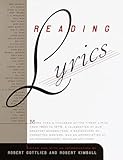 Robert Gottlieb, Robert Kimball
Reading Lyrics
Pantheon
Hardcover: 736 pages
(Includes the following types of information: song lyrics.)
|
|
|
|
|
“Come Rain or Come Shine” was included in these films:
- King of Comedy (1983, conflicting
information)
- For the Boys (1991, Bette
Midler)
- Forget Paris (1995, David
Sanborn)
- Midnight in the Garden of Good and
Evil (1997, Alison Eastwood)
- Harold Arlen: Somewhere over the Rainbow
(1998)
- The Other Sister (1999, Juliette
Lewis)
- Leaving Las Vegas (2000, Don
Henley)
- Stormy Weather: The Music of Harold
Arlen (2003, Sandra Bernhard)
And on stage:
- St. Louis Woman (1946, Ruby
Hill, Harold Nicholas) Broadway
- Free and Easy (1959) Amsterdam
and Paris "blues opera"
- Dream: The Johnny Mercer Musical
(1997) Broadway revue
- Wizard: The Music of Harold Arlen
(2004) cabaret
|
|
|
|
Comment Policy
- Your comments are welcome, including why you like
this tune, any musical challenges it presents, or additional background information.
- Jazz musicians, fans, and students of all ages use this website as an educational resource.
As such, off-topic, off-color, unduly negative, and patently promotional comments will be removed.
- Once submitted, all comments become property of JazzStandards.com.
By posting, you give JazzStandards.com permission to republish or otherwise distribute your comments in any format or other medium.
JazzStandards.com reserves the right to edit or remove any comments at its sole discretion.
|
|
| Click on any CD for more details at Amazon.com |
 Wes Montgomery
Full House
1990 Original Jazz Classics 106
Original recording 1962
|
|
Generations of guitarists have been inspired by Montgomery’s work on this album, a live collaboration with saxophonist Johnny Griffin and the Wynton Kelly Trio with Paul Chambers and Jimmy Cobb. The CD offers two takes of this remarkably swinging interpretation of “Come Rain or Come Shine.”
|
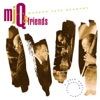
 Modern Jazz Quartet
Celebration
1994 Atlantic 82538
|
|
The Modern Jazz Quartet celebrated their 40th anniversary by making an album full of collaborations with a variety of guest artists. This cross-generational performance features a lyrical, understated performance by Branford Marsalis on soprano saxophone.
|
|
 Art Blakey & the Jazz Messengers
Moanin'
1990, Blue Note 46516
Original recording, 1958
|
|
On this hard bop version of "Come Rain or Come Shine"' drummer Blakey gives the song the Messenger touch with Benny Golson's sax and Lee Morgan's trumpet coolly punctuating a dynamite Bobby Timmons piano solo.
|
 Ray Charles
The Genius of Ray Charles
1990 Atlantic 1312
Original recording 1959
|
|
This is one of the most influential vocal performances of “Come Rain or Come Shine.” The soprano choir and string arrangements of Ralph Burns might dominate in other circumstances, but here they take a backseat to Ray’s knockout vocals and the subtle accompaniment of a small jazz ensemble. Trombonist Bob Brookmeyer gets in some particularly tasty licks.
|
 Bill Evans Trio
Portrait in Jazz
2001, Riverside Records
Original recording, 1959
|
|
Pianist Bill Evans is his usual innovative self on this interpretation of the song. His playing is discordant yet sensitive as he reinvents the song with the help of bassist Scott LaFaro and drummer Paul Motian.
|
 Dinah Washington
Smoke Gets In Your Eyes
Collection, 1999, Recall
|
|
Vocalist Washington is all sass and confidence on this wonderful live version of the torch song classic.
|
 Ella Fitzgerald
Arlen Songbook 2
Polygram Records
Original Recording 1960
|
|
Ella gives a slyly swinging performance here with the tasteful accompaniment of Billy May’s big band.
|
 Art Pepper
Intensity
Ojc
Original recording 1960
|
|
Alto saxophonist Art Pepper's heart is on his sleeve as he delivers this deeply moving reading of the ballad. The emotion is genuine on this wistful track.
|
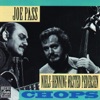
 Joe Pass
Chops
Ojc
Original recording 1978
|
|
Guitarist Pass and bassist Orsted Pedersen make it easy to forget that you are only listening to a duo. A subtle and delightful blues flavor permeates this slow-tempo performance.
|
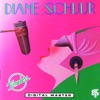
 Diane Schuur
Timeless
1990, GRP 9540
Original recording, 1986
|
|
The album’s “Timeless” title describes the selections, the orchestral arrangements, and vocalist Schuur’s soaring soprano, which invests “Come Rain or Come Shine” with passion. Among the guest artists is Stan Getz.
|
|
|
|