|
|
|
Carnival in Flanders closed after only six performances but generated a top jazz standard composition in “Here’s That Rainy Day,” |
|
 |
|
- Jeremy Wilson
|
|
| |
Dolores Gray introduced “Here’s That Rainy Day” in the Broadway musical, Carnival in Flanders, which opened on September 8, 1953, at the New Century Theatre.
|
| |
| |
|
| |
|
Carnival in Flanders was based on the 1935, French film comedy La Kermesse Heroique, which had won several Best Foreign Film awards. Despite the success of the source material, a score by Jimmy Van Heusen and Johnny Burke, and a cast that boasted John Raitt, the production struggled to establish itself. Veteran film director Preston Sturges was hired to salvage the play three weeks before its Broadway debut, but the last-minute rescue attempt was not enough, and the show closed after only six performances.
Carnival in Flanders, for all its brevity, left its impression on Broadway. The Van Heusen/Burke score generated a top jazz standard composition in “Here’s That Rainy Day,” and Raitt’s co-star, Dolores Gray, won a Tony Award for Leading Actress in a Musical, a standing record for the shortest-lived, Tony-Award-winning role!
|
| |
| |
|
| |
|
|
| |
| |
|
| |
|
|
|
|
|
More information on this tune... |
|
- Jeremy Wilson
|
|
| This section suggests definitive or otherwise significant recordings that will help jazz students get acquainted with
“Here's That Rainy Day.” These recordings have been selected from the Jazz History and
CD Recommendations sections.
|
As addressed in the “History Notes,” Frank Sinatra’s status as a jazz artist is open to some debate. However, his interpretation of “Here’s That Rainy Day” ( No One Cares) is certainly definitive and is a wonderful jumping-off point for anyone seeking to learn the tune. The intimate nature of the tune has lent itself well through the years to correspondingly intimate performances. As such it is not surprising that two of the definitive recordings of the tune are introspective solo performances by pianist Bill Evans ( Alone) and guitarist Joe Pass ( Virtuoso (20 Bit Mastering)).
Noah Baerman - Jazz Pianist and Educator
|
John Barrett Jr. aptly described “Here’s That
Rainy Day” as “a gentle yawn, the sun rising on
a sad feeling.” It is a ballad about lost love,
about love turning to a cold, rainy day. With a
relaxed tempo and a feeling of melancholy, the lyrics
and music support each other in creating the mood.
That is not to say that it is a simple song. Alec
Wilder, in his book
American Popular Song: The Great Innovators, 1900-1950,
comments that “Here’s That Rainy Day” is “a very
difficult song” with a complex bass line. He characterizes
it as “powerful,” “affecting,” and with “great weight
and authority.” The song is an excellent example
of the sophistication that became acceptable in
popular songs in the 1940’s.
Jazz musicians appreciate the elegance of “Here’s
That Rainy Day” with its surprising melodies and
harmonies. The song’s flexibility has allowed it
to be recorded hundreds of times as a ballad, a
swing number, and even an up-tempo, bossa nova tune.
-JW
|
Musical analysis of “Here’s That Rainy Day”
|
|
Original Key
|
F major
|
|
Form
|
A -B -A -C
|
|
Tonality
|
Primarily major
|
|
Movement
|
The “A” sections are slow; upward arpeggios with embellished top note. “B” and “C” sections tend to leap down and arpeggiate upwards.
|
|
Comments (assumed background)
|
| Van Heusen’s original harmonic progression over section “A” corresponds to what jazz musicians often call a “Lady Bird” or “Half Nelson” progression -I -bIIIma7 -bVIma7 (in the original, Fmaj7 - Ab maj7 -Dbmaj7), with one chord per measure. Some players perform this starting in the parallel minor and then follow a descending bass line. In the original key, this is: Fm7 -C7/E -Ebm6 -Dm7(b5) -Dbmaj7. This is not necessarily an improvement over the original; however, it is a bone of contention between the more rabid players. In either case, the Dbmaj7 skips down two minor thirds to ii7 (Bbm7 to Gm7), proceeding to V7 -I. “B” starts on a iv, actually functioning as a ii7 of the new temporary key of Ab. This drops to Gm7(b5) (after an embellishing pass through its own subdominant iv, Dbmaj7), which is the ii7 of the original I key of F major. The second time, going into the “C” section, Fmaj7 is followed by Bbmaj7- a very nice twist. Bbmaj7 (IV) goes to ii7 -V7 -I, which is followed by a surprise II7, delaying the final ii7 -V7 -I resolution. |
|
K. J. McElrath - Musicologist for JazzStandards.com
|
|
The controversy continues over whether Frank Sinatra was a jazz singer or not. Certainly his early years in the orchestras of jazz musicians Harry James and Tommy Dorsey (and later work with Count Basie) would lead one to believe that they considered his style was more swinging than some of his colleagues.
And it is also known that Sinatra was widely admired and listened to by jazz musicians, and that he may be the one to receive credit for making “Here’s That Rainy Day” into a standard. His 1959 Capitol recording of the tune, arranged by Gordon Jenkins, is a beautiful and timeless rendering of the number.
Chris Tyle - Jazz Musician and Historian
|
Additional information for "Here's That Rainy Day" may be found in:
|
|
|
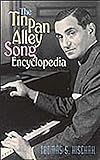 Thomas S. Hischak
The Tin Pan Alley Song Encyclopedia
Greenwood Press
Hardcover: 552 pages
(1 paragraph including the following types of information: Broadway productions, performers and style discussion.)
|
|
|
|
|
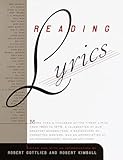 Robert Gottlieb, Robert Kimball
Reading Lyrics
Pantheon
Hardcover: 736 pages
(Includes the following types of information: song lyrics.)
|
|
|
|
|
“Here's That Rainy Day” was included in these films:
- Carnival in Flanders (1953,
Dolores Gray)
|
|
|
|
Comment Policy
- Your comments are welcome, including why you like
this tune, any musical challenges it presents, or additional background information.
- Jazz musicians, fans, and students of all ages use this website as an educational resource.
As such, off-topic, off-color, unduly negative, and patently promotional comments will be removed.
- Once submitted, all comments become property of JazzStandards.com.
By posting, you give JazzStandards.com permission to republish or otherwise distribute your comments in any format or other medium.
JazzStandards.com reserves the right to edit or remove any comments at its sole discretion.
|
|
| Click on any CD for more details at Amazon.com |
 Ella Fitzgerald
The First Lady of Song
1993 Polygram 517898
Original recording 1965
|
|
Vocalist Fitzgerald is heard here in her second recorded collaboration with pianist Tommy Flanagan, who would be an important part of her musical life. This also marks the beginning of her relationship with Keter Betts, who would be her bassist for over twenty years. Fitzgerald sings this difficult melody with ease and with an extra touch of melancholy.
|
 Gary Burton and Stephane Grappelli
Paris Encounter
2003 DBK Works 504
Original recording 1969
|
|
This passionate ballad performance is a highlight of a remarkably successful collaboration. Vibraphonist and violinist Grappelli find a great deal of common ground here in spite of living on different continents and having an age difference of over thirty years
|
|
 Carmen McRae
Bittersweet
2002 Koch 8593
Original recording 1964
|
|
“Here’s That Rainy Day” is a highlight of this album, on which McRae puts her behind-the-beat phrasing to use in singing songs with bittersweet moods. The band, led by pianist and arranger Norman Simmons, offers gentle but solid support.
|
 Joe Pass
Virtuoso
2001 Pablo 2310708
Original recording 1973
|
|
Guitarist Pass deepened his legacy in the 1970s with a series of solo guitar recordings. While some of his solo arrangements were noteworthy for their jaw-dropping virtuosity, “Here’s That Rainy Day” is an example of his gentle touch and lush orchestration.
|
 Bill Evans
Bill Evans Alone
Polygram Records 33801
Original recording, 1968
|
|
The master pianist at work, exploring, solo, every nook and cranny of the song.
|
 Charles McPherson
Live at the Five Spot
1994 Prestige 24135
Original recording 1966
|
|
Alto saxophonist McPherson reinvents “Here’s That Rainy Day” as a high-energy tune with a Latin feel. He is joined on this live recording by pianist Barry Harris and trumpeter Lonnie Hillyer, fellow Detroit natives and devotees of the bebop sound and approach.
|
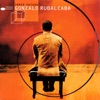
 Gonzalo Rubalcaba
Inner Voyage
1999, Blue Note
|
|
Cuban pianist Rubalcaba slows the song almost to a halt, allowing the trio to explore it intimately. There is peace and elegance throughout.
|
 Donna Leonhart
Bein' Green
2001, Sunnyside
|
|
Vocalist Leonhart has hidden her light under a bushel for too long. This is a wonderful collection of songs, dealt with in a straight-forward manner and with unusual and varied instrumentation. Just piano and strings on this cut make it delicious.
|
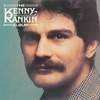
 Kenny Rankin
The Kenny Rankin Album
1989, Atlantic 1013
Original recording, 1976
|
|
The golden-throated singer has been hard to peg stylistically, but here, in the company of master arranger/conductor Don Costa, he proves his jazz credentials in a compelling reading of “Here’s That Rainy Day.”
|
 Elvin Jones/ Richard Davis
Heavy Sounds
1999, Polygram
Original recording, 1968, Impulse!
|
|
“Here’s That Rainy Day” stands out as a gem on an uneven album. Drummer Jones and bassist Davis are airtight, and the quartet partakes in some intriguing conversation.
|
|
|
|