|
|
|
| “Considered racy at the time, Andy Razaf’s lyrics are actually quite sweet.” |
|
 |
|
- JW
|
|
| |
“Honeysuckle Rose” was introduced as a dance number in the 1929 revue, Load of Coal, at Connie’s Inn in Harlem by its composer, Thomas “Fats” Waller. “Honeysuckle Rose” and “Ain’t Misbehavin’,” also written that year for the musical revue Hot Chocolates, would become the two most enduring compositions born of the longtime collaboration of Waller and lyricist Andy Razaf.
Other songs in Waller and Razaf’s Load of Coal score included the wistful “My Fate Is in Your Hands” and “Zonky.” The oddly titled “Zonky” was a song about a dance written in the spirit of “Walking the Dog” or “Balling the Jack.” The song warns the listener “Other dances, they may come and go but when you learn the Zonky you will want it to stay.”
According to the Kennedy Center’s website page, “A Place Called Harlem,” Connie’s Inn was a Harlem speakeasy that featured song and dance revues. Found at the intersection of 131st Street and 7th Avenue it was second in popularity only to the Cotton Club. The owners eventually opened the originally segregated club to blacks who were allowed to patronize the club after the whites had gone home. Fats Waller was in good company at Connie’s Inn, at least with regard to other performers which included the likes of Duke Ellington, Fletcher Henderson, and Ethel Waters.
|
| |
| |
|
| |
|
|
| |
| |
|
| |
|
Shortly after the opening of Load of Coal, “Honeysuckle Rose,” sung by Mildred Bailey, debuted on the air on Paul Whiteman’s Old Gold Show. Her double-tempo rendition is said to have been a setback for the song; subsequent recordings by Dave Wilborn with McKinney’s Cotton Pickers (1930) and Frankie Trumbauer and His Orchestra (1931) did not become hits. Finally, in 1933, the public took notice with a Fletcher Henderson and His Orchestra recording, which climbed the pop charts to number eighteen.
Recordings that made the pop charts include:
- Fletcher Henderson and His Orchestra (1933, #18)
- Red Norvo and His Orchestra (1935, Mildred Bailey, Vocal, #9)
- Fats Waller (1935, #17)
- The Dorsey Brothers Orchestra (1935, Don Mattison, Skeets Herfurt and Roc Hillman, vocals, #17)
- Fats Waller, Tommy Dorsey, Bunny Berigan, and Dick McDonough playing on A Jam Session at Victor (1937, #4)
|
|
| |
|
| |
|
|
|
|
|
More information on this tune... |
|
See the Reading and Research page for this tune for additional references. |
|
- Jeremy Wilson
|
|
| This section suggests definitive or otherwise significant recordings that will help jazz students get acquainted with
“Honeysuckle Rose.” These recordings have been selected from the Jazz History and
CD Recommendations sections.
|
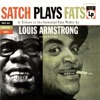
Fats Waller recorded his own “Honeysuckle Rose” many times throughout his career. Particularly noteworthy among his many fine versions is one from a 1937 jam session with Tommy Dorsey and Bunny Berigan. That same year, Belgian guitarist Django Reinhardt recorded the tune for the first time ( All Star Sessions), featuring Coleman Hawkins and Benny Carter, whose arrangement would become widely used. Louis Armstrong also developed a significant relationship with the tune, and his version on the Satch Plays Fats album is a classic ( Satch Plays Fats: The Music of Fats Waller)
Noah Baerman - Jazz Pianist and Educator
|
Considered racy at the time, Andy Razaf’s lyrics
are actually quite sweet. The verse is rarely sung,
beginning with
Have no use for sweets of
any kind, since the day you came around…
although it is included on Mildred Bailey’s
The Rockin’ Chair Lady (1931-1950) Verve
644. The slangy chorus is a succession of praises
for “My Honeysuckle Rose,” the one who makes the
honeybee jealous and the flowers droop and sigh.
-JW
|
Musical analysis of
“Honeysuckle Rose”
|
| Original
Key |
F major |
| Form |
A – A – B
– A |
| Tonality |
Major throughout |
| Movement |
The downward
movement of “A” is step followed by a leap;
then it arpeggiates up in “B, scalewise. |
|
Comments
(assumed
background)
|
|
This is a bouncy tune requiring some dexterity.
Harmonic progression is neither unusual
nor difficult, going from ii – V7 or ii
– V7 –I most of the time. The harmonic progression
of “B” is a variation on the one also found
in the “B” sections of “Yes Sir, That’s
My Baby,” “Cloudburst,” and “On the Sunny Side of the Street.” Since
the melody ascends step-wise at this point,
it is IMPERATIVE that the bass line move
in contrary motion, i.e. downwards. Otherwise,
the identical line appears in both the melody
and the bass line, creating parallel octaves
and a great deal of boredom. |
|
K. J. McElrath - Musicologist for JazzStandards.com |
|
On the evening of January 23, 1938, jazz music
became “legitimate.” On the stage of Carnegie Hall,
Benny Goodman’s Orchestra and guests brought
jazz to the hallowed bastion of classical music.
For two hours the Hall resounded with great, swinging
music.
There were a number of firsts that night. Aside
from the fact that it was the first jazz concert
at Carnegie, part of the evening’s program included
a jam session: a 16-minute excursion on “Honeysuckle
Rose,” which featured both black and white jazz
musicians (members of the bands of Goodman, Count
Basie and
Duke Ellington). The first time a jam session
had been recorded, and it lay in
Benny Goodman’s closet until its release in
1955, proving that it was, indeed, a very special
evening.
Chris Tyle - Jazz Musician and Historian
|
Additional information for "Honeysuckle Rose" may be found in:
|
|
|
 Thomas S. Hischak
The Tin Pan Alley Song Encyclopedia
Greenwood Press
Hardcover: 552 pages
(1 paragraph including the following types of information: film productions, history and performers.)
|
|
|
|
|
 Robert Gottlieb, Robert Kimball
Reading Lyrics
Pantheon
Hardcover: 736 pages
(Includes the following types of information: song lyrics.)
|
|
|
|
|
“Honeysuckle Rose” was included in these films:
-
Tin Pan Alley (1940, sung and
danced by Betty Grable)
-
As Thousands Cheer (1943, Lena
Horne with Benny Carter and His Band)
-
Walking My Baby Back Home (1953,
Janet Leigh dubbed by Paula Kelly)
-
New York, New York (1977, Diahnne
Abbott)
-
Honeysuckle Rose (1980, Willie
Nelson)
-
The Marrying Man (1991)
-
Human Stain (2003) (Jess Stacy)
And on Broadway:
-
Bubbling Brown Sugar (1976, Josephine
Premise/Avon Long)
-
Ain’t Misbehavin’: The Story of Fats Waller
(1978, Ken Page/Nell Carter)
-
Slow Drag (1997, Christopher Colquhon)
|
| This section shows the jazz standards written by the same writing team. |
|
|
|
|
Comment Policy
- Your comments are welcome, including why you like
this tune, any musical challenges it presents, or additional background information.
- Jazz musicians, fans, and students of all ages use this website as an educational resource.
As such, off-topic, off-color, unduly negative, and patently promotional comments will be removed.
- Once submitted, all comments become property of JazzStandards.com.
By posting, you give JazzStandards.com permission to republish or otherwise distribute your comments in any format or other medium.
JazzStandards.com reserves the right to edit or remove any comments at its sole discretion.
|
|
| Click on any CD for more details at Amazon.com |
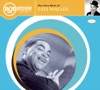
 Fats Waller
Very Best of Fats Waller
RCA
Original recording 1937
|
|
This compilation treats us to two among the composer’s many performances of this tune. One presents a spirited small group featuring Bunny Berigan and Tommy Dorsey, while the other is a fascinating quasi-classical solo piano rendition.
|
 Fletcher Henderson
Fletcher Henderson Story: Study In Frustration
1994 Sony 57596
Original recording 1932
|
|
Henderson’s arrangement of this tune stands as an important early example of his arranging style and would later be used by Benny Goodman. This exciting performance features the trombone of J.C. Higginbotham.
|
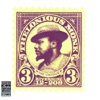
 Thelonious Monk
The Unique Thelonious Monk
1991 Original Jazz Classics 64
Original recording 1956
|
|
Monk displays his unique mixture of reverence and innovation with a spirited take on this tune. Bassist Oscar Pettiford is featured prominently and drummer Art Blakey completes the trio.
|
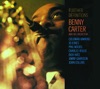
 Benny Carter
Further Definitions
1997 GRP 229
Original recording 1961
|
|
Carter revisits his arrangement from his classic 1930s collaboration with Coleman Hawkins and Django Reinhardt. Carter and Hawkins are joined in the saxophone section by relative newcomers Phil Woods and Charlie Rouse.
|
 Nat "King" Cole
Nat King Cole Trio: Instrumental Classics
Blue Note Records 98288
Original recording 1945
|
|
Cole’s spirited, up-tempo performance shows off his brilliant instrumental skills, as well as those of guitarist Oscar Moore.
|
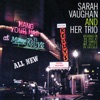
 Sarah Vaughan
At Mister Kelly's
1991 Polygram 32791
Original recording 1957
|
|
Vaughan, backed by a swinging trio, gives us a typically masterful and playful performance, taken at a relaxed pace.
|
|
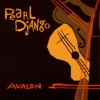
 Pearl Django
Avalon
2000 Modern Hot Records
|
|
This quintet of violin, bass, and three guitarists (sometimes playing unusual models) has brought the lively sound of the Quintet of the Hot Club of France into the 21st century. They insert some amusing quotes into their improvisational playfulness.
|
|
 Django Reinhardt
All Star Sessions
2001 Blue Note 20591
Original recording 1937
|
|
An interesting track on an interesting album. The All Star sessions, compiled between 1935-39, highlight the guitarist’s work with American jazz greats touring Europe. This track features saxophone greats Coleman Hawkins and Benny Carter, who contributed the arrangement.
|
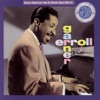
 Erroll Garner
Body and Soul
1991, Sony 47035
Original recording, 1951, Legacy
|
|
This is an interesting take on the Waller tune as pianist Garner works through it with a trio. Though Garner was self-taught and could not read music, his stride playing is reminiscent of Waller yet distinct in its own style.
|
|
|
|